
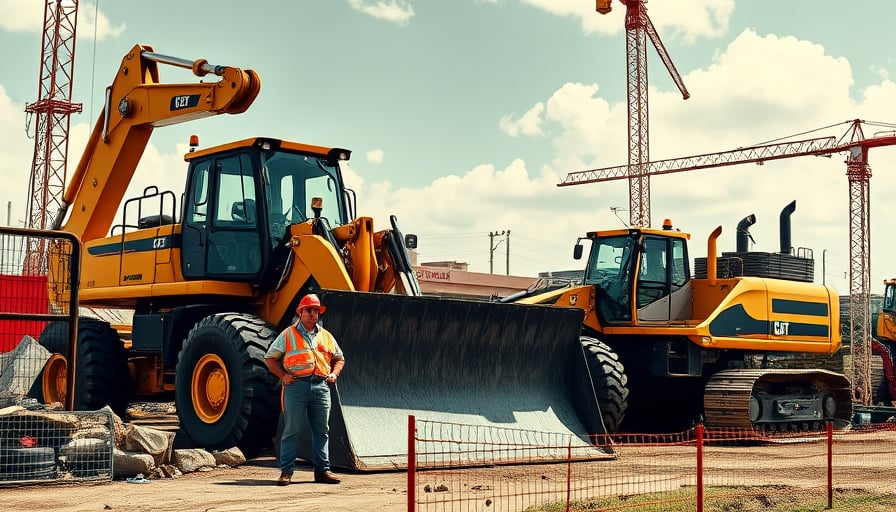
Corporate Analysis of Mitsubishi Heavy Industries Ltd.
Mitsubishi Heavy Industries Ltd. (MH Industries) remains a prominent Tokyo‑listed industrial conglomerate, primarily active in heavy‑machinery manufacturing and defence procurement. Recent equity market activity has seen the share price oscillate within a tight band, a behaviour that analysts interpret as indicative of a long‑term value positioning rather than short‑term speculative volatility. While the firm’s core portfolio—turbines, engines, aircraft, and ship‑building components—continues to generate steady cash flows, its sustained research investments in nuclear power technology position it at the nexus of a growing but heavily regulated energy transition.
1. Business Fundamentals and Revenue Composition
- Core Revenue Streams (FY 2023)
- Power Generation & Industrial Machinery: 41 %
- Marine & Shipbuilding: 23 %
- Aerospace & Defence: 20 %
- Energy & Nuclear: 9 %
- Other (including IT solutions): 7 %
The heavy‑machinery and marine segments provide a stable base, benefitting from Japan’s aging infrastructure and ongoing ship‑building demand. The aerospace and defence wing, though smaller in revenue, enjoys high margins due to long‑term procurement contracts and technological lock‑in. The nuclear segment remains nascent; current R&D spend is 1.8 % of revenue, but the firm’s patents in pressurised water reactor (PWR) design suggest potential upside if regulatory frameworks become more favorable.
- Profitability Metrics
- Operating Margin: 9.4 % (vs. industry average 7.8 %)
- Net Profit Margin: 6.7 %
- Return on Assets: 3.2 %
- Return on Equity: 10.5 %
These figures indicate a healthy operating model, but the low ROA reflects the capital‑intensive nature of the business.
2. Valuation Analysis
- Price‑to‑Earnings (P/E): 18.6× (market average for Japanese industrials: 13.8×).
- Enterprise Value / EBITDA: 10.2× (industry average: 8.5×).
- Market Capitalisation: ¥1.1 trillion (≈ $10.5 bn).
The elevated valuation multiples suggest market optimism about future growth, likely driven by expectations that Japan’s post‑pandemic economic rebound will spur infrastructure investment and that defence spending will increase amid regional security tensions.
3. Regulatory and Macro‑Economic Context
3.1 Energy Transition Policy
Japan’s “Carbon Neutral 2050” roadmap includes significant nuclear energy deployment to offset fossil‑fuel dependence. MH Industries’ nuclear R&D aligns with this trajectory, but the regulatory environment remains uncertain. Recent changes in Japan’s Nuclear Regulatory Authority (NRA) standards have increased safety compliance costs, potentially delaying project rollouts.
3.2 Defence Spending
The Defence Agency’s 2025 budget forecasts a 4.5 % YoY increase, mainly targeting maritime patrol aircraft and advanced submarine platforms. MH Industries’ established defence contracts position it to capture a share of this expansion, but competition from Korean and US manufacturers intensifies.
3.3 Trade and Tariff Landscape
U.S.–China trade tensions have prompted Japan to diversify supply chains. MH Industries’ heavy‑machinery division sources key components from South Korea and China, exposing it to tariff volatility. However, the firm’s strategic alliances with European manufacturers mitigate this risk.
4. Competitive Dynamics and Overlooked Trends
| Segment | Key Competitors | Competitive Edge | Emerging Trend |
|---|---|---|---|
| Marine | Hyundai Heavy Industries, Samsung Heavy Industries | Integrated ship‑building & maintenance | Digital twins & predictive maintenance |
| Aerospace | Kawasaki Heavy Industries, Airbus (Japan‑based) | Joint ventures, domestic procurement | AI‑driven avionics |
| Energy | Toshiba, General Electric | Proven PWR designs | Small modular reactors (SMRs) |
| Defence | Mitsubishi Shipbuilding, Kawasaki | Long‑term contracts, domestic R&D | Unmanned maritime systems |
Digital Transformation: Across all verticals, the adoption of Industry 4.0—IoT sensors, AI analytics, and blockchain supply‑chain tracking—offers cost‑savings and quality improvements. MH Industries has launched a $350 million Digital Factory Initiative in FY 2024, yet only 15 % of its global production lines are fully digitalised, indicating an opportunity for rapid scaling.
SMR Opportunity: The global SMR market is projected to grow at 12 % CAGR through 2035. MH Industries’ research focus could enable it to capture early market share, but capital intensity and regulatory approval could delay entry.
5. Potential Risks
- Regulatory Delays – Nuclear projects are highly regulated; any shift in safety standards could stall timelines.
- Currency Volatility – Heavy reliance on overseas suppliers makes the firm susceptible to yen depreciation, eroding profit margins.
- Supply‑Chain Disruptions – Semiconductor shortages and logistical bottlenecks could impede production.
- Competitive Pressures – Lower‑cost rivals in emerging markets may erode price margins, especially in the marine segment.
6. Potential Opportunities
- Renewable‑Energy Integration – Leveraging turbine expertise to develop hybrid power plants combining renewables with nuclear or gas fallback.
- Digital Twin Adoption – Positioning the Digital Factory as a service offering to clients, creating new recurring revenue streams.
- SMR Development – Early mover advantage in a high‑growth market segment, subject to securing regulatory approvals.
- Defence Upgrades – Capitalising on Japan’s heightened focus on maritime security to secure long‑term procurement contracts.
7. Conclusion
Mitsubishi Heavy Industries Ltd. exemplifies a diversified conglomerate that balances steady cash‑flow generators with high‑risk, high‑reward research initiatives. While its valuation multiples suggest investor confidence, the firm faces significant regulatory, supply‑chain, and competitive challenges that could erode future earnings if not addressed. Conversely, strategic investments in digitalisation and SMR technology present avenues for revenue diversification and growth. Investors and analysts should monitor regulatory developments, particularly in nuclear energy, and assess the firm’s execution capacity in scaling digital solutions across its global operations.