Market Context and Immediate Impact
Intel Corp.’s latest quarterly results triggered a measurable decline in the company’s share price, a move that mirrors a broader sell‑off across technology and semiconductor equities. The dip reflects heightened investor unease over two interrelated macro‑factors: rising borrowing costs and the substantial financing required to underpin the rapid expansion of artificial‑intelligence (AI) infrastructure. Firms whose growth models hinge on debt‑backed capital expenditures have come under sharper scrutiny, leading to a reassessment of valuation multiples industry‑wide.
Strategic R&D Focus: GPU Architecture and Rack Design
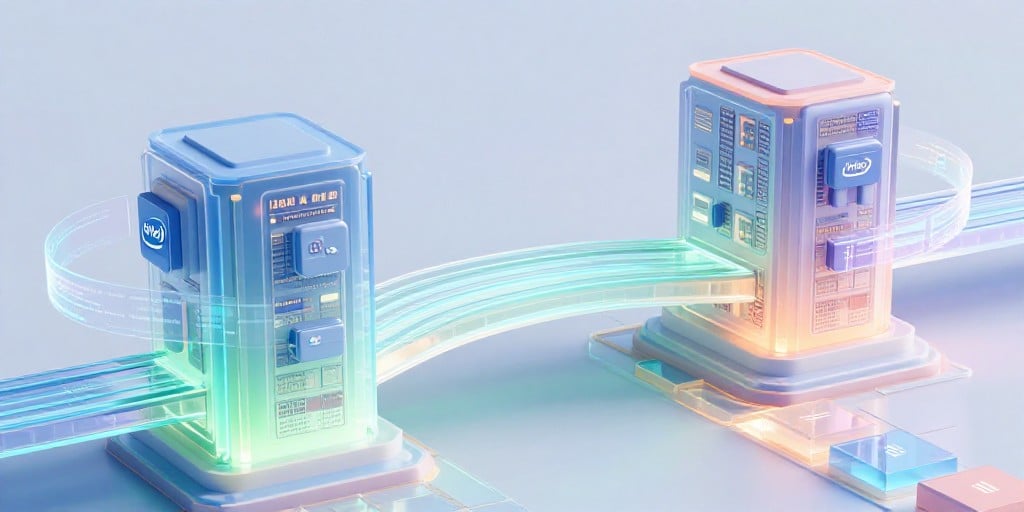
In its disclosures, Intel underscored continued investment in a new generation of GPU architecture and expanded rack designs, both powered by its Xeon processor line. The intent is to fortify the company’s capacity to support the next wave of agent‑centric AI workloads—a segment that demands high throughput, low latency, and dense compute density. By integrating Xeon‑based compute with bespoke GPU accelerators, Intel seeks to offer a differentiated platform that can compete with established GPU‑centric providers and capture market share in data‑center and edge deployments.
Navigating Supply‑Chain Constraints and Capital Intensity
The semiconductor industry remains plagued by supply‑chain bottlenecks—particularly in advanced lithography equipment and interconnect materials. Intel’s strategy acknowledges these constraints, positioning its new designs to mitigate the impact of component shortages through modular rack architectures that can be rapidly reconfigured. Nonetheless, the capital intensity of building out next‑generation fabs and research facilities remains a critical challenge. The company must balance aggressive R&D investment against the backdrop of a tightening credit environment, where higher interest rates increase the cost of long‑term debt.
Regulatory Landscape: Export Controls and Foreign Investment
U.S. government agencies have intensified scrutiny of chip‑export licenses, especially for advanced manufacturing equipment destined for key international markets. This regulatory tightening coincides with broader geopolitical tensions that affect supply chain security and technology transfer. For Intel, this translates into additional compliance costs and potential delays in accessing critical components abroad. The company’s ability to navigate these evolving regulatory frameworks will be pivotal in sustaining its global supply chain resilience.
Broader Industry Implications
Intel’s experience is emblematic of a sector in transition. As AI workloads accelerate the demand for specialized silicon, incumbents must either innovate rapidly or partner with ecosystem players to remain competitive. The combination of higher financing costs and stricter export controls creates a precarious operating environment. Companies that successfully align their R&D roadmap with supply‑chain agility and regulatory compliance are likely to emerge as leaders in the new AI‑centric semiconductor paradigm.
Forward‑Looking Outlook
Going forward, Intel’s focus on Xeon‑backed GPU platforms positions it well to capitalize on emerging agent‑centric AI workloads. However, sustained success will require:
- Capital Efficiency – Optimizing capital allocation to balance debt‑backed growth with risk‑adjusted returns.
- Supply‑Chain Diversification – Strengthening relationships with multiple suppliers to reduce dependency on any single source.
- Regulatory Proactiveness – Anticipating and adapting to export‑control regimes to avoid production bottlenecks.
By addressing these dimensions, Intel can leverage its technological strengths while mitigating the macro‑economic and geopolitical risks that currently weigh on its valuation and share price.