
Intel’s Surge: A Strategic Pivot or a Speculative Rally?
Intel Corp’s shares have continued a robust upward trajectory, marking a nine‑day streak of gains and a near 70 % increase in market value for the calendar year. The rally has been underpinned by several corporate moves that have bolstered investor confidence, yet the implications of these developments warrant a deeper examination.
Reacquiring the Ireland Fab: A Quest for Autonomy
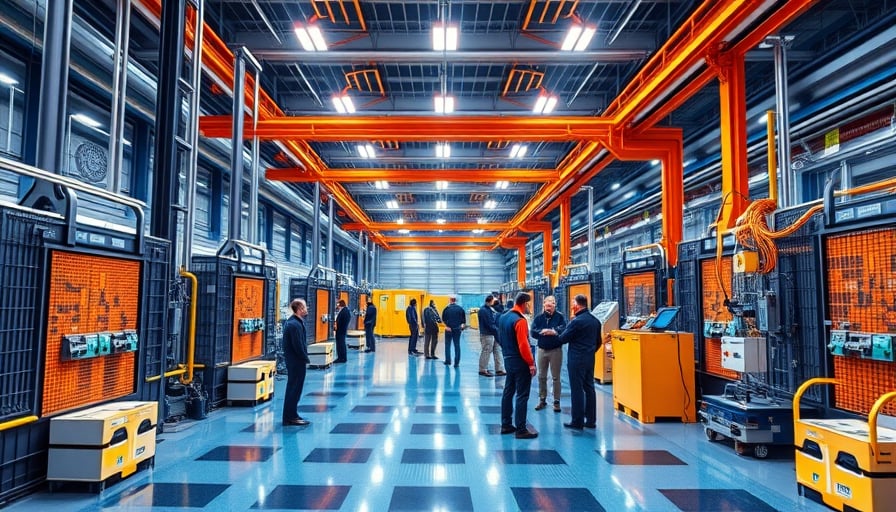
Intel’s recent transaction to reacquire full control of its Ireland fabrication plant is more than a simple ownership shuffle. Historically, the company has relied on external foundries to mitigate capital expenditure, especially after its 2021 investment shortfall. By consolidating its manufacturing footprint, Intel signals a strategic shift toward vertical integration.
However, this move raises questions about risk concentration. A single plant’s downtime—whether due to equipment failure or geopolitical disruptions—could cripple supply chains that span cloud data centers, automotive electronics, and emerging AI workloads. While the Irish facility boasts advanced 14‑nanometer processes, it lags behind the 7‑nanometer nodes employed by competitors such as TSMC, potentially constraining Intel’s ability to match performance and power targets demanded by next‑generation workloads.
Expanding the Google Partnership: Cloud and AI Synergies
Intel’s expanded partnership with Google to supply future generations of Xeon processors for data‑center use and to collaborate on infrastructure‑processing units (IPUs) designed for AI and cloud workloads is a marquee deal. Xeon’s dominance in the enterprise server market provides a stable revenue base, while the IPU collaboration positions Intel at the heart of AI acceleration.
Yet the partnership also underscores a broader trend: the convergence of traditional CPU design with specialized AI accelerators. Competitors such as AMD, NVIDIA, and even ARM-based chip manufacturers are aggressively pursuing similar collaborations. Intel’s challenge will be to differentiate its offerings through performance‑per‑watt advantages and to secure long‑term contracts that mitigate the risk of being eclipsed by lower‑cost or higher‑performance rivals.
Joining the Terafab Venture: Aligning with SpaceX, Tesla, and xAI
Intel’s decision to join Elon Musk’s Terafab project—a joint venture aimed at advancing semiconductor development for Tesla, SpaceX, and xAI—adds further strategic depth. Terafab intends to accelerate the development of advanced packaging technologies and to harness shared intellectual property across its portfolio. For Intel, this alignment could unlock new revenue streams and accelerate technology transfer between consumer, automotive, and aerospace domains.
Nonetheless, the venture’s success hinges on the delicate balance between open‑source collaboration and proprietary advantage. The alliance raises potential concerns regarding data privacy, as the semiconductor designs for autonomous vehicles and space-bound systems will likely handle sensitive telemetry and navigation data. Ensuring robust security protocols throughout the design, manufacturing, and supply chain will be critical to prevent adversarial exploitation.
Investor Sentiment: From Survival Mode to Expansion
Analysts observe a notable shift in market sentiment—from a period of relative underperformance to one of perceived growth and expansion. Intel’s shares now trade above the average analyst price target, and the forward valuation reflects a premium that some view as high. Nevertheless, the narrative has evolved: Intel appears to be moving from a survival mode—characterized by manufacturing setbacks and intense competition—into an expansion phase driven by manufacturing autonomy and strengthened ties to major cloud and AI players.
This transformation, however, is not without risk. The semiconductor industry remains subject to cyclical demand fluctuations, geopolitical trade tensions, and rapid technological disruption. Intel’s success will depend on its ability to:
- Maintain manufacturing excellence while scaling new fabs to meet demand for advanced nodes.
- Secure long‑term contracts with cloud and AI giants, ensuring a stable revenue base.
- Navigate security and privacy concerns across its expanding portfolio of AI and automotive applications.
- Balance cost and innovation to compete with more nimble, cost‑efficient rivals.
Broader Societal Impact
The implications of Intel’s strategic pivot extend beyond the boardroom. By bolstering manufacturing autonomy, Intel could reduce reliance on foreign supply chains, potentially enhancing national security in the United States. Its AI and cloud partnerships will likely accelerate the adoption of machine learning across sectors, raising both productivity gains and ethical considerations about data usage and algorithmic bias. Meanwhile, the Terafab alliance could spur advances in autonomous transportation and space exploration, but also intensify debates over surveillance, data sovereignty, and the militarization of space.
Conclusion
Intel’s recent corporate moves—reacquiring its Ireland fab, deepening its partnership with Google, and joining the Terafab venture—collectively signal a bold transition toward a more integrated, technologically diversified future. While these actions have buoyed investor confidence and positioned Intel favorably within the competitive semiconductor landscape, the company must carefully manage manufacturing risks, market competition, and societal implications. Only by maintaining a disciplined balance between innovation, security, and ethical responsibility will Intel sustain its newfound growth trajectory in an industry that is as volatile as it is transformative.