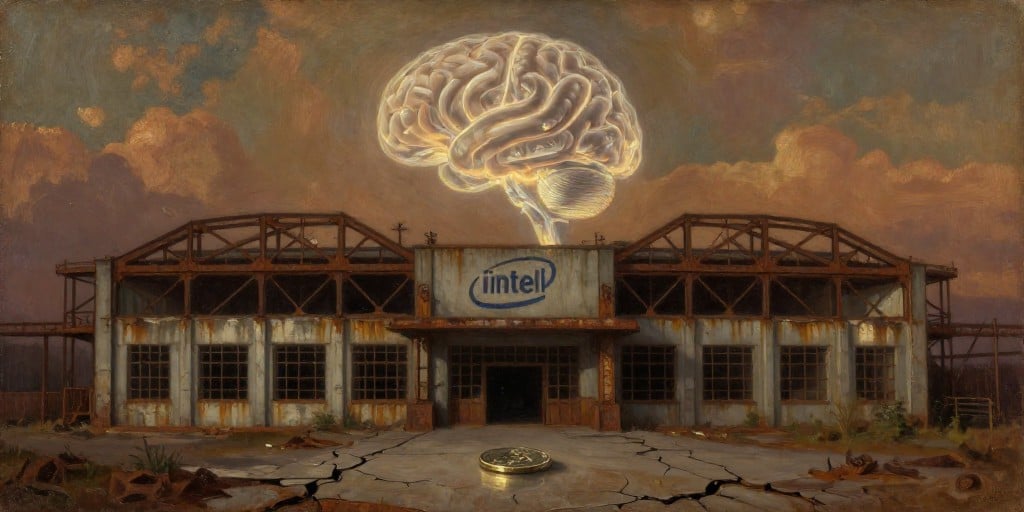
Intel Corp. Faces a Sharp Pre‑Market Decline Amid AI‑Driven Sector Volatility
Intel Corporation’s shares fell more than five percent in the pre‑market session on 21 November, a trajectory that mirrored a broader retreat in technology names across the market. The decline came in the wake of a high‑profile artificial‑intelligence (AI) listing that intensified investor caution regarding the valuation and growth prospects of semiconductor stocks, including industry peers Nvidia and AMD.
Market Context and Immediate Impact
- Pre‑market performance: Intel’s stock opened below its previous close, slipping to a level that was already under pressure from a sector‑wide sell‑off.
- After‑hours trading: The dip continued, with the share settling below the pre‑market level and maintaining momentum into the next trading day.
- Peer comparison: Nvidia and AMD, both heavily invested in AI infrastructure, experienced similar downward pressure, underscoring a systemic sentiment shift rather than a company‑specific event.
Investor Sentiment and the AI Narrative
Analysts point to the intersection of two key forces:
- Valuation Concerns: The AI boom has pushed many semiconductor valuations into territory that some market participants deem unsustainable, especially for companies that are still building out their AI product lines.
- Uncertainty Over AI Spending: Corporate budgets for AI development are still in flux, with some firms postponing capital expenditure until the economic impact of AI becomes clearer.
This environment has fostered a defensive stance among equity buyers, who prefer firms with proven revenue streams and robust cash flows over those that are still scaling AI capabilities.
Intel’s Business Fundamentals Under Scrutiny
- Market Share Dynamics: While Intel remains a leading player in the x86 processor market, its share of the broader semiconductor ecosystem has diminished relative to competitors that have accelerated AI‑centric product development.
- Revenue Composition: Intel’s revenue remains heavily weighted toward data‑center and PC processors, segments that have seen slower growth than the AI‑accelerated server market.
- Capital Allocation: The company’s recent capital expenditures have largely focused on manufacturing capacity expansion, with less emphasis on R&D for AI‑optimized silicon.
These fundamentals suggest that Intel’s valuation is more vulnerable to shifts in investor sentiment than its peers that have aggressively pursued AI hardware solutions.
Regulatory and Competitive Landscape
- Supply‑Chain Constraints: Ongoing global supply‑chain disruptions continue to affect semiconductor manufacturing. Intel’s ability to secure advanced lithography tools may be limited compared to rivals that have secured strategic partnerships.
- Policy Scrutiny: Increasing regulatory attention on AI and semiconductor supply chains, particularly in the United States and Europe, could impose additional compliance costs or restrict access to certain markets.
Potential Risks and Opportunities
| Risk | Opportunity |
|---|---|
| Valuation Volatility – Investor sentiment could lead to further share price erosion if AI growth stalls. | Capital Efficiency – Intel’s strong cash position may allow selective acquisitions of niche AI silicon firms. |
| Competitive Lag in AI – Falling behind on AI‑specific processor development could erode market relevance. | Manufacturing Leadership – Intel’s advanced fabs could position it to meet demand for high‑performance, low‑power AI chips. |
| Regulatory Burden – Potential restrictions on technology transfers may limit Intel’s global footprint. | Strategic Partnerships – Collaboration with cloud providers could secure long‑term AI workloads. |
Conclusion
Intel’s pre‑market decline on 21 November serves as a microcosm of the broader semiconductor market’s reaction to AI‑driven valuation dynamics and investor caution. While Intel retains a formidable position in traditional processor markets, its exposure to AI‑related uncertainties highlights a growing sensitivity in its valuation. Investors and analysts will need to monitor how Intel navigates its strategic balance between expanding AI capabilities and maintaining its core business strength, especially as regulatory scrutiny and competitive pressures intensify.