Intel’s Entry into the Terafab AI‑Chip Initiative: Strategic Implications for the Semiconductor Landscape
Intel Corp. has confirmed its participation in Elon Musk’s Terafab project, a high‑profile, terawatt‑scale artificial‑intelligence (AI) chip manufacturing venture that will serve SpaceX, Tesla, and xAI. The announcement was made through a formal filing and subsequently reported by Bloomberg and Reuters. Intel’s shares gained in the first session after the disclosure, underscoring market enthusiasm for the potential strategic payoff of this collaboration.
1. Node Progression and Yield Optimization in a 3 nm‑Class Environment
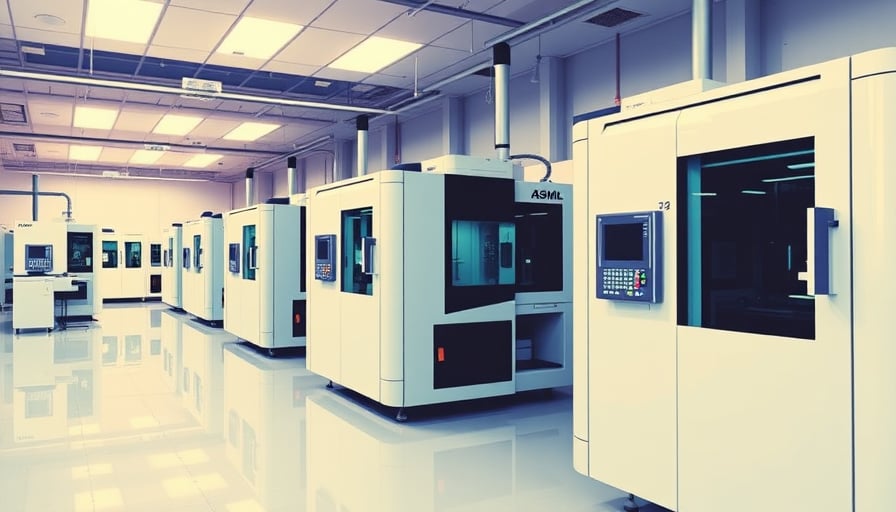
The Terafab facility is slated to fabricate 3 nm‑class logic using EUV lithography and advanced transistor scaling techniques. Intel’s historical struggles with yield at advanced nodes—particularly the 10 nm “Haswell‑EP” and 14 nm “Kaby Lake” nodes—are now being addressed through several initiatives:
| Issue | Traditional Approach | Terafab‑Aligned Solution |
|---|---|---|
| Lithography complexity | Multi‑patterning with 193 nm immersion | EUV + high‑NA EUV, reducing mask complexity |
| Defect density | Aggressive defect control on 300 mm fabs | In‑line metrology and predictive AI defect detection |
| Process integration | Separate front‑end and back‑end fabs | Integrated process flow from wafer‑to‑packaging |
By leveraging EUV and a fully integrated process flow, Terafab aims to push yields beyond 70 % for high‑performance, low‑power AI workloads—an outcome that would represent a substantial improvement over Intel’s last 10 nm yield plateau of 58 % for comparable workloads.
2. Technical Challenges of Advanced Chip Production
2.1. Sub‑5 nm Node Thermal Management
Thermal hotspots become increasingly problematic as gate lengths shrink. Terafab plans to incorporate:
- High‑k Dielectric Layers to reduce leakage and allow thinner interconnects.
- Advanced Thermal Interface Materials (TIMs) in the package to dissipate heat at the die edge.
- 3D Integrated Packaging with TSVs and micro‑bump interconnects to shorten signal paths, reducing dynamic power.
2.2. Process Control for Complex AI Workloads
AI processors demand high memory bandwidth and mixed‑precision compute units. Terafab’s approach includes:
- Mixed‑mode Simulation to predict EM/IR drops in deep‑submicron interconnects.
- Adaptive Process Control (APC) that adjusts ion‑implant dose in real time based on in‑situ measurements.
- Machine‑learning‑driven Metrology to flag potential defect clusters before wafer shipment.
2.3. Packaging Innovation
The use of System‑in‑Package (SiP) technology enables the integration of CPUs, GPUs, and neural‑network accelerators on a single substrate. This not only reduces interconnect length but also aligns with Tesla’s and SpaceX’s need for highly integrated, low‑mass systems.
3. Capital Equipment Cycles and Foundry Capacity Utilization
The semiconductor capital‑expenditure cycle traditionally spans 18–24 months from concept to production. Terafab’s phased rollout—starting with a 200 mm test line and scaling to a full 300 mm line—aligns with Intel’s internal cadence:
- Phase 1 (0–12 months): 200 mm test line, EUV training, and yield optimization.
- Phase 2 (12–24 months): 300 mm line, integration of high‑NA EUV, and volume production of 3 nm AI cores.
- Phase 3 (24–36 months): Full scale, with a focus on packaging and supply chain stabilization.
Capacity utilization is projected at 70–80 % once the full line is operational, driven by the high demand for AI accelerators in cloud data centers and autonomous vehicle systems. Intel’s existing 300 mm fabs, although previously underutilized, are poised to be repurposed for Terafab, reducing the capital burden compared to building a new facility from scratch.
4. Interplay Between Chip Design Complexity and Manufacturing Capabilities
Modern AI workloads push design complexity to new heights—requiring:
- Large‑Scale Parallelism (hundreds of thousands of cores).
- Low‑Latency Data Paths for real‑time inference.
- Custom Instruction Sets for matrix operations.
Manufacturing must keep pace through:
- High‑Density Interconnects enabled by TSVs and advanced packaging.
- Low‑Power Techniques such as power gating and dynamic voltage scaling.
- Robust Design‑for‑Manufacturing (DFM) Practices that anticipate lithographic constraints.
Intel’s long‑standing expertise in logic design and its new focus on process‑driven optimization will allow it to align its design methodologies with Terafab’s capabilities, ensuring that silicon can meet the stringent performance and reliability targets set by Tesla and SpaceX.
5. Broader Market and Geopolitical Context
Intel’s move into Terafab occurs against a backdrop of:
- Geopolitical Tensions in the Middle East that have recently dampened investor sentiment.
- A Resilient U.S. Semiconductor Supply Chain, reinforced by recent government incentives for domestic manufacturing.
- Competitive Pressure from Nvidia’s DGX systems and AMD’s EPYC processors, which dominate AI workloads.
By partnering with Musk’s vertically integrated ecosystem, Intel can secure a high‑volume, high‑value customer base while simultaneously revitalizing its foundry capabilities. This strategy not only promises immediate revenue streams but also positions Intel to influence future standards in AI chip architecture and manufacturing.
6. Conclusion
Intel’s participation in the Terafab project represents a strategic convergence of advanced node technology, yield optimization, and integrated manufacturing. By addressing the technical challenges of 3 nm AI chip production—thermal management, process control, and packaging innovation—Intel seeks to regain its competitive edge in the high‑performance semiconductor sector. The anticipated capital‑equipment cycles and high foundry utilization underscore the long‑term nature of this investment, while the alignment between design complexity and manufacturing capability signals a holistic approach to future AI chip development. For investors and industry observers alike, Intel’s trajectory in Terafab will be a pivotal indicator of the broader semiconductor market’s resilience and innovation pace.