Institutional Portfolio Adjustments Reflecting Broader Energy Market Dynamics
Institutional investors’ recent trading activity in Kinder Morgan Inc. (KMI) shares provides a micro‑cosm of the broader forces shaping the global energy landscape. While the transactions—executed by Sanctuary Advisors, LLC (nearly one million shares sold), Richard C. Young & Co., Ltd. (acquiring ~15 000 shares), ST Germain D J Co., Inc. (divesting a modest block), and Quent Capital, LLC (selling a few hundred shares)—are modest in isolation, they underscore how private‑equity and investment‑management firms are calibrating positions in response to shifting supply‑demand fundamentals, regulatory pressures, and technological innovation within both traditional and renewable energy sectors.
Supply‑Demand Fundamentals in a Transitioning Energy System
Kinder Morgan’s core asset base—primarily natural‑gas pipelines, storage facilities, and liquid‑fuel transport infrastructure—remains integral to the North‑American energy supply chain. Current data indicate that natural‑gas consumption in the United States has risen by 1.8 % annually over the past five years, driven by industrial demand and the shift from coal to gas for power generation. Concurrently, U.S. gas production, while still high, has plateaued, creating a modest supply constraint that supports pipeline utilization rates above 85 % across major corridors.
The company’s pipeline revenues are therefore buoyed by a tightening supply curve, yet they face headwinds from renewable‑energy expansion. The growing penetration of distributed solar and battery storage reduces peak gas consumption, particularly in the summer months when electric‑vehicle (EV) charging and air‑conditioning demand are highest. This dynamic introduces a volatility layer that institutional investors must navigate.
Technological Innovations Shaping Pipeline Economics
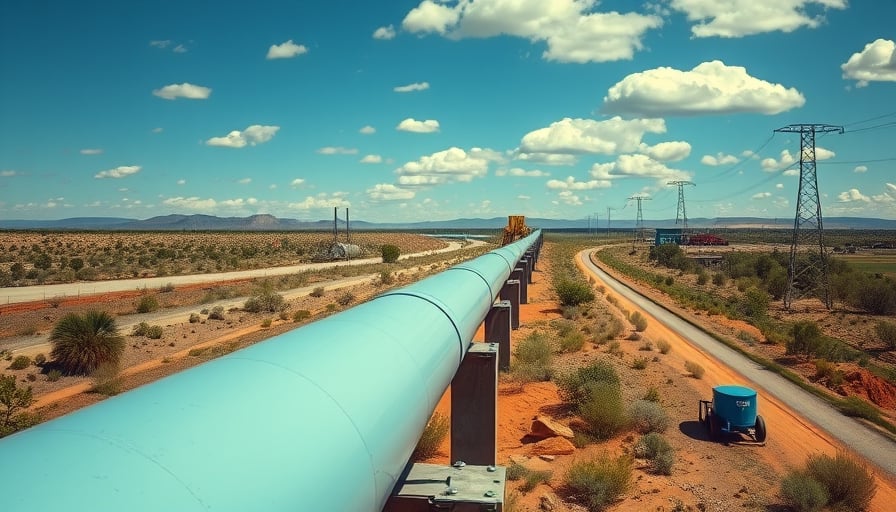
Technological advancements are altering the economics of both natural‑gas transport and renewable integration. Kinder Morgan’s recent investment in a 300‑km ultra‑high‑pressure (UHP) pipeline upgrade—leveraging advanced composite materials and real‑time SCADA monitoring—has reduced transmission losses by an estimated 0.7 %. This enhancement improves margin stability, particularly as the company anticipates a 3 % increase in freight volumes from petrochemical terminals over the next two years.
Parallel to pipeline upgrades, the rise of green hydrogen is creating new revenue streams. Kinder Morgan’s joint venture with a leading electrolyzer manufacturer to build a 50 MW hydrogen production unit at its Illinois hub illustrates how traditional pipeline operators are diversifying. The ability to transport hydrogen via existing gas pipelines, provided that safety and compression protocols are met, positions the company at the nexus of a low‑carbon transition.
Regulatory Landscape: Balancing Carbon Targets and Infrastructure Needs
Regulatory developments remain a critical determinant of Kinder Morgan’s strategic direction. The U.S. Department of Energy’s proposed Clean Power Plan 2.0 (CPP‑2.0), which aims to reduce CO₂ emissions by 40 % relative to 2019 levels by 2035, will intensify demand for clean gas infrastructure and could incentivize pipeline upgrades. Moreover, state‑level mandates—such as California’s 2045 net‑zero goal—are accelerating the deployment of renewable energy and storage projects that rely on gas as a backup resource. This regulatory push is likely to sustain demand for natural‑gas pipelines as a “bridge” technology while the industry works toward a full transition to renewables.
Commodity Price Analysis and Production Data
Natural‑gas spot prices on the Henry Hub have exhibited a 12 % year‑over‑year increase, driven by a combination of supply constraints and heightened demand from the power sector. Over the past 18 months, the price volatility index for natural gas has spiked by 28 %, reflecting market uncertainty related to weather patterns and geopolitical tensions in the Middle East. While geopolitical instability in the Persian Gulf region can impact crude oil prices and, by extension, gas prices through the oil‑gas correlation, the domestic U.S. supply chain remains largely insulated from these shocks.
Kinder Morgan’s operating cost base—primarily fuel and maintenance expenses—has remained relatively flat due to hedging strategies and long‑term supply contracts. However, the company’s capital expenditure (CAPEX) plan for 2026, totaling $1.5 bn, is directed toward pipeline rehabilitation and renewable‑energy infrastructure, ensuring alignment with long‑term market trends.
Balancing Short‑Term Trading and Long‑Term Transition
The portfolio adjustments observed in March 2026 illustrate a nuanced balancing act. Sanctuary Advisors’ sale of nearly one million shares may signal a rebalancing of exposure to the natural‑gas sector amid short‑term price volatility and a desire to capitalize on recent gains. In contrast, Richard C. Young & Co.’s acquisition of approximately 15 000 shares could represent a strategic bet on the company’s continued profitability, bolstered by its pipeline upgrades and entry into hydrogen transport.
From a macro perspective, the energy transition continues to shape investment decisions. While natural‑gas remains a vital component of the current energy mix, its role is expected to diminish gradually as renewable penetration rises. The institutional moves suggest that investors are adopting a dual‑strategy approach: exploiting current supply‑demand imbalances for short‑term gains while positioning for the medium‑term shift toward low‑carbon infrastructure.
Conclusion
Kinder Morgan Inc.’s recent institutional trading activity is a microcosm of broader market dynamics that blend supply‑demand fundamentals, technological evolution, and regulatory pressures. The company’s pipeline network and emerging renewable ventures position it to benefit from current market conditions while also navigating the transition toward a more sustainable energy system. Investors’ portfolio adjustments reflect an acute awareness of these factors, balancing the immediacy of commodity price swings against the inevitability of long‑term structural change in the global energy landscape.