ING Group’s Third‑Quarter Report: A Surface‑Level Upswing Over Deeper Turbulence
In its most recent quarterly filing, ING Group disclosed a modest uptick in earnings, attributing the improvement largely to higher net interest income and fee‑based revenue. Net interest income climbed 15 %, while fee and commission income grew by just under 10 %. Total income for the quarter rose 5.6 %, and the net result increased 3.5 % to €1.85 billion.
Yet a deeper examination of the numbers reveals a pattern of uneven progress and a cautious stance on future profitability. Provisioning for loan losses was higher than in the previous year—a sign that credit quality may be under strain—yet the overall earnings gain fell short of analyst expectations. The discrepancy between headline growth and underlying risk suggests that the bank’s recent performance may be more fragile than the surface statistics indicate.
Restructuring the Wholesale Banking Unit
In an effort to tighten its cost base, ING announced a global restructuring of its wholesale banking arm. The plan targets the elimination of approximately 400 jobs and foresees €75 million in annual savings by 2028. While the cost‑saving target is ambitious, the announcement raises questions about the broader implications for ING’s service capabilities and client relationships.
- Job Cuts and Service Impact – Will the reduction in personnel compromise the bank’s ability to deliver complex wholesale solutions? The company has not yet disclosed how it will mitigate potential service gaps.
- Timing of Savings – The projected €75 million savings spread over five years may be too conservative given the scale of the workforce reduction. A more aggressive savings timeline could signal a deeper strategic realignment.
Dividend and Share‑Buyback Programmes
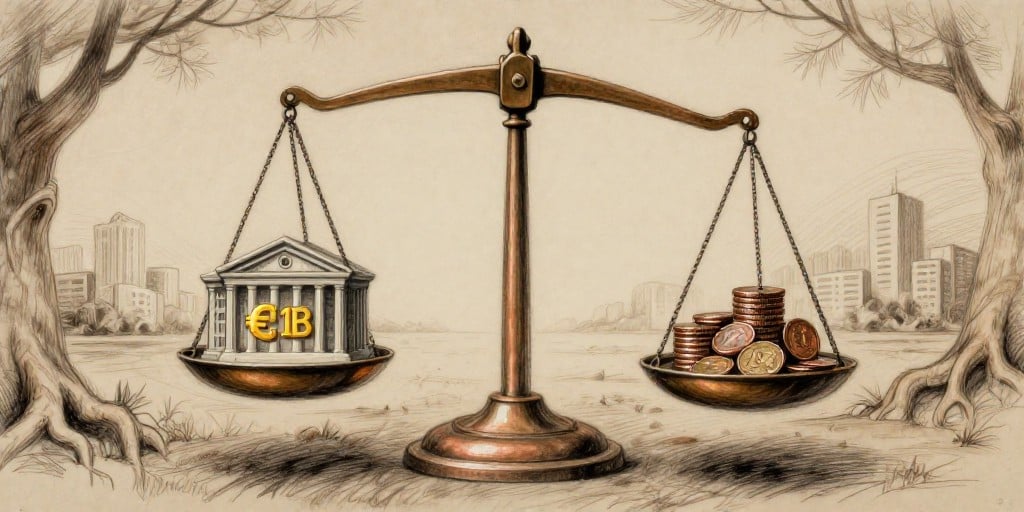
Concurrently, ING approved a dividend and share‑buyback programme, allocating up to €1.9 billion for shareholder returns. On the surface, this move appears to reward investors for a period of stable earnings. However, the decision to divert capital in this manner invites scrutiny:
- Capital Allocation – Is the allocation of €1.9 billion for shareholder returns at odds with the bank’s need to build a stronger balance sheet amid rising provisioning costs?
- Signal to Markets – The buy‑back may be interpreted as a sign that ING’s management believes its shares are undervalued, yet the modest share price decline of nearly 2 % in after‑hours NYSE trading suggests market participants are not entirely convinced.
Market Context and Broader Trends
ING’s share price slipped slightly after the announcement, reflecting a broader malaise in the European banking sector. Several banks reported weaker quarterly figures, contributing to a modest decline in the Stoxx Europe 600 Banks index. The euro, meanwhile, has hovered near its weakest levels in recent months, amplifying investor caution ahead of the European Central Bank’s forthcoming policy meeting.
The currency environment places additional pressure on ING’s earnings, especially given its significant exposure to international interest rate movements. A weak euro could erode net interest margins if the bank is unable to adjust deposit rates at the same pace as borrowing costs.
Strategic Moves and Potential Consolidations
CEO Steven van Rijswijk has positioned ING as a player open to consolidation opportunities, while emphasizing organic growth and targeted acquisitions. Recent steps include:
- Acquisition of a 40 % stake in Spain’s Singular Bank – This move aims to deepen private‑banking capabilities in the Iberian market, yet the stake’s minority status raises questions about the bank’s influence on strategy and operations.
- Full ownership of the Polish asset‑management arm of Goldman Sachs – By securing complete control of this subsidiary, ING seeks to broaden its product offering, but it also inherits the complexities of a foreign asset‑management operation amid regulatory scrutiny.
These acquisitions suggest a strategy of incremental expansion rather than outright takeover, potentially limiting the bank’s ability to fully integrate new entities and realize synergies.
Human Impact and Accountability
The proposed job cuts in the wholesale banking division will have real consequences for employees and their families. While ING frames the restructuring as a cost‑saving measure to strengthen its competitive position, it has not provided a clear plan for redeployment or severance. Transparency on this front would enhance the bank’s credibility and demonstrate accountability to its workforce.
Additionally, the higher provisioning for loan losses indicates a growing risk of credit defaults. If these provisions continue to rise, the bank’s profitability may erode further, affecting dividend payouts and shareholder returns. Stakeholders—particularly depositors and employees—warrants a more thorough disclosure of risk management strategies.
Conclusion
ING Group’s latest quarterly results paint a picture of modest earnings growth set against a backdrop of rising credit risk, aggressive cost‑cutting, and a heavy focus on shareholder returns. While the bank’s strategic acquisitions and openness to consolidation signal ambition, the lack of clarity on how these moves translate into sustained profitability leaves room for skepticism. In an environment where the euro weakens, regulators remain vigilant, and the banking sector faces tightening margins, ING’s future will likely hinge on its ability to balance cost efficiency with robust risk management and transparent communication to all stakeholders.