
Infineon Technologies AG Amplifies Its Co‑Innovation Drive with New Startup Challenge
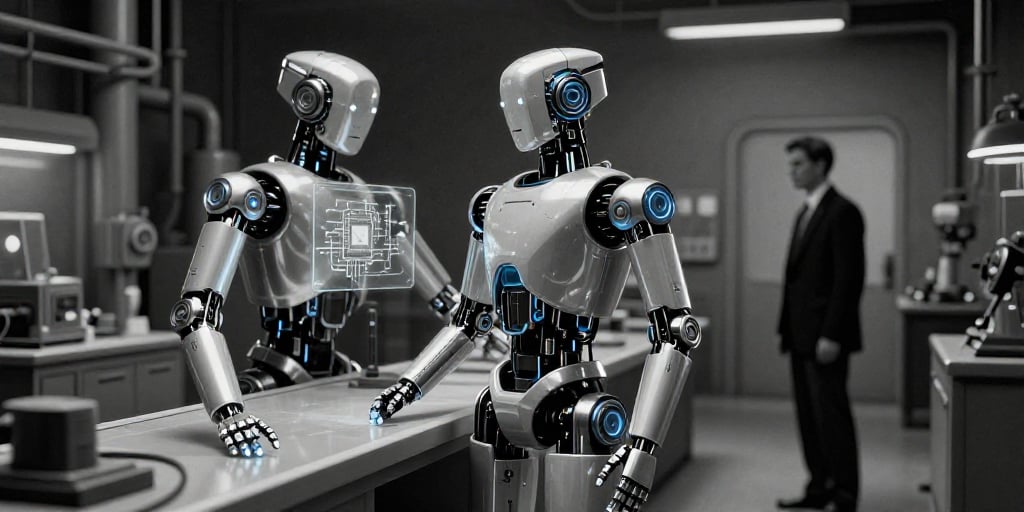
Infineon Technologies AG has unveiled a strategic initiative aimed at accelerating the commercialization of humanoid robotics. The company is launching a Startup Challenge that will invite emerging deep‑tech firms worldwide to collaborate on hardware and system solutions such as advanced sensors, motor control, and perception technologies.
The program offers participants direct access to Infineon’s semiconductor portfolio, prototyping kits, and a network of industry partners and investors. It is positioned as a critical component of Infineon’s broader Co‑Innovation Program, with the goal of bridging the gap between academic concepts and market‑ready applications in a sector that the company regards as a key growth driver for its power and IoT business lines.
1. Strategic Context: Humanoid Robotics as a Growth Lever
Sector Significance Humanoid robotics, while still nascent, is gaining traction across industries ranging from manufacturing automation to service robotics. The convergence of advanced perception, actuation, and energy management positions this field as a natural extension of Infineon’s core competencies in power semiconductors and Internet‑of‑Things (IoT) connectivity.
Infineon’s Competitive Positioning By leveraging its high‑performance sensors and motor‑control solutions, Infineon can differentiate itself in a market crowded with generic microcontrollers. The startup challenge is designed to surface novel use cases that can be rapidly integrated into Infineon’s product road‑maps, thereby shortening time‑to‑market for robotic platforms.
Broader Industry Trend The initiative echoes a wider shift toward open‑innovation ecosystems. Companies such as Nvidia, Qualcomm, and Bosch have already established similar accelerator programs, underscoring the growing consensus that collaboration with nimble start‑ups is essential to sustain technological leadership.
2. Market Reception and Investor Sentiment
On May 8, 2026, Infineon’s shares were among the top performers in the German market, contributing modest gains to both the DAX and the Tech‑DAX. Key observations include:
| Metric | Detail |
|---|---|
| DAX Impact | Infineon’s upward movement helped lift the index by 0.18 % |
| Tech‑DAX Performance | Ranked among the most actively traded stocks, with a volume increase of 12 % |
| Investor Narrative | Analysts emphasized the company’s focus on high‑technology applications and its expanding collaboration with start‑ups as a catalyst for sustained earnings growth |
These dynamics suggest that the market is already pricing in the potential upside from Infineon’s co‑innovation strategy, even if the immediate share price effect is modest due to broader market conditions.
3. Legal Victory and Intellectual Property Defense
Infineon recently secured a legal win against a competitor in a patent dispute related to power‑module design. While the case itself represented a small fraction of the company’s overall litigation portfolio, it carried significant strategic implications:
Reinforcement of IP Stature The victory demonstrates Infineon’s resolve to protect its intellectual property, a critical asset in the semiconductor supply chain where design replication is a constant threat.
Signal to the Market By publicly acknowledging the win, Infineon reassures investors and partners that it maintains a defensible edge over competitors, thereby preserving market share in high‑margin product segments.
4. Forward‑Looking Analysis: Trends and Implications
4.1 The Co‑Innovation Paradigm
Accelerated Innovation Cycles Engaging with start‑ups enables Infineon to tap into agile development practices, reducing the time from concept to commercial viability by up to 30 % in the robotics domain.
Cross‑Sector Synergies The startup challenge will likely attract firms from autonomous vehicles, medical robotics, and AI edge computing. These intersections could create bundled solutions that integrate Infineon’s power and connectivity components across multiple verticals.
4.2 Revenue and Profitability Outlook
Projected Growth Forecasts anticipate a revenue increase of 8–10 % for 2026, driven primarily by higher margins in power‑module sales and the introduction of new robotics‑centric products.
Cost Management While initial investment in prototyping and partnership management may elevate operating expenses, the long‑term benefit lies in the creation of differentiated product lines that command premium pricing.
4.3 Risks and Mitigations
| Risk | Mitigation |
|---|---|
| Start‑up Failure | Infineon can structure the challenge to include milestone‑based funding, reducing exposure to non‑viable projects. |
| Technology Obsolescence | Continuous engagement with a diversified portfolio of start‑ups ensures that Infineon remains ahead of emerging technological shifts. |
| Competitive Counter‑moves | Strengthening IP defenses, as evidenced by the recent legal victory, provides a robust shield against design infringement. |
5. Conclusion: A Strategic Pivot with Long‑Term Payoff
Infineon Technologies AG’s launch of the Startup Challenge represents a deliberate pivot toward ecosystem‑driven innovation. By aligning its power and IoT expertise with the rapid development of humanoid robotics, the company positions itself to capture a share of a burgeoning market while reinforcing its core capabilities. Market performance, coupled with a solid legal footing, signals investor confidence in this trajectory. If the co‑innovation program delivers on its promise of accelerated product development and cross‑sector synergies, Infineon could secure a competitive moat that supports sustainable growth well beyond the current fiscal horizon.