Corporate Dynamics in the Industrial Sector: An Analysis of Capital Investment and Market Response
London’s trading session opened with the FTSE 100 largely unchanged, reflecting a broader focus on macro‑economic signals and sectoral activity rather than idiosyncratic corporate developments. Within this context, Rolls Royce Holdings, a constituent of the FTSE 100 and a benchmark for industrial and engineering peers, recorded a modest decline during the morning session. The movement mirrored a broader pattern of volatility across the index and aligned with the behaviour of comparable companies such as Babcock International. The industrial sector, in turn, received a modest lift from the broader manufacturing backdrop, signalling sustained confidence in heavy‑industry outputs.
Market Forces and Index Performance
In Europe, the STOXX 50 moved into positive territory, buoyed by gains in key constituents including Rolls Royce. The index’s performance was underpinned by solid earnings from major industrial players and a rebound in commodity‑linked shares after a period of oil‑price weakness. The parallel movements of Rolls Royce in both UK and European indices underscore its continued relevance to investors tracking the industrial and defence sub‑sector, even as the firm itself released no significant operational or earnings guidance for the period.
Capital Expenditure Trends in Heavy Industry
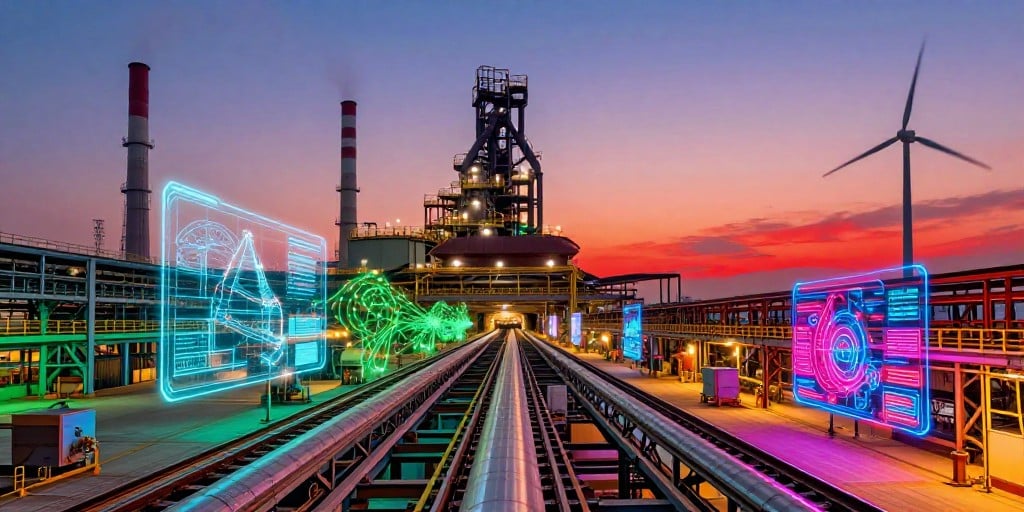
Capital expenditure (CapEx) in heavy industry remains a critical driver of long‑term productivity and competitive positioning. Recent data indicate that firms in the aerospace, marine engineering, and power generation segments are allocating 8–10 % of annual revenue to CapEx, with a notable shift toward digital twin technologies, advanced robotics, and low‑emission propulsion systems. These investments aim to reduce cycle times, lower maintenance costs, and improve reliability‑centered maintenance (RCM) schedules.
From an engineering perspective, the adoption of additive manufacturing for turbine blades and 3‑D printed composite components is accelerating, allowing manufacturers to iterate designs rapidly and reduce part count. The integration of high‑resolution sensor networks and predictive analytics within production lines enhances real‑time quality control, thereby shortening the production cycle and mitigating scrap rates. Consequently, CapEx directed toward industrial Internet of Things (IIoT) platforms is expected to rise, as firms seek to embed end‑to‑end visibility across supply chains.
Supply Chain Impacts
Global supply chain disruptions—rooted in geopolitical tensions, port congestion, and component shortages—continue to exert pressure on production timelines. The reliance on long‑lead items such as specialized alloys and electronic control units magnifies the risk of bottlenecks. To counteract these risks, manufacturers are diversifying supplier portfolios and increasing on‑shore inventory buffers for critical components. Advanced procurement analytics, powered by machine‑learning models, are being deployed to forecast demand volatility and optimize inventory turnover rates.
Regulatory Environment and Infrastructure Spending
Regulatory shifts in emissions standards, particularly the European Union’s Green Deal and the United States’ Corporate Sustainability Reporting Directive, are reshaping CapEx priorities. Firms are allocating funds toward carbon capture and storage (CCS) retrofits, electrification of plant fleets, and the deployment of hybrid power generators. Additionally, government infrastructure spending, especially in the United Kingdom’s “Industrial Strategy” initiatives, provides a supportive backdrop for large‑scale plant expansions and technology upgrades. Tax incentives for renewable‑energy‑related CapEx and accelerated depreciation schedules further lower the net cost of such investments.
Economic Factors Driving CapEx Decisions
Macro‑economic variables—interest rates, inflation expectations, and currency fluctuations—play pivotal roles in shaping capital budgeting. Rising borrowing costs compress Net Present Value (NPV) of future cash flows, prompting firms to prioritize high‑return‑on‑investment projects. Conversely, periods of low‑rate environments encourage debt‑financed expansion, particularly in sectors with long‑term, stable revenue streams. Inflationary pressures on raw materials and labour costs can erode margin forecasts, leading firms to adopt hedging strategies and to invest in automation to preserve cost competitiveness.
Technical Insights into Industrial Systems
Modern heavy‑industry plants increasingly rely on distributed control systems (DCS) that integrate real‑time data acquisition with predictive maintenance algorithms. The adoption of edge computing nodes reduces latency in fault detection, enabling rapid shutdown of malfunctioning modules and preventing cascading failures. Moreover, the integration of machine‑learning‑enabled fault‑diagnostic modules into legacy supervisory control and data acquisition (SCADA) systems allows for automated anomaly detection, which is crucial in high‑availability sectors such as aerospace propulsion and nuclear power generation.
The shift toward modular production cells—where each cell can be reconfigured for different product variants—has improved throughput flexibility. By coupling these modular cells with just‑in‑time (JIT) manufacturing principles, firms can reduce work‑in‑process (WIP) inventory, thereby lowering capital tied up in unsold goods. This approach also enables rapid scale‑up or down in response to market demand fluctuations.
Market Implications
The confluence of these technological, economic, and regulatory drivers suggests a sustained upward trajectory in CapEx within the industrial sector. While short‑term volatility—exemplified by the modest decline in Rolls Royce’s share price—reflects broader market sentiment, the underlying fundamentals remain robust. Investors will continue to evaluate the balance between risk exposure (e.g., supply chain fragility, regulatory compliance costs) and the expected return from productivity gains facilitated by advanced manufacturing technologies.
In summary, the industrial landscape is witnessing a transition toward digitally integrated, low‑emission, and highly automated production ecosystems. Capital investment decisions are being calibrated against a backdrop of economic uncertainty, evolving regulatory frameworks, and the imperative to secure resilient supply chains. This strategic focus positions companies to achieve higher productivity metrics and to capture emerging market opportunities in a rapidly changing global economy.