Corporate Overview
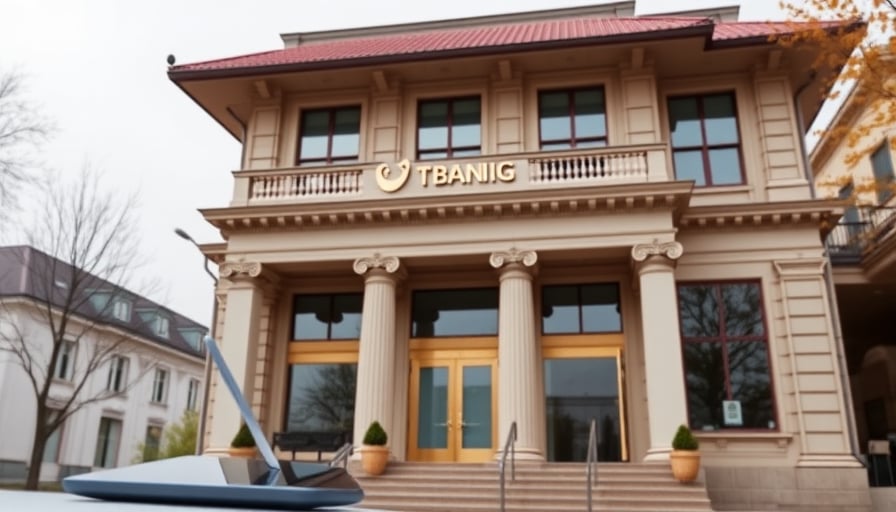
Industrial Bank Co., Ltd. (IBank), a Fujian‑based financial group listed on the Shanghai Stock Exchange, closed its March 2, 2026 trading session at 18.44 CNY. Over the preceding twelve months the bank’s share price has oscillated modestly, with a recent trough preceding the current close and a higher intra‑year peak. The firm’s market capitalization remains substantial, underscoring its entrenched position within China’s banking ecosystem.
The bank’s price‑to‑earnings (P/E) ratio, calculated on a trailing twelve‑month basis, sits below the average for the industry, suggesting a valuation that could be appealing to value‑oriented investors. No recent corporate actions, material regulatory filings, or strategic shifts have been announced; the institution continues to focus on core banking activities—deposits, lending, asset management, and foreign‑currency operations.
Market Context
Macro‑Economic Landscape
China’s domestic monetary environment remains accommodative, with the People’s Bank of China maintaining policy rates that support bank liquidity while preserving credit growth. However, the broader economic backdrop is characterized by a gradual slowdown in GDP expansion and a persistent emphasis on deleveraging, particularly in the real‑estate sector. These conditions support the continued demand for traditional banking services such as consumer and SME lending, while also elevating the risk profile of certain loan segments.
Regulatory Developments
The China Banking Regulatory Commission (CBRC) and the China Securities Regulatory Commission (CSRC) have continued to enforce stricter capital adequacy and risk‑management standards. Recent guidance on non‑performing loan (NPL) coverage and stress‑testing frameworks has intensified the pressure on mid‑sized banks to strengthen their risk buffers. Industrial Bank’s stable valuation metrics imply that the institution is likely maintaining adequate capital buffers and has not yet faced regulatory penalties or mandates that would materially disrupt its operations.
Strategic Analysis
Competitive Dynamics
Industrial Bank operates within a highly consolidated banking landscape dominated by large state‑owned banks and a growing cohort of mid‑sized private lenders. Its current focus on traditional deposit and loan products places it in direct competition with both larger peers and newer fintech‑integrated platforms. While the bank’s P/E ratio indicates potential undervaluation, its lack of diversification into digital banking or alternative finance channels could represent a missed opportunity in the rapidly evolving fintech space.
Institutional Perspective
From an institutional investor standpoint, Industrial Bank’s stable valuation and lack of recent corporate disruption reduce short‑term risk exposure. However, the institution’s heavy reliance on conventional banking products may limit upside potential in a market increasingly favoring high‑yield, technology‑enabled financial services. Long‑term investors should monitor the bank’s strategic initiatives—particularly any expansion into digital payment infrastructure, wealth‑management technology, or cross‑border financing—to gauge its ability to sustain growth amid industry transformation.
Emerging Opportunities
- Digital Transformation – Investment in core banking technology and AI‑driven credit assessment could enhance efficiency and reduce operating costs, potentially improving profit margins and shareholder returns.
- SME Financing – Targeting under‑served small‑to‑medium enterprises with tailored loan products can capture higher interest spreads while mitigating credit risk through robust monitoring tools.
- Green Finance – Participation in green bonds and sustainable lending aligns with both regulatory incentives and rising investor demand for ESG‑compliant assets.
- Cross‑Border Services – Leveraging foreign‑currency handling capabilities to support trade finance for regional exporters can open new revenue streams, especially as Belt‑and‑Road Initiative projects mature.
Long‑Term Implications for Financial Markets
- Valuation Compression – As China’s banking sector undergoes further consolidation, mid‑sized banks with strong balance sheets may see valuation compression. Industrial Bank’s current undervaluation relative to peers could be a catalyst for a rally if the institution demonstrates strategic resilience.
- Risk‑Adjusted Performance – Heightened regulatory scrutiny on capital adequacy may prompt banks to reallocate capital to higher‑yield ventures. Industrial Bank’s performance will depend on its ability to balance risk and reward in an environment with tighter capital constraints.
- Innovation Adoption – Banks that fail to innovate risk erosion of market share. Institutional investors should consider Industrial Bank’s digital roadmap, as it will be a decisive factor in long‑term competitiveness.
Executive‑Level Insights
- Investment Thesis – Industrial Bank presents a compelling entry point for value investors seeking exposure to China’s stable banking sector. However, the bank’s limited diversification and absence of a clear digital strategy may temper upside expectations.
- Strategic Recommendations – Management should prioritize investment in technology infrastructure, pursue ESG‑aligned lending programs, and explore partnerships with fintech firms to broaden its service offering.
- Risk Considerations – Monitor regulatory changes, particularly those pertaining to capital ratios and NPL provisioning. Additionally, macro‑economic headwinds could affect loan demand and profitability.
In conclusion, while Industrial Bank maintains a solid financial footing and attractive valuation, its long‑term success will hinge on its responsiveness to regulatory evolution, digital transformation imperatives, and shifting market preferences toward innovation and sustainability.