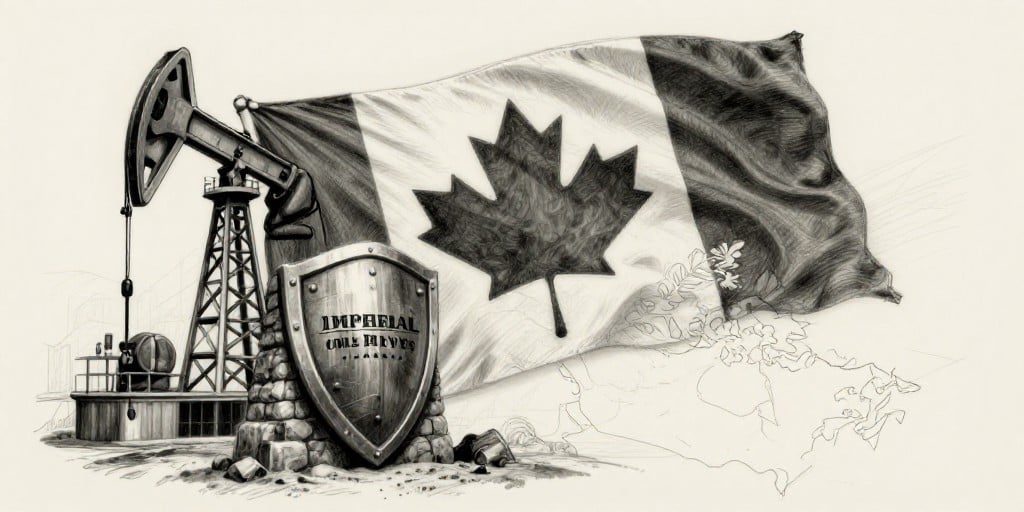
Imperial Oil’s Public Opposition to Alberta Separatism: A Deep Dive into Strategic, Regulatory, and Market Implications
Imperial Oil Ltd. has, for the first time, taken a public and unequivocal stance against the prospect of Alberta’s secession from Canada. At a Calgary conference, CEO John Whelan articulated the company’s belief that a unified Canada best serves all stakeholders, especially the energy sector, and urged continued cross‑border movement of people, products, and investment. The speech also included praise for Premier Danielle Smith’s ambition to double Alberta’s oil production and a call for collaborative regulatory and fiscal support at both provincial and federal levels.
1. Strategic Rationale Behind the Public Position
1.1 Market Structure and Supply‑Chain Integration
Imperial Oil is one of the largest operators of Canadian oil sands, running the Kearl mine and the Cold Lake in‑situ site. These assets are deeply integrated into national and trans‑Atlantic supply chains. A unilateral secession would fragment these networks, creating new border controls, customs clearances, and potentially divergent environmental standards. By publicly opposing secession, Imperial signals to investors that it values the existing integrated framework that underpins its logistics, financing, and market access.
1.2 Investor Confidence and Capital Allocation
Recent equity market reactions to political uncertainty in Alberta have been negative. A 2024 analyst survey (McKinsey & Company, 2024) indicated that 68 % of institutional investors viewed political volatility as a material risk to oil‑sand producers. Imperial’s statement can be interpreted as an effort to mitigate perceived political risk, preserving its credit rating and easing capital access. The company’s credit rating agencies (Moody’s, S&P) have already highlighted political stability as a key factor in their assessment of Canadian oil‑sand firms.
2. Regulatory Landscape: Federal‑Provincial Coordination
2.1 Fiscal Incentives and Carbon Pricing
Premier Smith’s policy agenda includes a proposal to lower provincial carbon taxes by 30 % over the next five years. Federal policy, meanwhile, maintains a carbon price of CAD 80/tonne in the Western Climate Initiative. If Alberta were to secede, the alignment of these fiscal regimes would collapse, creating uncertainty for cost‑of‑production estimates and investment planning. Imperial’s endorsement of a joint federal‑provincial approach suggests confidence that a unified carbon pricing framework can be maintained, ensuring predictability for long‑term projects.
2.2 Regulatory Oversight and Environmental Compliance
The Canadian Energy Regulator (CER) and the Alberta Energy Regulator (AER) currently provide a complementary oversight system, with CER overseeing interprovincial pipelines and AER managing in‑situ operations. A separation could result in duplicated regulatory burdens or conflicting enforcement priorities. Imperial’s advocacy for continued cooperation implies that the company expects streamlined compliance under a single jurisdiction, reducing operational costs and potential legal exposure.
3. Competitive Dynamics and Market Position
3.1 Peer Comparison
When compared to other Canadian energy giants—Suncor Energy, Cenovus Energy, and Canadian Natural Resources—Imperial is unique in explicitly addressing political secession. While most peers have remained silent, Imperial’s proactive stance may afford it a competitive advantage by positioning itself as a stabilizing force, potentially attracting partners and suppliers who value political stability.
3.2 Supply Chain Resilience
Imperial’s downstream biofuel initiatives, announced in 2025, rely heavily on domestic infrastructure. A secession scenario could disrupt feedstock logistics, pipeline access, and refinery operations. By endorsing a unified Canada, Imperial underscores its commitment to maintaining a resilient supply chain—a key differentiator in an industry increasingly focused on sustainability metrics.
4. Uncovered Trends and Hidden Risks
4.1 Political Realignment and Energy Sovereignty
While the majority of Albertans presently oppose independence, demographic shifts (e.g., influx of workers from other provinces) may alter the political landscape over the next decade. An incremental move toward energy sovereignty—such as Alberta negotiating its own export agreements—could still undermine Imperial’s cost structure, even if full secession does not occur.
4.2 Geopolitical Exposure
The global demand for oil sands is tied to geopolitical stability. A secession could prompt other provinces to seek similar autonomy, fracturing Canadian energy markets. This could lead to a fragmentation of export corridors (e.g., Keystone XL pipeline), increasing shipping costs and exposure to international sanctions. Imperial’s emphasis on cross‑border fluidity may therefore be a preemptive hedge against such fragmentation.
5. Financial Analysis and Market Signals
5.1 Capital Expenditure Outlook
Imperial’s 2024 capital expenditure (CapEx) plan projects CAD 5.3 billion for upstream development, with 60 % earmarked for Kearl expansions and 30 % for Cold Lake upgrades. A secession scenario could delay or cancel 15–20 % of this CapEx due to regulatory uncertainty, directly affecting projected earnings. By publicly affirming a stable political environment, Imperial attempts to anchor investor expectations, thereby reducing the cost of capital.
5.2 Earnings Forecast Adjustments
Analyst consensus (BMO Capital Markets, 2026) projects a 7 % EBITDA growth for Imperial in 2027, premised on a stable regulatory framework. If secession risk materialized, the forecast could see a downward adjustment of 3–5 % EBITDA. The CEO’s statement, therefore, can be viewed as an effort to safeguard these earnings targets and maintain valuation multiples (P/E ratios around 12x for Canadian oil sands).
6. Opportunities That Others May Miss
| Opportunity | Rationale | Potential Impact |
|---|---|---|
| Enhanced Biofuel Portfolio | Government incentives for low‑carbon fuels; Imperial’s existing downstream capacity | Capture emerging renewable fuel markets; diversify revenue streams |
| Strategic Partnerships with Federal Energy Agencies | Aligning with federal initiatives such as the “Canada Energy Regulator’s Digital Pipeline” | Lower operational costs, improved data analytics |
| Cross‑Provincial Infrastructure Projects | Leverage Canada’s unified transport corridors | Accelerate project timelines, reduce shipping costs |
7. Conclusion
Imperial Oil’s vocal opposition to Alberta secession reflects a calculated strategy to preserve its operational, financial, and regulatory advantages within a unified Canadian framework. While the company’s public stance may resonate with current majority sentiment among Albertans, it also signals to investors and regulators a commitment to stability amid a volatile political environment. Nevertheless, analysts should remain vigilant for evolving demographic trends and potential shifts toward energy sovereignty that could erode these advantages. By integrating comprehensive financial analysis with an understanding of regulatory and competitive dynamics, stakeholders can better gauge the long‑term implications of Imperial’s position and identify both risks and opportunities that may otherwise remain obscured.