
Idemitsu Kosan’s Strategic Maneuvering Amid Strait of Hormuz Disruptions
The Japanese refining group Idemitsu Kosan Co. Ltd. has positioned itself at the center of a complex geopolitical and commercial drama unfolding in the Persian Gulf. Recent events surrounding the transit of its very‑large‑crude‑carrier (VLCC), the Idemitsu Maru, underscore the company’s capacity to navigate an environment marked by heightened risk, shifting traffic patterns, and evolving supply‑chain imperatives.
Transit of the Idemitsu Maru – A Tactical Breakthrough
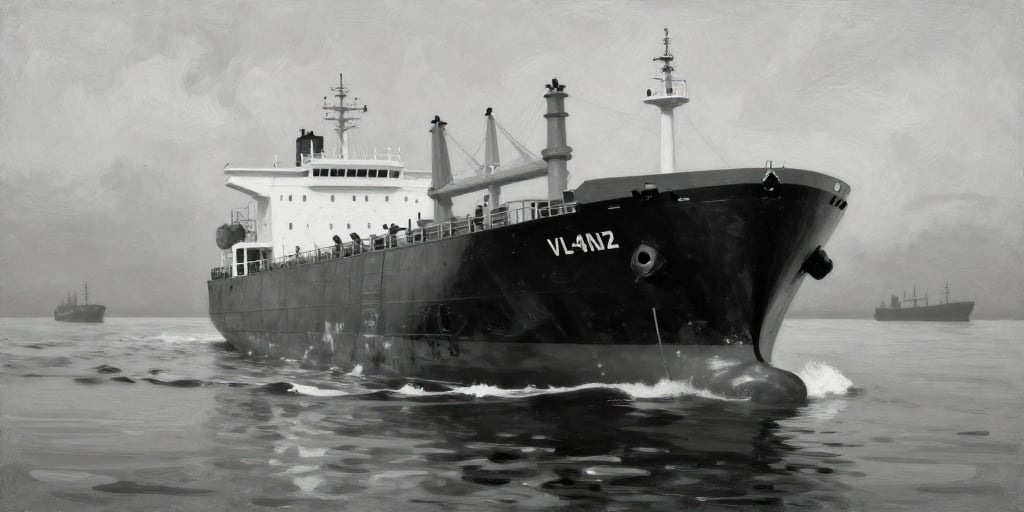
On 29 April, the Idemitsu Maru successfully crossed the Strait of Hormuz after a period of idling off the United Arab Emirates. The vessel, which was carrying Saudi crude oil, became the first Japan‑linked tanker to traverse the strait since the conflict between the United States and Iran erupted in late February. While Idemitsu Kosan declined to comment on the status of individual ships, it confirmed that the vessel was under its management.
Shipping data from LSEG and MarineTraffic reveal that the Idemitsu Maru moved eastward past Larak Island, following a route sanctioned by Iranian authorities, and reached the eastern side of the strait. This movement is significant in two respects:
- Regulatory Compliance – The route, approved by Iranian authorities, demonstrates Idemitsu’s willingness to adhere to local mandates, thereby mitigating the risk of interdiction or seizure.
- Strategic Signaling – By re‑entering the strait, the company signals to market participants its commitment to maintaining supply continuity for its Japanese clientele, even amid heightened tensions.
Resurgence of Liquefied Natural Gas (LNG) Traffic
Parallel to the Idemitsu Maru transit, a liquefied natural gas tanker operated by Abu Dhabi National Oil Co. (ADNOC) also crossed the strait, marking a notable return of traffic after a period of near‑zero transit. The simultaneous movement of crude and LNG carriers suggests a gradual normalization of shipping lanes that had been largely closed during the conflict. The return of LNG traffic is particularly relevant because many Asian countries, including Vietnam, rely heavily on LNG imports for power generation and industrial processes.
Diversification of Supply Chains – The Vietnam Initiative
In a related strategic announcement, Idemitsu Kosan declared its intention to supply Vietnam with approximately four million barrels of crude oil via non‑Hormuz routes. This decision aligns with the company’s broader strategy to diversify its supply sources in response to geopolitical tensions that have strained traditional Middle‑Eastern oil pipelines. Vietnam’s expanding refining capacity and its role as a key hub for plastics manufacturing make it a critical market for any oil supplier seeking to strengthen its presence in Southeast Asia.
Analytical Assessment
1. Fundamental Business Principles
- Risk Management – Idemitsu’s decision to manage vessels through politically volatile regions exemplifies a calculated risk profile that balances potential losses against the strategic necessity of maintaining market access.
- Supply‑Chain Resilience – Diversification of routes, as seen with the Vietnam initiative, enhances resilience against disruptions in a single geopolitical hotspot.
2. Competitive Positioning
- Market Differentiation – By re‑establishing a presence in the Strait of Hormuz, Idemitsu signals operational flexibility that may distinguish it from competitors that remain constrained to alternative, potentially higher‑cost routes.
- Strategic Partnerships – Engagement with ADNOC’s LNG operations indicates a willingness to collaborate with regional players, further embedding Idemitsu within the Gulf’s maritime ecosystem.
3. Economic Drivers
- Geopolitical Instability – Ongoing hostilities in the Middle East have disrupted traditional pipeline flows and maritime routes, raising freight rates and tightening supply.
- Regional Demand – Southeast Asian economies, especially Vietnam, have experienced sustained growth in refinery throughput, creating demand for reliable crude supplies.
- Commodity Pricing Dynamics – Fluctuations in oil and LNG prices influence route selection; lower freight costs via the Strait of Hormuz can improve margin profiles for shipping operators.
4. Cross‑Sector Connections
- Energy‑to‑Plastics Linkage – Idemitsu’s supply to Vietnam supports the broader plastics manufacturing chain, illustrating how oil logistics can underpin downstream industries.
- Infrastructure and Geopolitics – The reliance on pipeline infrastructure versus maritime routes reflects a broader debate over infrastructure resilience in the face of geopolitical uncertainty.
Conclusion
Idemitsu Kosan’s recent maneuvers—particularly the Idemitsu Maru’s transit of the Strait of Hormuz and its commitment to supply Vietnam via alternative routes—exemplify a firm adept at balancing fundamental business imperatives with the demands of an increasingly unstable geopolitical landscape. By diversifying supply channels and forging strategic partnerships, Idemitsu demonstrates a model of corporate adaptability that extends beyond the oil industry, offering insights into how businesses can navigate complex, inter‑sectoral challenges in a globalized economy.