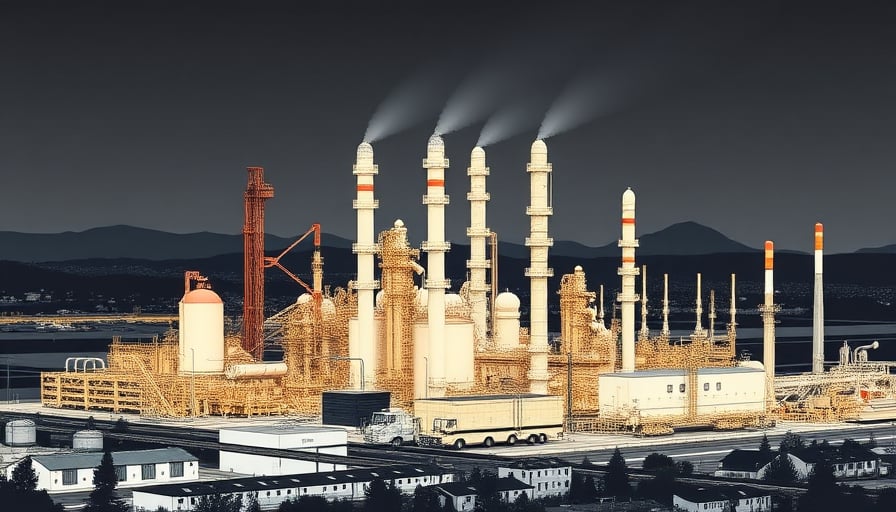
Idemitsu Kosan Co. Ltd. Extends Refinery Operations to 2030 Amid Uncertain EV Momentum
Tokyo, March 2026 – Idemitsu Kosan Co. Ltd., a long‑standing player in Japan’s petroleum and petrochemical sector, has announced that it will keep its six domestic refineries in operation through the year 2030. The decision follows an internal reassessment of the pace at which Japan is transitioning to electric vehicles (EVs) and the consequent impact on gasoline demand. The company’s statement signals a cautious stance toward refining capacity expansion, reflecting the broader market environment for oil products.
The Rationale Behind a Six‑Year Extension
Idemitsu’s board of directors cited two primary drivers for extending refinery operations:
Lagging EV Adoption: While Japan’s EV sales have accelerated in recent years, the growth rate has fallen short of early forecasts. The Ministry of Economy, Trade and Industry’s latest projections show that gasoline demand will only fall by 3.1 % per annum until 2030, compared with the 4.5 % decline anticipated in 2022 forecasts.
Commodity Price Volatility: The global oil market remains highly volatile, with Brent crude prices fluctuating between $50 USD and $80 USD per barrel in 2025. Idemitsu’s refinery portfolio, which processes 1.2 million barrels per day of crude oil, provides a buffer against supply disruptions that could otherwise impact downstream petrochemical production.
Business Fundamentals Underpinning the Decision
Capital Expenditure (CapEx) Constraints: Idemitsu’s 2025 CapEx budget is capped at ¥200 billion, a 12 % reduction from the 2024 allocation. Extending refinery operations allows the company to postpone expensive retrofit projects, such as catalytic cracking units that would enable higher-value product slates.
Margin Dynamics: Refining margins in Japan have averaged ¥9 per barrel over the past three years, a figure that has plateaued due to competitive pressures from Southeast Asian refineries offering lower operating costs. By maintaining current throughput, Idemitsu can preserve a margin floor that supports its petrochemical arm’s profitability.
Regulatory Landscape: Japan’s “Carbon Neutrality 2050” roadmap mandates that all major refining plants undergo a 30 % carbon intensity reduction by 2035. Idemitsu’s current plants are already 12 % below the target baseline, enabling a more gradual retrofit schedule without jeopardizing regulatory compliance.
Competitive Dynamics and Market Positioning
Idemitsu faces competition on multiple fronts:
| Competitor | Refining Capacity | Key Strengths |
|---|---|---|
| JXTG Nippon Oil & Energy | 1.6 million bpd | Integrated LNG supply chain |
| Sokyu Oil & Energy | 0.9 million bpd | Advanced catalytic reforming technology |
| JX Holdings | 1.2 million bpd | Strong petrochemical synergy |
While rivals have initiated mid‑term capacity upgrades, Idemitsu’s conservative stance could be interpreted as a risk‑mitigation tactic. By avoiding premature expansion, the company may preserve flexibility to pivot toward renewable fuel production if market conditions shift dramatically.
Overlooked Trends and Emerging Opportunities
Biofuels and Synthetic Fuels: Japan’s research into e‑fuel production has accelerated, with the government earmarking ¥500 billion for pilot projects. Idemitsu could leverage its refinery infrastructure to process low‑carbon synthetic hydrocarbons, creating a new revenue stream without overhauling existing plants.
Hydrogen Economy: Hydrogen demand is projected to rise by 15 % annually in the next decade. Idemitsu’s refining facilities could be retrofitted to produce low‑carbon hydrogen via steam‑methane reforming coupled with carbon capture and storage (CCS), positioning the company ahead of the market curve.
Digitalization of Operations: Integrating AI‑driven predictive maintenance could cut downtime by 10 %, improving throughput and margins. Idemitsu’s current investment in digital analytics is modest; scaling this capability could provide a competitive edge.
Potential Risks
Regulatory Shock: A sudden tightening of environmental regulations could accelerate the decline in gasoline demand, rendering the extended refinery operation unsustainable.
Supply Chain Disruptions: Geopolitical tensions in the Middle East or ASEAN could spike crude prices beyond the company’s hedging capacity.
Capital Allocation Efficiency: By keeping plants running, Idemitsu may be allocating capital to assets with diminishing marginal returns, potentially eroding shareholder value in the long term.
Conclusion
Idemitsu Kosan’s decision to maintain its six domestic refineries through 2030 reflects a careful balancing act between current market realities and future uncertainties. While the company’s cautious approach shields it from immediate downturns, it also limits its agility to capitalize on emerging low‑carbon opportunities. Investors and industry observers will need to monitor how Idemitsu navigates the evolving regulatory landscape and capitalizes—or fails to capitalize—on the nascent bio‑fuel and hydrogen markets.