
Corporate News – Technical Analysis of Power System Implications
The inclusion of IBERDROLA SA as a holding in the May 2026 portfolio of the Munro Climate Change Leaders Fund Active ETF underscores the continued confidence in the company’s contributions to renewable‑energy infrastructure. While the announcement does not disclose Iberdrola’s performance metrics or future outlook, its presence within a diversified energy‑transition and technology fund signals a broader institutional endorsement of the company’s role in advancing cleaner power generation.
Grid Stability Amidst Rapid Renewable Integration
IBERDROLA’s extensive portfolio—spanning wind farms, solar parks, and advanced hydroelectric facilities—creates a high proportion of variable renewable generation (VRG) on its transmission network. This volatility challenges traditional grid stability mechanisms, particularly frequency regulation and voltage control.
- Frequency Control: The rapid power swings associated with wind and solar output necessitate fast‑acting primary and secondary frequency regulation. Iberdrola has invested in power‑electron‑based virtual synchronous machines (VSMs) that emulate inertia and provide synthetic inertia to dampen frequency excursions.
- Voltage Support: Fluctuations in reactive power from intermittent sources can lead to voltage instability. The company’s deployment of static synchronous compensators (STATCOMs) and series FACTS devices (e.g., SVCs) across key substations helps maintain voltage profiles within permissible limits, thereby ensuring power quality for downstream consumers.
Infrastructure Investment Requirements
To accommodate the projected 2026–2035 renewable capacity additions, Iberdrola’s transmission network must undergo substantial upgrades:
- High‑Voltage DC (HVDC) Backbones: HVDC lines enable efficient long‑distance power transfer with lower losses than AC, crucial for linking remote wind and solar sites to load centers. Iberdrola’s planned 765 kV HVDC corridor between the Atlantic wind belt and the Iberian Peninsula exemplifies this strategy.
- Grid Decentralization: Enhancing distribution networks with smart grid technologies—advanced metering infrastructure (AMI), distribution automation (DA), and microgrid capabilities—allows for local load management, storage integration, and improved resilience.
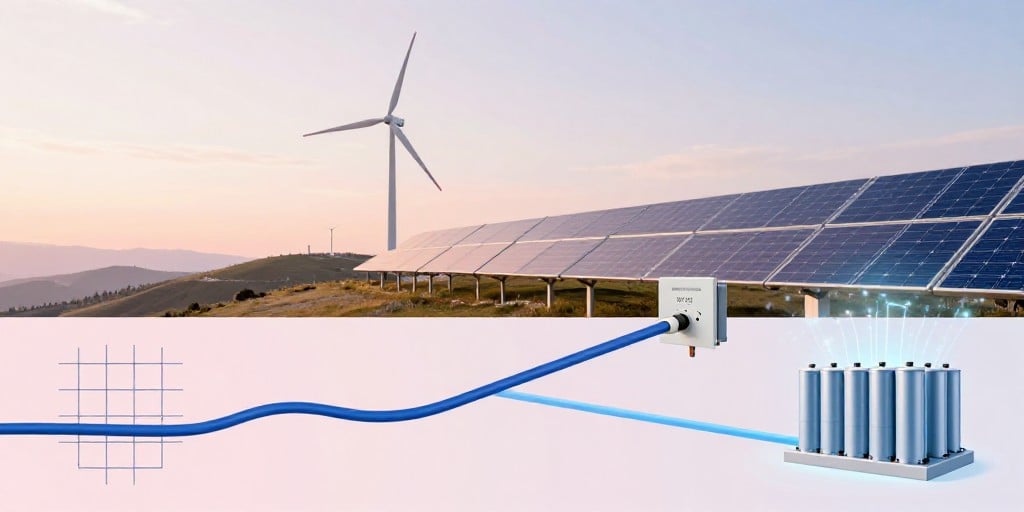
- Grid‑Scale Energy Storage: Battery Energy Storage Systems (BESS) and pumped‑hydro storage are being integrated to absorb excess generation and discharge during deficit periods, thereby smoothing the net load seen by the transmission system.
The capital intensity of these upgrades is high, but they are pivotal for maintaining system reliability and meeting regulatory targets for renewable penetration.
Regulatory Frameworks and Rate Structures
European Union (EU) directives—such as the Renewable Energy Directive II (RED II) and the Clean Energy for All Europeans package—set binding renewable energy targets and establish market mechanisms that influence utility financing. Iberdrola operates within a regulatory environment that balances:
- Grid Connection Fees (GCFs): Levied on new renewable projects, these fees contribute to grid upgrade financing. Iberdrola’s strategy includes negotiating cost‑sharing agreements with developers to streamline integration.
- Time‑of‑Use (TOU) Tariffs: By shifting consumption patterns, TOU rates incentivize end‑users to align demand with renewable generation peaks, reducing the need for peaking capacity and enhancing system efficiency.
- Renewable Energy Certificates (RECs): Iberdrola’s participation in REC markets provides an additional revenue stream that offsets the cost of renewable infrastructure expansion.
These frameworks collectively shape the utility’s investment decisions and impact consumer electricity prices.
Economic Impacts of Utility Modernization
Modernizing the power system yields both macroeconomic and microeconomic benefits:
- Job Creation: Large‑scale transmission projects and smart grid deployments generate skilled employment opportunities in engineering, construction, and operations.
- Cost Distribution: While infrastructure investments raise the upfront cost base, the long‑term benefits—lower transmission losses, reduced need for peaking plants, and higher renewable penetration—tend to lower wholesale prices.
- Consumer Costs: Transition costs are reflected in regulated tariffs, but the adoption of renewable energy can mitigate fuel price volatility, potentially stabilizing consumer bills over the long term.
IBERDROLA’s financial disclosures indicate that the company has earmarked significant reserves for grid upgrades, mitigating the risk of sudden tariff hikes. However, continuous regulatory oversight will be required to ensure that investment costs are passed equitably across consumer segments.
Engineering Insights into Power System Dynamics
- Dynamic Stability: The integration of high‑capacity VSMs and fast‑response storage systems improves the system’s damping ratios, reducing the likelihood of cascading failures during disturbances.
- Transient Performance: HVDC converters with advanced control schemes (e.g., vector control) provide precise current and voltage regulation, enhancing the ability of the grid to respond to sudden load changes.
- Cyber‑Physical Resilience: Smart grid sensors and distributed energy resources (DERs) create a cyber‑physical system that must be secured against threats; Iberdrola’s investment in cyber‑security protocols aligns with regulatory expectations under the EU NIS Directive.
Conclusion
IBERDROLA’s inclusion in a climate‑focused investment portfolio signals the sustained confidence in its capacity to navigate the technical challenges of grid stability, renewable integration, and infrastructure modernization. The company’s engineering‑driven approach—employing advanced grid technologies, aligning with evolving regulatory frameworks, and carefully managing investment economics—positions it to contribute meaningfully to the broader energy transition while maintaining reliable and cost‑effective service for consumers.