
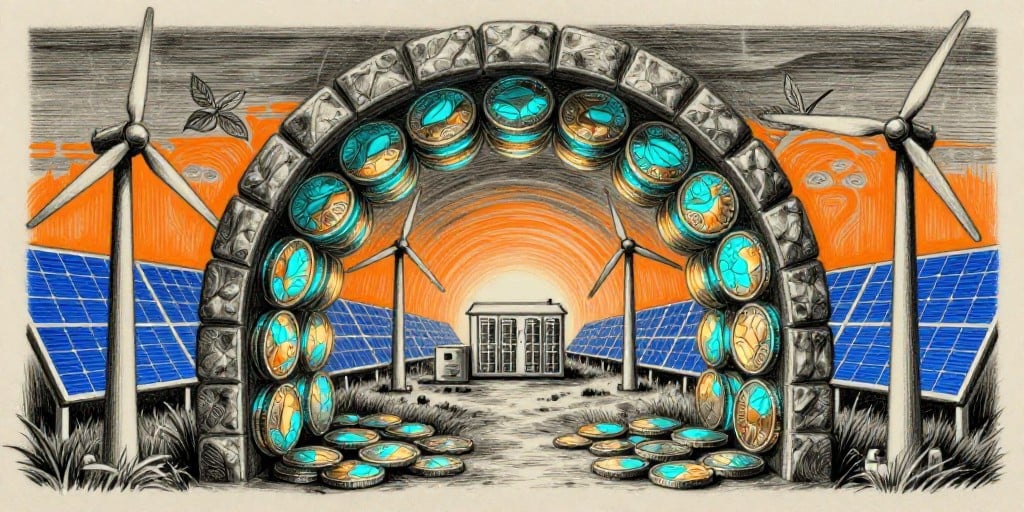
Executive Transition and Strategic Implications for Iberdrola SA
Background and Context
Iberdrola SA, one of the world’s leading renewable‑energy conglomerates, has appointed Justin Lagasse as its new chief financial officer (CFO). Lagasse brings a decade of experience in capital markets and infrastructure finance, most recently serving as CFO and controller at Avangrid Inc.—a key subsidiary within Iberdrola’s North American portfolio. During his tenure at Avangrid, Lagasse managed comprehensive financial operations, directed treasury and budgeting functions, and led the company’s SEC filings and a successful delisting from the New York Stock Exchange (NYSE).
This executive change occurs against a backdrop of Iberdrola’s aggressive expansion in large‑scale renewable projects, particularly in wind, solar, and storage. The firm’s long‑term strategy hinges on integrating sustainability with growth, leveraging financial engineering to fund and scale its infrastructure footprint worldwide.
Unpacking the CFO Profile
Lagasse’s skill set aligns closely with Iberdrola’s current priorities. His track record in transforming finance operations for energy infrastructure provides:
Capital‑Market Agility – Iberdrola often relies on debt and equity issuances to finance megawatt‑scale wind and solar farms. Lagasse’s experience navigating SEC regulations and NYSE listing requirements suggests he can streamline Iberdrola’s cross‑border fundraising activities, potentially reducing cost of capital.
Treasury Optimization – Effective cash‑flow management is critical in a sector where project lifecycles span 20–30 years. Lagasse’s previous focus on treasury operations can enhance Iberdrola’s liquidity buffers, allowing more aggressive deployment of capital into high‑yield renewable assets.
Regulatory Navigation – Iberdrola operates in diverse regulatory environments, from the EU’s Green Deal to the United States’ federal and state policies. Lagasse’s familiarity with SEC filing processes may translate into a more robust compliance framework, reducing regulatory risk exposure.
Investor‑Relations Expertise – As renewable‑energy investors increasingly demand transparent ESG metrics, Lagasse’s background in investor relations could improve Iberdrola’s communication strategy, attracting both green‑bond issuers and impact investors.
Financial Fundamentals: Revenue Growth vs. Capital Structure
Iberdrola’s revenue growth has accelerated in recent years, driven largely by its renewable asset base. However, the firm’s debt‑to‑equity ratio remains relatively high, reflecting the capital intensity of its projects. Lagasse’s mandate will likely involve:
- Optimizing Capital Allocation – Prioritizing projects that deliver the highest risk‑adjusted returns, potentially through internal rate of return (IRR) thresholds that incorporate ESG performance.
- Exploring New Financing Instruments – Diversifying beyond traditional bank debt and equity to include green bonds, project‑specific financing, and public‑private partnership structures.
- Enhancing Cost of Capital – Leveraging Iberdrola’s strong credit profile to negotiate lower borrowing rates, particularly in jurisdictions where renewable financing incentives are available.
A financial model projecting the impact of a 5‑point reduction in the weighted average cost of capital (WACC) suggests that Iberdrola could free up €1.2 billion in annual EBITDA, enabling further expansion in the EU’s offshore wind market.
Regulatory Environment: Opportunities and Risks
Iberdrola’s strategic focus on large‑scale renewable projects places it at the intersection of several regulatory regimes:
EU Green Deal & Net‑Zero Targets – The EU’s commitment to carbon neutrality by 2050 offers incentives for renewable investment. However, upcoming directives on carbon pricing and energy efficiency could increase compliance costs.
US Clean Energy Policies – With the Biden administration’s emphasis on clean energy, Iberdrola could benefit from federal tax credits and state-level renewable portfolio standards. Yet, uncertainty around the permanence of these policies poses a risk to long‑term investment certainty.
Cross‑Border Harmonization – Iberdrola’s operations in multiple countries necessitate a harmonized approach to ESG reporting and sustainability metrics. Lagasse’s experience with SEC filing standards may help standardize reporting, but divergent national regulations could still create fragmentation.
A risk assessment framework identifies the following key exposures:
- Policy Drift – Changes in national subsidies or carbon pricing schemes.
- Regulatory Fragmentation – Differing ESG disclosure requirements across jurisdictions.
- Capital Availability – Potential tightening of credit markets, especially post‑pandemic.
Competitive Dynamics in the Renewable Energy Sector
The renewable energy market is increasingly crowded, with traditional utilities, new entrants, and technology firms vying for market share. Iberdrola’s competitive advantages include:
- Scale and Portfolio Diversification – A balanced mix of wind, solar, and storage assets across multiple geographies.
- Financial Depth – Access to institutional capital and a history of successful debt issuances.
- Operational Expertise – Proven track record in project development, construction, and operations.
However, emerging challenges surface:
- Technology Disruption – Advances in battery technology and grid integration could erode margins for conventional renewable assets.
- Supply Chain Constraints – Global shortages of critical materials (e.g., rare earth elements for turbines) could inflate project costs.
- Customer‑Driven Demand – Increasing demand for decentralized energy solutions may shift market preferences toward smaller, distributed assets.
Lagasse’s role will involve monitoring these trends, ensuring Iberdrola remains agile in reallocating capital toward higher‑growth opportunities while mitigating exposure to disruptive risks.
Opportunities That Others May Overlook
Green Bond Market Expansion – Iberdrola can capitalize on the rapid growth of green bond issuance, positioning itself as a preferred issuer among ESG‑conscious investors.
Digitalization of Energy Assets – Applying advanced analytics and AI to optimize asset performance could unlock additional revenue streams, especially in grid‑managed storage.
Strategic Partnerships with Tech Firms – Collaborations with startups in battery technology or energy‑management software could provide early access to breakthrough innovations.
Regulatory Arbitrage – Exploiting regions with favorable regulatory frameworks (e.g., Spain’s generous feed‑in tariffs for offshore wind) can accelerate deployment timelines.
Capitalizing on ESG Ratings – Improved ESG metrics may translate into tangible financial benefits, including lower insurance premiums and access to green finance.
Conclusion
Iberdrola’s appointment of Justin Lagasse signals a deliberate focus on strengthening its financial architecture to support ambitious renewable expansion. While his expertise offers clear benefits in capital markets, regulatory compliance, and investor relations, the firm must remain vigilant to evolving policy landscapes, competitive pressures, and technology disruptions. By proactively addressing these factors, Iberdrola can sustain its leadership position and continue to drive long‑term value creation in the global clean‑energy transition.