
Iberdrola Accelerates European Charging Network Expansion
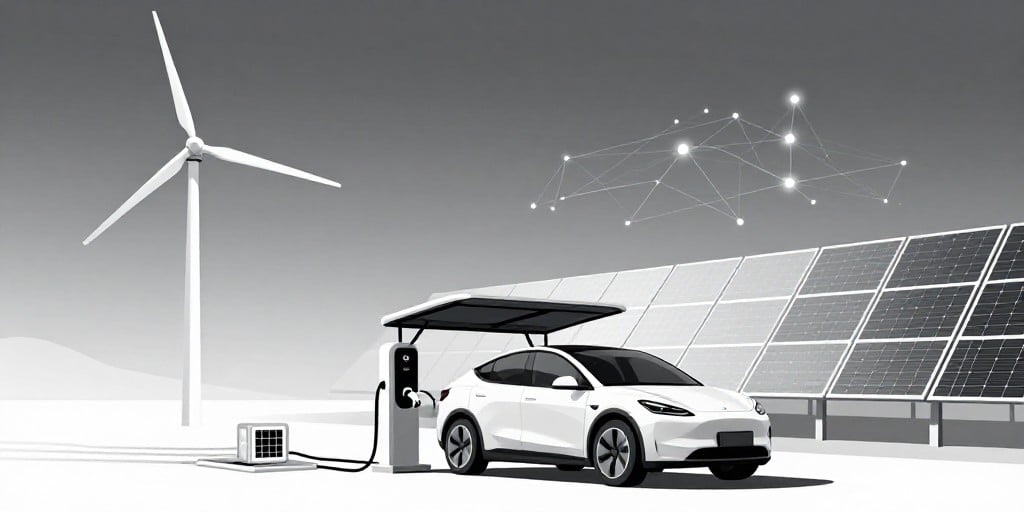
Iberdrola, the Spanish multinational utility, is extending its electric‑vehicle (EV) charging infrastructure throughout Spain and across additional European markets. The company’s strategy positions it as a comprehensive infrastructure partner that connects renewable generation assets, grid management capabilities, and digital services.
Strategic Focus on High‑Capacity, Corridor‑Based Fast Charging
Central to Iberdrola’s expansion is the deployment of fast‑charging stations along major transport corridors. By concentrating on high‑capacity points of use, the utility seeks to reduce range anxiety for commercial and private EV operators alike. In parallel, Iberdrola is integrating residential charging solutions, thereby broadening the usability of electric mobility across diverse consumer segments. This dual approach aligns with the broader trend among large European utilities that are allocating significant capital to meet the surging demand for EV infrastructure as vehicle adoption accelerates.
Alignment with Macro‑Sector Dynamics
The company’s move reflects several fundamental business principles that transcend industry boundaries:
| Factor | Corporate Implication | Economic Context |
|---|---|---|
| Renewable Generation | Enables monetization of existing generation assets through ancillary services | Growing EU renewable targets |
| Grid Management | Enhances grid stability by balancing demand peaks | Aging grid infrastructure and integration challenges |
| Digital Services | Creates data‑driven revenue streams and improves customer engagement | Increasing importance of data analytics in utilities |
By integrating these elements, Iberdrola strengthens its competitive positioning against peers that rely solely on traditional generation or distribution models.
Acquisition in Finland and Policy Debates
In a parallel development, Iberdrola announced the acquisition of a majority stake in one of Finland’s largest grid operators. The transaction has ignited a vigorous debate among Finnish political stakeholders regarding the ownership of critical infrastructure. Both the governing coalition and opposition parties have called for a comprehensive review of the ownership structure, citing concerns over foreign control, market dominance, and consumer protection.
The Finnish debate echoes long‑standing discussions in the country’s energy sector, where the balance between foreign investment and domestic sovereignty remains a central policy issue. The controversy underscores the broader theme of how multinational utilities navigate market power and regulatory oversight in regions with stringent public interest safeguards.
Cross‑Sector Implications
Iberdrola’s dual focus on EV charging and grid ownership highlights a broader convergence between the transportation and energy sectors. As electrification of mobility continues, utilities that can seamlessly integrate generation, grid, and digital platforms will command a competitive advantage. The Finnish case illustrates the regulatory risks that accompany cross‑border acquisitions, especially in highly regulated, infrastructure‑heavy industries.
Outlook
With the EU’s commitment to decarbonization and the rapid growth in EV adoption, Iberdrola’s expansion of charging infrastructure positions it favorably within an evolving market. Simultaneously, the Finnish acquisition serves as a reminder that strategic growth initiatives must be weighed against political, economic, and regulatory landscapes to maintain long‑term sustainability and stakeholder trust.