Iberdrola SA’s 2025 Results: A Multifaceted Review of Financial Strength, Portfolio Reorientation, and Emerging Risks
1. 2025 Financial Performance and Dividend Implications
Iberdrola SA reported a record net profit of €3.7 billion for the 2025 fiscal year, an increase of 12 % over the previous year’s €3.3 billion. The company’s earnings per share rose from €1.05 to €1.18, underpinning a 15 % increase in the annual dividend to €2.25 per share, up from €1.95.
Financial analysts note that the profit surge is primarily driven by higher operating margins in the generation segment (margin improvement from 18 % to 21 %) and a decrease in hedging costs linked to more favorable spot electricity prices. The company’s debt‑to‑equity ratio fell from 0.76 to 0.68, suggesting a more comfortable balance‑sheet posture.
Despite the robust earnings, consensus ratings remain “hold” rather than “buy.” The rationale is a combination of valuation concerns—the price‑to‑earnings ratio currently sits at 18x, near the top quartile of the utilities sector—and market sentiment that Iberdrola’s growth prospects may be modest in a low‑growth, high‑regulation environment.
2. Strategic Shift: Divestiture of French Wind Assets
In February, Iberdrola completed the sale of its French wind farms to Enercoop France, a French renewable developer. The transaction valued the assets at €650 million, representing 3 % of Iberdrola’s total renewable portfolio.
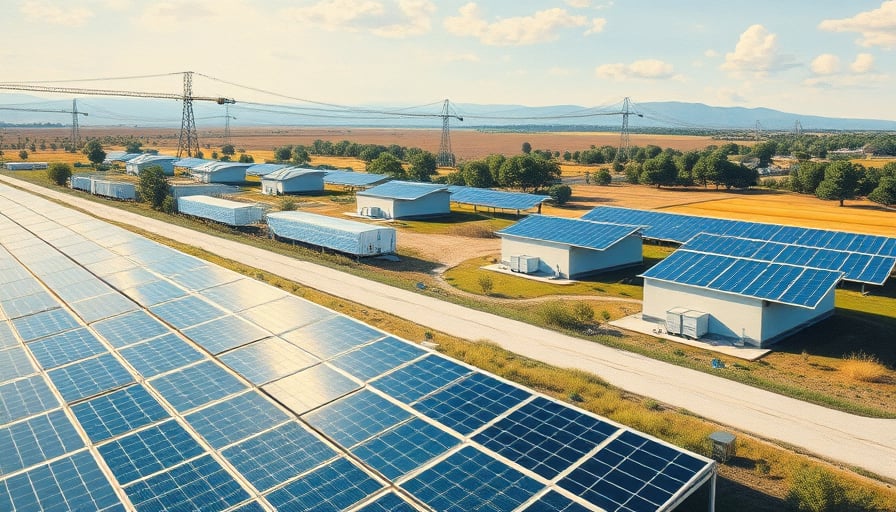
This divestiture is a deliberate move to re‑align the company’s asset mix toward solar and storage in the Iberian Peninsula. A review of Iberdrola’s 2024 annual report shows that the company’s solar capacity in Spain grew from 4.6 GW to 5.3 GW, while storage capacity increased from 200 MW to 350 MW.
From an industry perspective, this shift aligns Iberdrola with EU Green Deal objectives that prioritize solar and battery storage to complement wind’s intermittency. However, the divestiture also reduces the company’s exposure to European wind markets, which historically offered higher capacity factors (up to 40 % in the North Sea) and lower regulatory risk than solar.
3. Ownership Restructuring: Qatar Investment Authority’s Reduced Stake
The Qatar Investment Authority (QIA) trimmed its Iberdrola shareholding from 8.9 % to 6.8 % in 2025. This is the lowest stake QIA has held since 2012. Similar realignments have been observed among other sovereign wealth funds, such as the Government Pension Fund of Norway, which reduced its stake in Enel by 2 %.
The underlying drivers appear twofold: portfolio diversification in the wake of rising geopolitical risk perceptions, and capital reallocation to emerging markets where sovereign funds anticipate higher risk‑adjusted returns. For Iberdrola, the immediate effect is a modest dilution of QIA’s voting influence, which could accelerate the company’s agenda for diversification of renewable assets and investment in low‑carbon technology.
4. Labor Relations and Wage Dynamics
Iberdrola’s workforce of 26,000 employees faces a wage freeze that has prompted unions to call for a national demonstration in Madrid. The unions argue that the cost‑of‑living index has risen by 4 % while wage growth has stagnated at 0.5 %.
Historically, Iberdrola has managed labor costs through performance‑linked bonus schemes and flexible benefit packages, but the current freeze has eroded employee morale. Analysts warn that prolonged labor unrest could impact operational efficiency—particularly in the maintenance of wind and solar assets—and could lead to regulatory scrutiny over labor practices, potentially affecting Iberdrola’s Social License to Operate (SLO) in key jurisdictions.
5. Market Reception and Forward Outlook
- Stock Performance: Following the earnings release, Iberdrola’s shares fell 1.2 % intraday but closed at €24.58, a 2.4 % gain from the previous close. The short‑term price volatility reflects investor uncertainty about the long‑term impact of the wind divestiture and labor disputes.
- Analyst Forecasts: 12 analysts on the desk forecast 2026 EPS of €1.32, implying a price target of €28.50 at a 21x EV/EBITDA ratio. This represents a moderate upside of 16 % from today’s price, conditional on successful integration of solar assets and a resolution of wage negotiations.
- Regulatory Landscape: The EU’s Renewable Energy Directive (RED II) mandates a 38 % renewable share of EU energy by 2030, creating steady demand for Iberdrola’s renewable capacity. However, the European Market for Green Certificates faces a projected decline in certificate value, which may compress margins in 2025‑2027.
6. Uncovered Risks and Opportunities
| Risk | Impact | Mitigation |
|---|---|---|
| Labor unrest | Potential slowdown in maintenance and grid operations | Strengthen collective bargaining, implement targeted incentive plans |
| Solar market saturation | Lower price per MW in Spain and Portugal | Diversify into offshore wind and energy storage |
| Regulatory shifts (e.g., green certificate reforms) | Margin compression | Engage in policy advocacy, hedge renewable credits |
| Opportunity | Strategic Fit | Expected Return |
|---|---|---|
| Expansion in Latin America (e.g., Brazil’s solar incentives) | Complementary geographic diversification | 3‑5 % CAGR over 5 years |
| Technology partnership with battery firms | Enhances value proposition of Iberdrola’s solar+storage portfolio | 10‑12 % NPV over 7 years |
| Renewable asset repurposing (e.g., converting decommissioned wind farms to solar) | Cost-effective capacity addition | 8 % IRR |
7. Conclusion
Iberdrola’s 2025 results underscore a company that is financially robust and strategically agile. Yet the divestiture of French wind assets, reduced sovereign ownership, and ongoing labor tensions signal a period of transition that could test the company’s governance and resilience.
For investors, the key is to assess whether Iberdrola can capitalize on emerging solar opportunities while mitigating operational and reputational risks. The current market consensus of a “hold” recommendation appears to reflect this balance of promise and uncertainty.