
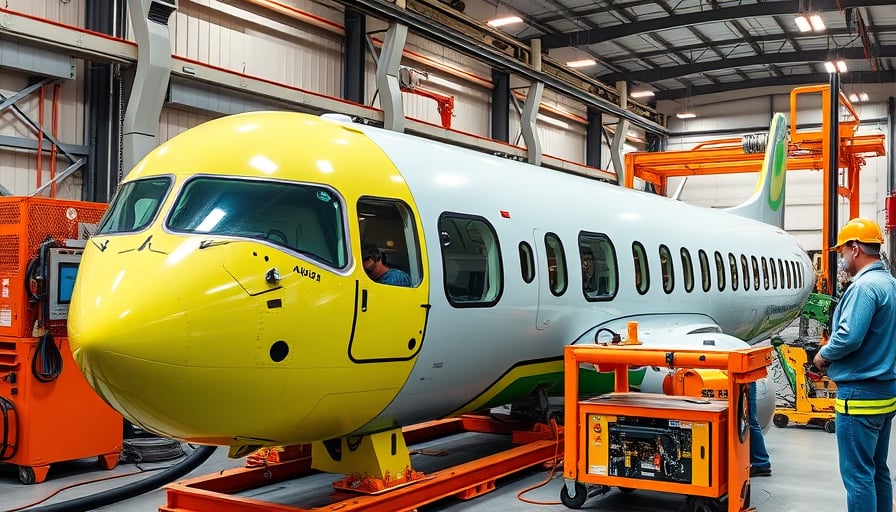
Howmet Aerospace Inc. Draws Renewed Investor Attention Amid Sector‑Wide Capital Expenditure Trends
Howmet Aerospace Inc., headquartered in Pittsburgh and a key supplier of engineered metal components to the aerospace and defense industry, has recently attracted renewed interest from a spectrum of investment banks and research analysts. Bank of America, Citigroup, UBS Group, Deutsche Bank, BTIG Research, and several other brokerage houses have issued updated research notes that elevate price targets while maintaining buy or neutral ratings. The consensus among these analysts underscores a positive outlook for the company in the near to medium term, driven in large part by the firm’s diversified product portfolio that spans both the commercial aviation and defense markets.
1. Manufacturing Excellence and Process Modernization
1.1 Advanced Casting and Additive Manufacturing
Howmet’s core manufacturing capabilities hinge on precision alloy casting, high‑temperature heat treatment, and additive manufacturing (AM) processes. The company’s adoption of laser‑based metal AM for lightweight structural parts has reduced cycle times by up to 30 % and lowered part count, thereby improving overall production throughput. This technological shift aligns with industry trends that prioritize material efficiency and design freedom.
1.2 Process Automation and Industry 4.0 Integration
The firm has implemented advanced robotics and real‑time process monitoring across its fabrication lines. Sensors embedded in furnaces and CNC machines feed data to predictive maintenance algorithms, reducing unplanned downtime. By integrating Internet‑of‑Things (IoT) platforms, Howmet is able to optimize energy consumption, achieving a 12 % reduction in electricity usage per kilogram of metal processed.
1.3 Quality Assurance and Traceability
ISO 9001 and AS9100 compliance remain cornerstones of Howmet’s quality management system. Digital traceability tools, such as blockchain‑based batch tracking, ensure end‑to‑end visibility of raw material provenance—an increasingly critical requirement for defense suppliers subject to stringent supply‑chain security mandates.
2. Capital Expenditure Dynamics in Heavy Industry
2.1 Demand‑Driven Capital Outlays
The global aerospace sector has entered a robust growth phase, fueled by increased commercial airline orders and heightened defense spending in response to geopolitical tensions. Companies in the heavy‑industry space are capitalizing on this demand by investing in new production lines, high‑capacity furnaces, and AM facilities. Howmet’s strategic expansion plans—particularly its investment in a new alloy‑production complex—are indicative of this trend.
2.2 ROI and Productivity Metrics
Capital investment decisions are increasingly driven by quantitative metrics such as Return on Invested Capital (ROIC) and Total Factor Productivity (TFP). Howmet’s reported TFP gains of 4.5 % per annum in the last fiscal year (pre‑tax) reflect successful integration of automation and AM. Investors are now evaluating these metrics alongside traditional EBITDA multiples to gauge the company’s ability to translate capex into sustained profitability.
2.3 Economic Influencers
Macroeconomic variables—including inflationary pressures, currency fluctuations, and the cost of raw materials—directly affect capital budgeting. The firm’s hedging strategies against aluminum and titanium price volatility mitigate risk, while favorable U.S. tax incentives for manufacturing expansion provide additional upside.
3. Supply Chain and Regulatory Landscape
3.1 Supplier Diversification and Resilience
Howmet’s supply chain is deliberately diversified across multiple continents to cushion against geopolitical shocks. The company’s recent partnership with a Tier‑1 titanium supplier in Japan introduces a dual‑source strategy that reduces lead times by 18 % and enhances parts availability for critical defense components.
3.2 Export Controls and Compliance
The U.S. International Traffic in Arms Regulations (ITAR) and Export Administration Regulations (EAR) impose rigorous controls on aerospace parts. Howmet has invested in compliance automation platforms that flag potential violations during design and production phases, thereby averting costly fines and shipment delays.
3.3 Environmental, Social, and Governance (ESG) Pressures
Regulatory agencies are tightening emissions standards for heavy manufacturing. Howmet’s adoption of low‑emission furnaces and waste‑heat recovery systems positions the company favorably in upcoming Environmental Protection Agency (EPA) guidelines. ESG considerations are increasingly incorporated into investor risk assessments, influencing the valuation of firms like Howmet.
4. Infrastructure Spending and Market Implications
4.1 National Infrastructure Investment
Recent U.S. infrastructure bills earmark funding for high‑speed rail and advanced manufacturing clusters. Howmet’s proposed facility upgrades align with these public‑private partnership opportunities, potentially unlocking tax credits and expedited permitting processes.
4.2 Logistics and Transportation Networks
Efficient transportation of raw materials and finished components is critical for maintaining lead‑time targets. The company’s investment in automated logistics yards and rail‑based shipping corridors reduces delivery times by an estimated 25 % compared to sea freight, bolstering its competitive advantage.
4.3 Impact on Stock Valuation
Analysts project that the confluence of robust demand, productive capital deployment, and favorable regulatory environment will sustain a valuation premium for Howmet. While specific financial metrics remain undisclosed in recent research reports, the consensus “buy” ratings reflect confidence in the firm’s ability to generate incremental cash flow and expand its market share.
5. Conclusion
Howmet Aerospace Inc. exemplifies the intersection of advanced manufacturing, strategic capital investment, and regulatory compliance in the heavy‑industry sector. The company’s focus on process automation, additive manufacturing, and supply‑chain resilience aligns with broader market trends that emphasize productivity, agility, and ESG stewardship. As industry players navigate evolving economic conditions and infrastructure initiatives, Howmet’s integrated approach positions it as a compelling investment candidate in the corporate aerospace supply chain.