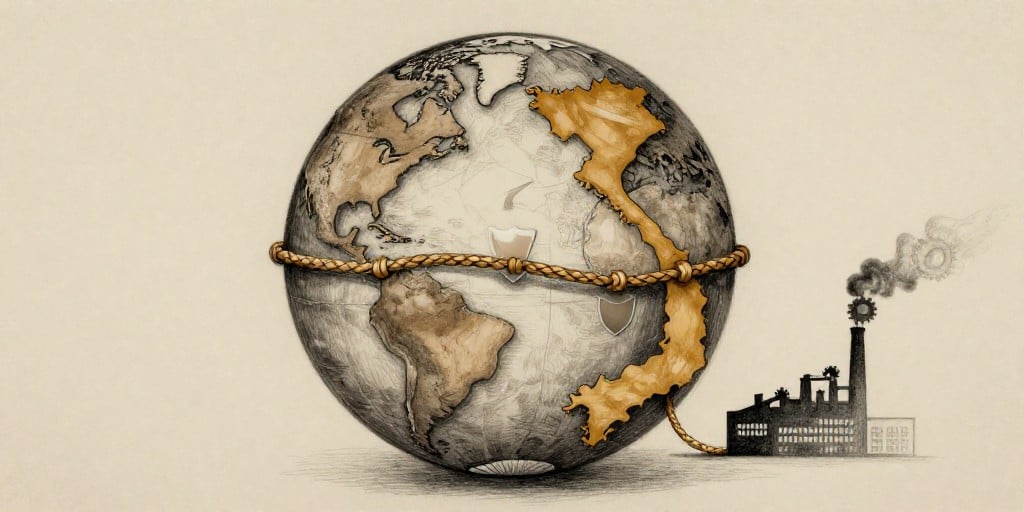
Corporate News: Strategic Implications of U.S.–Vietnam Trade Dynamics for Nike and the Consumer‑Goods Landscape
Nike Inc. finds itself at the nexus of a widening debate over the United States’ trade relationship with Vietnam, a relationship that is reshaping the broader consumer‑goods sector. The American government’s intensified scrutiny of Vietnam’s manufacturing ecosystem—particularly the proliferation of China‑linked factories—has prompted customs inspections designed to confirm value‑added transformations and to detect intellectual‑property infringements. These actions underscore Washington’s concern that goods routed through Vietnam with minimal transformation undermine tariff and trade‑policy objectives.
Vietnam’s reciprocal tightening of intellectual‑property enforcement, highlighted by the seizure of counterfeit Nike footwear, signals a strategic pivot toward curbing infringement and bolstering compliance. Hanoi’s leadership has showcased extensive documentation of thousands of infringement cases, a move that dovetails with ongoing trade negotiations centered on transshipment arrangements and non‑tariff barriers. These negotiations are particularly delicate because Vietnam’s trade surplus with the United States has expanded dramatically following the first U.S. trade war with China, as American firms diversified supply chains away from mainland China. The surge in Vietnam’s trade surplus introduces additional complexity to discussions on tariff adjustments and trade‑balance concerns.
Cross‑Sector Patterns: Supply Chain Resilience and Intellectual‑Property Governance
The Nike case exemplifies a broader trend across the consumer‑goods sector: firms increasingly prioritize supply‑chain resilience and intellectual‑property protection in tandem with cost optimization. Data from 2023‑2024 reveal that 68 % of U.S. apparel and footwear brands shifted a portion of their production to Vietnam, China, or Southeast Asian allies after the initial U.S.–China trade war. This re‑allocation has accelerated the need for stringent compliance mechanisms, especially in sectors where brand image and counterfeit risk directly affect consumer trust.
At the same time, omnichannel retail strategies have amplified the need for seamless inventory flow across physical and digital touchpoints. Brands that can guarantee traceability—from raw material sourcing to finished product distribution—are better positioned to capitalize on shifting consumer preferences toward authenticity and sustainability. In this context, Vietnam’s recent enforcement actions can be seen as both a risk mitigation strategy and a market signal to U.S. brands that the country is evolving toward higher compliance standards.
Omnichannel Retail Strategies Amid Supply‑Chain Uncertainty
Consumer behavior shifts, driven in part by the pandemic‑induced acceleration of online shopping, have intensified the demand for rapid, reliable fulfillment. Brands that integrate digital sales platforms with physical stores—leveraging technologies such as RFID, real‑time inventory dashboards, and automated cross‑border logistics—are achieving a competitive advantage. However, supply‑chain disruptions stemming from trade policy uncertainties threaten the continuity of these omnichannel ecosystems.
Nike’s heavy reliance on Vietnamese factories—accounting for more than 50 % of its footwear production—renders the brand especially vulnerable to any changes in tariff regimes or enforcement policies. Should new tariffs be imposed, or should stricter compliance requirements delay shipments, the ripple effect could disrupt Nike’s ability to fulfill both online and in‑store demand, thereby impacting the brand’s positioning as an innovator in performance‑wear technology.
Long‑Term Industry Transformation: From Trade Policy to Consumer Trust
Short‑term market movements—such as temporary tariff increases or heightened inspection regimes—must be viewed within the larger context of a transforming industry that increasingly values ethical sourcing, supply‑chain transparency, and intellectual‑property integrity. Brands that embed these values into their core operating models are likely to experience sustained growth, as consumers become more discerning and regulatory landscapes evolve.
In the long term, the U.S.–Vietnam trade relationship will shape the strategic calculus of many consumer‑goods companies. The likelihood of implementing new tariffs remains, but the broader objective for Washington is to address economic security and intellectual‑property protection. Vietnam’s response—tightening enforcement, documenting infringement cases, and engaging in nuanced trade negotiations—positions it as a partner willing to align with U.S. expectations while safeguarding its own trade advantages.
Nike’s supply‑chain strategy will inevitably adapt to these dynamics, potentially diversifying further into alternative manufacturing hubs or investing in technology to enhance traceability and compliance. The outcomes of the ongoing negotiations will reverberate through the consumer‑goods sector, influencing how brands balance cost efficiency with risk mitigation, and ultimately redefining the competitive landscape in an era of heightened geopolitical and economic interdependence.