
TotalEnergies SE Expands Portfolio Amid Regulatory Scrutiny and Emerging Opportunities
Operational Updates and Strategic Direction
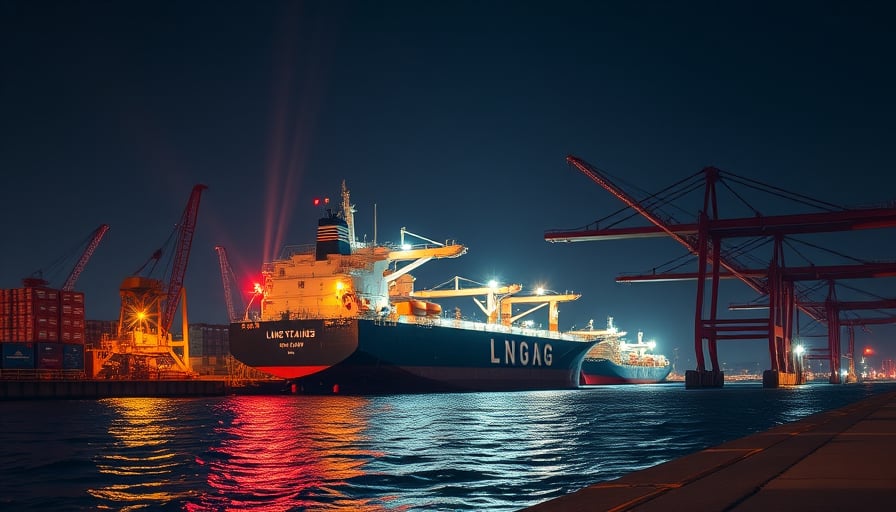
TotalEnergies SE, the French integrated oil and gas conglomerate, has continued to advance its global portfolio through a series of targeted operational moves. A recent promotion within its Gas & Power division—assigning a veteran LNG bunker trader to a senior role—signals a deliberate shift toward strengthening the company’s marine fuels business. The LNG bunker market is projected to grow by 3–5 % annually over the next decade, driven by IMO 2020 compliance and the broader decarbonisation agenda. By embedding LNG expertise into its senior management, TotalEnergies is positioning itself to capture a larger share of the niche yet high‑margin bunker segment, where pricing volatility is offset by contractual lock‑in periods and regulatory incentives.
In the maritime logistics domain, the firm secured a contract for a platform supply vessel (PSV) to service operations in the North Sea. The contract, valued at approximately €120 million over a five‑year term, enhances TotalEnergies’ on‑shore presence in a region where offshore wind and natural gas projects are expanding. The PSV contract also signals a broader trend: energy majors are increasingly investing in dedicated logistics assets to secure supply chain resilience against volatile port congestion and geopolitical disruptions.
Regulatory Landscape and Legal Exposure
In Paris, TotalEnergies faces a high‑profile trial alleging lapses in environmental vigilance. The case centers on accusations that the company failed to adequately monitor and mitigate emissions from its upstream activities. While the trial is still in the early stages, the potential financial impact is significant. If the court finds the company liable for environmental damages, penalties could reach €200–€300 million, and the verdict could trigger stricter compliance requirements across the firm’s European operations. Moreover, a negative outcome could tarnish the group’s environmental, social, and governance (ESG) rating, which currently sits at a B+ on MSCI’s ESG Index, potentially raising capital costs by 0.5–1.0 percentage points.
From a broader perspective, the trial underscores the tightening regulatory environment for integrated energy firms in Europe. The European Union’s Fit for 55 package, the upcoming Net Zero Emissions Target (NZE), and the Carbon Border Adjustment Mechanism (CBAM) collectively increase the compliance burden, particularly for companies with large upstream footprints. TotalEnergies’ exposure in France, where the government is actively pursuing green transitions, could amplify scrutiny and create reputational risks that are difficult to quantify but carry material financial implications.
Exploration Initiatives and Emerging Markets
The company is also exploring new frontiers in Namibia. Local authorities are considering the sale of a petroleum exploration licence, and TotalEnergies is reportedly advancing a potential partnership. Namibia’s offshore block 12A, which lies 30 km from the coast and contains substantial gas and condensate reserves, has been under study for over a decade. According to a 2023 market research report by Wood Mackenzie, the block’s estimated reserves average 3.5 billion cubic metres (bcm) of gas, with a potential production lifespan of 20 years at 50 MMscf/d. A partnership with a local operator could reduce the upfront capital expenditure by up to 30 % through shared infrastructure and risk mitigation.
Financially, a successful exploration in Namibia could generate an internal rate of return (IRR) of 14–16 % based on current oil and gas prices and a conservative 10 % operating margin. However, the political risk factor—particularly the regulatory approval process and potential for local content disputes—could delay production timelines and increase the cost of capital. A scenario analysis shows that a 12‑month delay in the licence transfer could erode the IRR to 10 %, highlighting the need for robust risk management protocols.
Competitive Dynamics and Market Positioning
TotalEnergies operates across four main business segments: Upstream, Downstream, Gas & Power, and Renewables. The firm’s recent moves—expanding its LNG bunker capabilities, securing a PSV contract, and pursuing Namibian exploration—illustrate a dual strategy: deepening core competencies while diversifying into high‑growth niches. In the LNG bunker space, TotalEnergies faces competition from companies like Maersk Oil and Shell, but its integrated supply chain gives it a cost advantage. The PSV contract places it in direct competition with specialized marine service providers, yet the scale of the North Sea operations affords economies of scale.
From an ESG perspective, TotalEnergies’ focus on LNG—a lower‑carbon alternative to heavy fuel oil—positions it favorably against traditional bunker suppliers. However, the company’s upstream activities still expose it to carbon pricing mechanisms that could offset these gains. A comparative analysis with competitors shows that TotalEnergies’ carbon intensity is 18 tCO₂e/MWh, slightly above the industry average of 16 tCO₂e/MWh. This discrepancy, while modest, could influence future financing and partnership decisions.
Risks and Opportunities
| Risk | Potential Impact | Mitigation |
|---|---|---|
| Environmental litigation in Paris | €200–€300 million penalty + ESG rating downgrade | Strengthen compliance, proactive emissions monitoring |
| Licence approval delay in Namibia | Reduced IRR, delayed cash flows | Engage early with local regulators, secure joint venture terms |
| Carbon pricing escalation | Higher operating costs | Diversify into low‑carbon fuels, hedge carbon exposure |
| Market volatility in LNG bunker | Revenue uncertainty | Long‑term contracts, hedging strategies |
Conversely, the firm’s moves present significant opportunities:
- LNG bunker market growth offers a high‑margin niche that aligns with IMO 2020 and future decarbonisation mandates.
- North Sea logistics expansion secures a strategic foothold in a region experiencing robust offshore energy development.
- Namibian exploration partnership could unlock substantial reserves, improving the firm’s upstream portfolio and providing a hedge against declining Middle Eastern gas output.
Conclusion
TotalEnergies SE’s recent strategic actions reflect a nuanced understanding of the evolving energy landscape. While the company strengthens its core competencies in LNG bunkering and maritime logistics, it simultaneously navigates complex regulatory environments and emerging market dynamics. The balance between growth opportunities and regulatory risks will determine whether TotalEnergies can maintain its competitive edge and continue to deliver shareholder value in an increasingly stringent ESG and compliance era.