
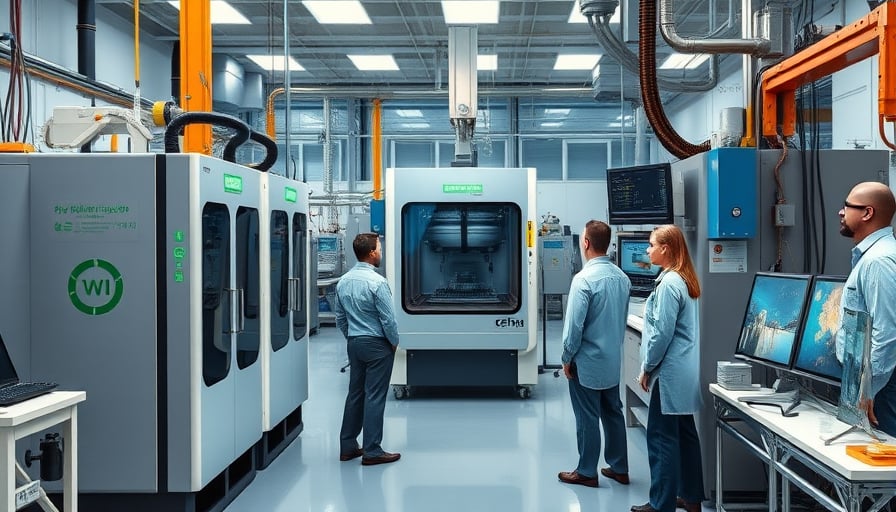
Corporate News: Toppan Holdings Inc. Expands Photomask and Advanced Packaging Presence at SEMICON Japan 2025
Toppan Holdings Inc. (Tokyo: 4M1) announced on Thursday that its semiconductor subsidiary, Toppan, will exhibit its photomask, advanced packaging, and FC‑BGA substrate technologies alongside Tekscend Photomask Corp. at the upcoming SEMICON Japan 2025 trade show. The exhibition, scheduled to run from 17 to 19 December at Tokyo Big Sight, provides a platform for the company to showcase its expanded production capacity for Flip‑Chip Ball‑Grid‑Array (FC‑BGA) substrates and to advance its semiconductor packaging portfolio.
1. Strategic Rationale Behind the Exhibition
1.1 Growth in Advanced Packaging Demand
- Market size: The global advanced packaging market is projected to reach USD $13.9 billion by 2028, growing at a CAGR of 10.7% (IDC, 2024).
- Drivers: The proliferation of high‑performance processors for AI, machine learning, and 5G applications demands increasingly compact, high‑density interconnects. FC‑BGA substrates, with their superior electrical performance and thermal management, are pivotal.
- Toppan’s positioning: By aligning its exhibition with Tekscend—a leading photomask manufacturer—Toppan signals an intention to strengthen its end‑to‑end packaging ecosystem, capturing a larger share of the value chain.
1.2 Capacity Expansion and Economies of Scale
- Toppan’s recent capital expenditure plan (FY2025) earmarked ¥10 billion for expanding FC‑BGA substrate production lines.
- The exhibition serves as a proof point for investors and partners that the company is moving from “pilot” to “commercial” scale.
- Early adoption of large glass panels (up to 400 mm) allows Toppan to offer lower-cost, higher‑yield substrates—an attractive proposition for fab‑less IC designers.
2. Regulatory and Sustainability Considerations
2.1 Environmental Impact of Photomask Production
- Photomask manufacturing consumes significant volumes of hazardous chemicals (e.g., photoresists, solvents).
- Recent Japanese environmental regulations (JAS, 2023) impose stricter limits on VOC emissions and waste disposal.
- Toppan’s participation in SEMICON Japan includes a showcase of its “green photomask” initiative, featuring low‑VOC photoresists and closed‑loop solvent recovery systems.
- Risk: Failure to comply fully could lead to regulatory fines, supply chain disruptions, and reputational damage, especially amid increasing ESG scrutiny from institutional investors.
2.2 Supply Chain Resilience
- The semiconductor supply chain remains vulnerable to geopolitical tensions. The U.S.-China trade war has amplified pressure on Japan to secure critical materials.
- Toppan’s strategy involves sourcing raw materials from diversified suppliers and investing in domestic fabs. However, the cost premium of local sourcing could squeeze margins if commodity prices rise sharply.
3. Competitive Landscape
3.1 Key Competitors
| Company | Core Offering | Market Share (2023) | Recent Moves |
|---|---|---|---|
| Toppan | Photomasks, FC‑BGA substrates | 8% | Expansion of glass panel capacity |
| AkzoNobel | Advanced packaging substrates | 12% | Acquisition of a graphene-based interposer firm |
| UMC | Photomask and packaging services | 9% | Joint venture with a Chinese fab‑less firm |
- Toppan’s differentiation hinges on its vertically integrated approach—from photomask fabrication to substrate assembly—enabling tighter quality control and faster time‑to‑market.
3.2 Market Share Dynamics
- The FC‑BGA segment is highly fragmented, with over 30 suppliers worldwide. A 5% increase in market share could translate to an additional USD $150 million in revenue, assuming a 2024 revenue base of USD $3 billion for the segment.
- Toppan’s new capacity, coupled with its partnership with Tekscend, positions it to capture a larger share of the high‑performance chip segment, which is expected to grow at 12% CAGR through 2027.
4. Financial Implications
4.1 Revenue Projections
- Toppan’s FY2024 revenue from advanced packaging rose 6% YoY, driven by a 15% increase in FC‑BGA sales.
- The company projects that the expanded capacity will add an estimated USD $200 million in annual revenue by FY2026, assuming a conservative 10% penetration of the 2024 market size.
4.2 Cost Structure
- Capex: ¥10 billion (~USD $80 million) for new lines.
- Operating cost: Incremental cost per substrate projected to decline from ¥5,200 to ¥4,800 due to economies of scale.
- EBITDA margin improvement: From 18% to 20% over the next 24 months, driven by higher throughput and lower per‑unit costs.
4.3 Investment Risks
- Technological obsolescence: Rapid advancements in packaging (e.g., 3D‑IC, TSV) could erode demand for conventional FC‑BGA substrates.
- Currency volatility: Revenue is largely denominated in yen; a 10% yen depreciation could affect margin after adjusting for input costs.
- Regulatory compliance costs: Implementation of stricter environmental standards could increase operating expenses by up to 5% in FY2025.
5. Uncovered Trends and Potential Opportunities
5.1 Hybrid Photomask‑Substrate Solutions
- Emerging AI‑driven design tools increasingly demand tighter integration between mask design and substrate characteristics.
- Toppan’s integrated manufacturing could develop “smart” substrates that automatically adjust for mask‑induced defects, offering a differentiated value proposition.
5.2 Circular Economy in Packaging Materials
- Recycling of glass panels and metal interconnects is gaining traction. Toppan’s early investment in closed‑loop processes could unlock new revenue streams and reduce regulatory exposure.
5.3 Cross‑Industry Collaborations
- The automotive electronics sector is driving demand for high‑reliability, high‑temperature substrates. Toppan could leverage its expertise to secure long‑term supply contracts with OEMs such as Toyota and Ford.
6. Conclusion
Toppan Holdings Inc.’s decision to showcase its photomask and advanced packaging capabilities at SEMICON Japan 2025 is more than a marketing exercise; it signals a deliberate strategy to consolidate its position in a rapidly evolving segment of the semiconductor ecosystem. By expanding production capacity, aligning with leading photomask technology, and addressing sustainability imperatives, the company is poised to capture growing demand for high‑performance FC‑BGA substrates.
However, the venture is not without risks. Regulatory compliance costs, supply‑chain volatility, and technological disruption could erode the anticipated gains. Investors and industry analysts should monitor Toppan’s ability to translate its exhibition presence into tangible market share and margin improvements, while also keeping an eye on emergent trends such as hybrid photomask‑substrate solutions and circular manufacturing practices that could redefine value creation in this vertical.