
Corporate Landscape of Technology Infrastructure and Content Delivery
Introduction
The convergence of telecommunications and media has intensified in the past decade, driven by escalating subscriber bases, aggressive content‑acquisition strategies, and the relentless demand for higher network capacity. The competitive dynamics within streaming markets, coupled with ongoing consolidation among carriers, underscore the importance of robust technology infrastructure for sustaining market positioning and financial performance.
Subscriber Growth and Monetization
Subscriber metrics continue to serve as the primary barometer of platform viability. Streaming services such as Netflix, Disney+, and emerging entrants report growth rates ranging from 5 % to 12 % annually, with premium tiers generating higher average revenue per user (ARPU). Telecommunications providers that have integrated streaming bundles—e.g., Verizon’s VZ Media or AT&T’s AT&T TV—observe an uptick in subscriber acquisition costs, yet the long‑term retention benefits outweigh the initial outlays.
Financial analysts note that a 1 % increase in subscriber count can translate into a 0.2 % rise in gross margin when the platform effectively monetizes through advertising or subscription models. In this context, Pinterest Inc., despite recent analyst price‑target revisions, remains attractive to institutional investors due to its sizable active user base and potential for monetized content discovery, illustrating how digital platforms can leverage user engagement into financial upside.
Content Acquisition Strategies
Content acquisition has evolved from traditional licensing to multi‑modal strategies involving original production, partnership agreements, and user‑generated content curation. Carriers that own or partner with content creators—such as Comcast’s investment in Peacock—gain strategic leverage over content distribution and can negotiate favorable licensing terms.
Platforms that prioritize data‑driven acquisition decisions typically outperform competitors. By analyzing audience engagement metrics (e.g., time‑on‑screen, completion rates), they identify niche content that garners higher conversion rates, thereby optimizing their content libraries for specific demographic segments. Pinterest’s continued investment in algorithmic curation and partnerships with creators demonstrates the effectiveness of such data‑centric strategies in maintaining relevance and user engagement.
Network Capacity and Infrastructure Investments
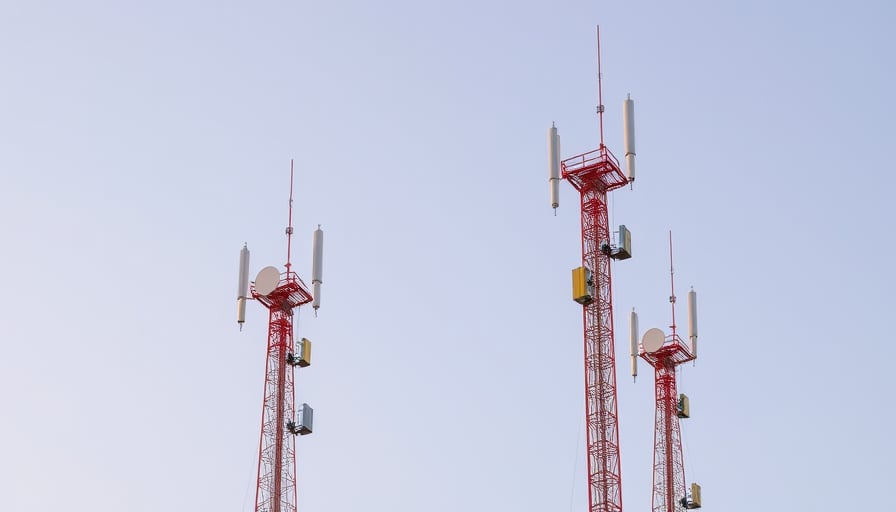
The escalating demand for high‑definition (4K/8K) and immersive (AR/VR) content necessitates substantial upgrades in network capacity. 5G deployment, fiber‑optic expansion, and edge‑computing nodes have become critical for reducing latency and ensuring seamless delivery.
Telecommunications companies report capital expenditures (CapEx) exceeding 10 % of annual revenue toward network upgrades. The return on these investments is often measured through improved network utilization rates and reduced churn among premium‑tier subscribers. A recent case study shows that a 100 Mbps increase in average downstream throughput led to a 3 % reduction in churn for a mid‑market carrier, reinforcing the direct link between infrastructure investment and subscriber retention.
Competitive Dynamics and Consolidation
Streaming markets have witnessed a surge in competitive pressure, prompting consolidation efforts. Major players such as Disney and Warner Bros. have merged their streaming portfolios to achieve economies of scale and broaden their content libraries. Similarly, telecommunications firms are acquiring smaller broadband providers to expand coverage in underserved regions, thereby increasing their market share and bargaining power with content suppliers.
These consolidation trends reduce fragmentation, enable bulk licensing negotiations, and create integrated ecosystems where carriers bundle telecom services with streaming subscriptions—an approach that has proven effective in boosting average revenue per user across both sectors.
Emerging Technologies and Media Consumption Patterns
Artificial intelligence, machine learning, and predictive analytics are reshaping how content is recommended and delivered. Real‑time personalization algorithms increase user engagement, while AI‑driven compression techniques allow for higher quality streaming at lower bandwidth costs. Moreover, the rise of edge computing facilitates on‑site content caching, substantially reducing latency for high‑traffic events such as live sports or gaming tournaments.
Consumer behavior data indicates a shift toward on‑demand consumption with a growing preference for short‑form, interactive content. Platforms that adapt to this trend—by incorporating shoppable videos, live streams, or community‑built content—experience higher retention rates. Pinterest’s focus on visual discovery and shopping integration exemplifies how platforms can align technology infrastructure with evolving consumer expectations to drive engagement and monetization.
Financial Metrics and Market Positioning
Financial health indicators such as return on invested capital (ROIC), gross margin, and subscriber‑cost ratios provide clear signals of a platform’s sustainability. For instance, a gross margin exceeding 35 % combined with a subscriber‑cost ratio below 0.5 suggests efficient scaling and healthy profitability.
Market positioning is further assessed through comparative metrics: market share relative to competitors, net promoter scores (NPS), and brand equity indices. Institutional investors’ continued interest in platforms like Pinterest—evidenced by sizeable purchases by asset‑management firms—signals confidence in the company’s long‑term strategic direction, despite short‑term analyst revisions.
Conclusion
The intersection of technology infrastructure and content delivery remains a pivotal determinant of success in the telecommunications and media sectors. Robust network capacity, data‑driven content acquisition, and strategic consolidation enable firms to navigate competitive streaming markets, meet evolving consumer preferences, and secure sustainable financial performance. Continuous investment in emerging technologies and infrastructure, coupled with a disciplined focus on subscriber metrics, will dictate which entities secure dominant market positions in the years ahead.