
Corporate Update – Targa Resources Corp.
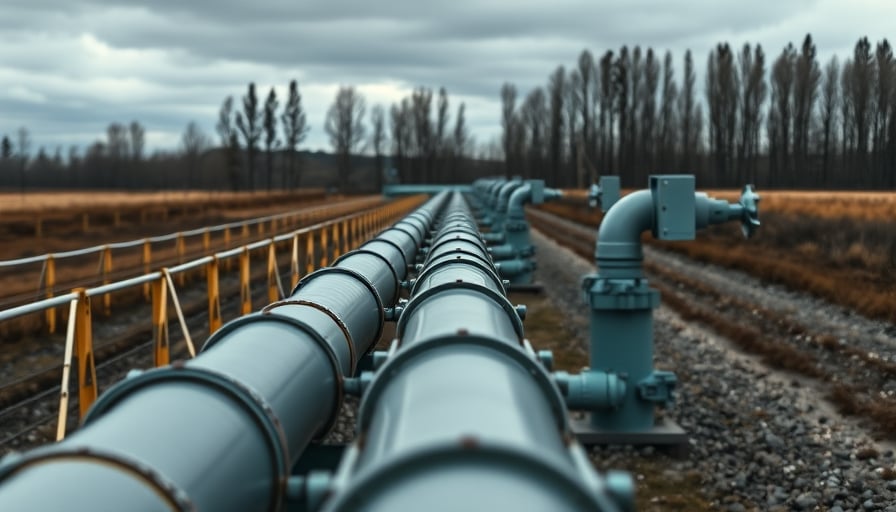
Targa Resources Corp. announced on January 6 the completion of an acquisition that adds a midstream stakeholder to its portfolio. The transaction broadens the company’s capabilities in gathering, compressing, treating, and transporting natural‑gas and natural‑gas‑liquid (NGL) assets. While the company did not disclose specific operational details, it emphasized that the expansion will strengthen its service offerings within the midstream sector.
Impact on Targa’s Midstream Operations
The newly acquired assets augment Targa’s existing infrastructure, allowing for more integrated end‑to‑end services from upstream production to downstream delivery. By enhancing its gathering and compression capacity, the company is better positioned to handle increased throughput from the growing natural‑gas production in the United States, particularly from the Permian Basin and the Marcellus Shale. The expansion also offers greater flexibility in handling NGL streams, which are becoming increasingly important as the global economy seeks low‑carbon alternatives to coal and heavy fuel oil.
Although the company’s share price moved only modestly in the days surrounding the announcement, analysts note that the acquisition aligns with Targa’s long‑term strategy to consolidate midstream assets and capture higher margins in a market where demand for natural‑gas transportation and storage is rising.
Broader Market Context
Supply‑Demand Fundamentals
- Natural‑Gas Supply: U.S. production has reached a peak of approximately 90 billion cubic feet per day (BCFD) in recent months, with the Permian Basin contributing 30 BCFD. However, seasonal demand spikes—especially during winter heating periods—continue to exert upward pressure on volumes.
- Demand Dynamics: Industrial usage remains a primary driver, with the chemical, power, and petrochemical sectors expanding their natural‑gas consumption. Residential and commercial demand is also projected to grow, supported by electrification of heating systems that shift to natural‑gas‑based heat pumps.
Commodity Price Analysis
- Crude Oil: Recent volatility in oil inventories, particularly the decline in U.S. West Coast crude stocks, has influenced spot prices, which currently trade around $80–$85 per barrel. Fluctuations in oil affect natural‑gas pricing through the gas‑oil ratio (GOR); a tighter GOR can elevate natural‑gas prices relative to oil.
- Natural‑Gas Prices: Henry Hub natural‑gas prices have ranged between $4.50 and $6.50 per MMBtu over the past year, with a notable spike in February due to a sudden inventory drawdown of 2.4 billion cubic feet. These price movements underscore the sensitivity of midstream operators to inventory levels.
Technological Innovations
- Hydrogen Blending: Several pipelines are being retrofitted to accommodate hydrogen blending up to 5–10 % of flow. This technology allows for a lower carbon footprint while preserving pipeline integrity.
- Advanced Compression: The deployment of high‑efficiency, variable‑speed compressor units reduces energy consumption by up to 15 % compared to legacy fixed‑speed compressors, improving operating margins for midstream operators.
- Digitalization: Real‑time monitoring systems, powered by AI‑driven predictive analytics, enable faster response to pressure drops and leak detection, enhancing safety and reducing downtime.
Regulatory Environment
- Environmental Regulations: The U.S. Environmental Protection Agency’s (EPA) methane emission standards are tightening, requiring midstream operators to implement more rigorous leak detection and repair (LDAR) programs. Compliance costs are rising, but the industry is investing in low‑emission technologies to meet deadlines.
- Infrastructure Incentives: The Inflation Reduction Act (IRA) offers tax credits for the expansion of natural‑gas infrastructure that supports decarbonization pathways, such as NGL-to-ethane conversion facilities. These incentives align with Targa’s acquisition, potentially boosting the value of the newly added assets.
- Renewable Integration: As the U.S. moves toward a low‑carbon grid, natural‑gas plays a pivotal role in balancing intermittent renewable generation. Midstream operators are increasingly investing in storage solutions to accommodate variable demand.
Balancing Short‑Term and Long‑Term Trends
Short‑Term Trading Factors
- Day‑to‑day inventory adjustments, seasonal demand swings, and geopolitical disruptions (e.g., sanctions on Russia affecting gas flows) create volatility that traders closely monitor.
- Midstream operators like Targa must maintain operational flexibility to capitalize on price differentials and manage capacity constraints.
Long‑Term Energy Transition Trends
- The continued shift toward decarbonization is driving investment in natural‑gas infrastructure that can serve as a bridge fuel.
- Emerging markets for NGL and hydrogen are expanding, creating new revenue streams for midstream companies that can repurpose existing pipelines and storage facilities.
The acquisition completed by Targa Resources Corp. is positioned to leverage both immediate market dynamics and the evolving trajectory of the global energy transition. By strengthening its midstream network, the company enhances its capacity to serve a diversifying customer base, adapt to regulatory pressures, and capitalize on technological advancements that are reshaping the natural‑gas sector.