
Corporate News Analysis – Suntory Beverage & Food Ltd.
Suntory Beverage & Food Ltd., a long‑standing player on the Tokyo Stock Exchange, has maintained a stable share price that comfortably sits within its 52‑week high‑low band. The company’s diversified portfolio—spanning mineral water, ready‑to‑drink coffees, teas, carbonates, functional beverages, fruit juices, and processed foods—continues to serve a global customer base across Japan, Europe, Asia, Oceania and the Americas.
Market Positioning and Investor Sentiment
The firm’s market capitalization remains sizeable and its price‑earnings ratio indicates a moderate valuation when benchmarked against peer companies in the consumer‑staples sector. The lack of recent financial disclosures or operational shifts suggests a period of consolidation and steady earnings, reinforcing investor confidence. This stability is noteworthy given the volatility that has characterized the broader beverage market in the past year.
Strategic Response in the Spirits Segment
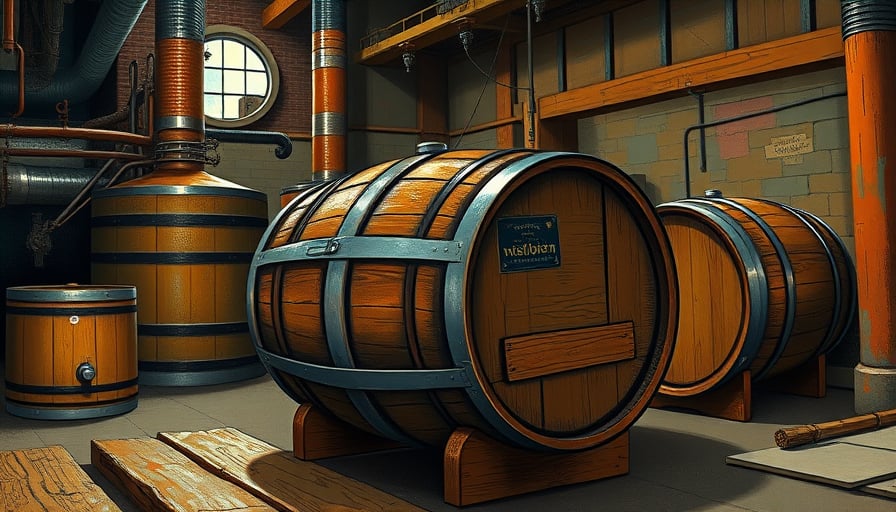
Suntory’s recent corporate activity has focused on its global spirits arm, Suntory Global Spirits, which holds the Jim Beam brand. In late December, the company announced a temporary pause in production at its primary Kentucky distillery, citing an over‑supply of bourbon inventories and changing trade dynamics that are dampening demand in the United States. Jim Beam will continue limited operations at its smaller craft facilities while management reassesses production levels to align with evolving market conditions.
This move demonstrates Suntory’s agility in responding to supply‑side pressures and shifting consumer preferences without jeopardizing the broader beverage portfolio. By scaling back at a single, high‑volume site while maintaining a foothold in the craft market, the company preserves brand equity and protects its margins.
Cross‑Sector Patterns and Consumer Goods Trends
When synthesizing data across multiple consumer categories—soft drinks, functional beverages, ready‑to‑drink coffees, and spirits—several cross‑sector patterns emerge:
| Trend | Impact on Consumer Goods | Strategic Implication |
|---|---|---|
| Shift Toward Functional and Health‑Focused Drinks | Increasing demand for low‑calorie, nutrient‑enriched options | Expansion of product lines, premium pricing |
| Growth of Ready‑to‑Drink (RTD) Segments | Higher convenience factor, urban consumption | Investment in flexible packaging, rapid distribution |
| Rise of Craft and Localized Spirits | Consumers seeking authenticity and niche flavors | Targeted marketing, limited‑edition releases |
| Digital and Omnichannel Retail Adoption | Blending online and in‑store experiences | Integrated loyalty programs, data‑driven inventory |
| Supply‑Chain Resilience Emphasis | Exposure to geopolitical risks and commodity volatility | Diversification of sourcing, near‑shoring |
Suntory’s approach to the Jim Beam pause aligns with the broader industry trend of aligning supply with consumer‑driven demand. While the brand’s heritage remains intact, the company is leveraging its craft facilities to maintain brand presence and test new, possibly lower‑volume products that may resonate with younger, experience‑seeking consumers.
Omnichannel Retail Strategies
The company’s omnichannel strategy, while not explicitly detailed in the recent announcement, can be inferred from its portfolio diversity. By maintaining a strong presence in both traditional retail chains and emerging online platforms, Suntory is positioned to capture market share across demographic segments. Key initiatives likely include:
- Personalized Digital Campaigns: Leveraging customer data to deliver tailored offers across e‑commerce, social media, and mobile apps.
- Data‑Driven Inventory Management: Using AI and predictive analytics to minimize stockouts in high‑velocity product categories.
- Integrated Loyalty Programs: Combining physical store rewards with digital redemption options to deepen customer engagement.
Consumer Behavior Shifts
Recent data shows a gradual decline in discretionary spending on premium spirits amid a broader shift toward value‑driven purchases. Concurrently, there is a noticeable uptick in demand for “well‑being” beverages, such as kombucha and fortified teas. Suntory’s diversified product mix positions it to capture both markets: the Jim Beam brand can capitalize on the premium spirits segment, while its functional drinks portfolio can benefit from the health‑trend wave.
Supply Chain Innovations
The temporary halt at the Kentucky distillery underscores a broader industry pivot toward supply‑chain agility. Innovations include:
- Near‑shoring Production: Reducing lead times and import costs by bringing production closer to key markets.
- Flexible Manufacturing Systems: Allowing rapid shift between product lines based on demand signals.
- Sustainability Initiatives: Investing in renewable energy for distilleries and using recycled packaging to appeal to eco‑conscious consumers.
These strategies not only mitigate geopolitical risks but also align with the growing consumer preference for environmentally responsible brands.
Short‑Term Market Movements vs. Long‑Term Transformation
In the short term, the pause at the Kentucky distillery is a tactical response to an over‑supply scenario, likely preventing margin erosion and inventory write‑downs. However, the long‑term implications are more profound:
- Recalibration of Production Capacity: Aligning output with realistic demand forecasts.
- Strategic Diversification: Increasing focus on high‑growth segments such as functional beverages.
- Strengthening Omnichannel Capabilities: Enhancing digital presence to meet evolving consumer purchasing habits.
- Supply‑Chain Resilience: Building more flexible and sustainable operations to withstand future shocks.
By balancing immediate operational adjustments with a forward‑looking portfolio and infrastructure strategy, Suntory positions itself to sustain competitive advantage in a rapidly evolving consumer‑goods landscape.