
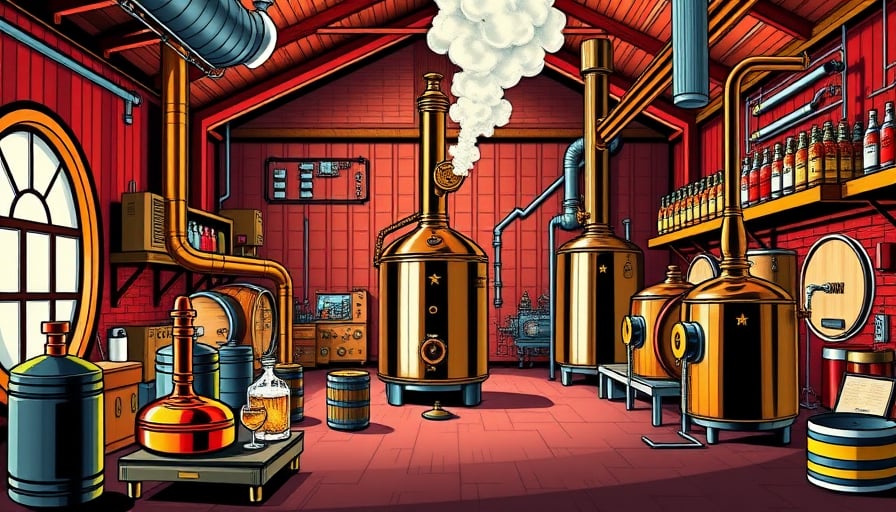
Suntory’s 2026 Production Pause at Clermont Distillery: A Case Study in Adaptive Consumer Strategy
Suntory Beverage & Food Ltd., a leading Japanese consumer‑staple conglomerate listed on the Tokyo Stock Exchange, has announced that production at its historic Clermont, Kentucky, distillery will be suspended for the entire year of 2026. This decision follows a sustained decline in bourbon demand that has generated an oversupply in the global market, prompting a strategic reassessment of output levels. While the flagship facility will remain closed for the year, other production sites within Suntory’s portfolio will continue to operate normally, allowing the company to align supply with current consumer demand and to safeguard the long‑term health of the brand across global markets.
The Market Context: Demographic Shifts and Consumption Patterns
The bourbon segment has historically benefited from robust growth driven by Generation Z and Millennial consumers, who value authenticity, heritage, and experiential consumption. However, recent surveys indicate a shift in spending priorities toward wellness‑centric beverages, craft cocktails, and digital engagement platforms that offer personalized recommendations. Additionally, aging baby boomers are increasingly prioritizing health, leading to a decline in high‑alcohol consumption. These demographic transitions are reshaping the demand curve for traditional spirits, creating a surplus that forces brands to recalibrate production.
Suntory’s decision reflects a broader industry trend: the need to balance supply with a consumer base that is becoming more fragmented and digitally oriented. By pausing production at its flagship site, Suntory acknowledges that the Clermont distillery’s output is no longer aligned with the consumption patterns of its most lucrative demographic cohorts.
Digital Transformation Meets Physical Retail
The bourbon industry has traditionally relied on the tactile experience of distillery tours and in‑store tastings. Yet, the rise of virtual reality (VR) tours, augmented reality (AR) product labels, and direct‑to‑consumer (DTC) e‑commerce platforms has disrupted that model. Consumers now expect a seamless blend of physical heritage and digital convenience.
Suntory’s strategy to maintain operations at other sites while suspending Clermont production illustrates a pivot toward a more flexible supply chain that can feed both physical stores and digital distribution channels. The company can use its remaining facilities to produce smaller, boutique batches tailored for niche markets, while leveraging digital tools to engage consumers directly.
Generational Spending and the Value of Experiential Retail
Millennials and Gen Z are less inclined to purchase high‑price luxury goods for their own use and more likely to invest in shared experiences—such as pop‑up bars, immersive tastings, and brand‑led events. By curating limited‑edition releases from alternate production sites, Suntory can create scarcity and exclusivity that resonate with these cohorts. Moreover, the company can partner with digital platforms that offer subscription services or curated tasting kits, thereby extending its reach beyond traditional brick‑and‑mortar retail.
The suspension also allows Suntory to invest in experiential technologies that enrich the consumer journey: interactive mobile apps that map the distillery’s history, AR overlays that reveal cocktail recipes, and data‑driven personalization engines that recommend product pairings based on purchase history. These initiatives convert the physical heritage of Clermont into a scalable digital asset.
Forward‑Looking Analysis: Turning Societal Changes into Market Opportunities
Supply‑Demand Alignment – By reducing output from its most prolific site, Suntory reduces excess inventory and mitigates the risk of price erosion, thereby preserving margin stability in an oversupplied market.
Portfolio Diversification – Maintaining production across other sites enables the company to experiment with lower‑cost, high‑margin products, such as ready‑to‑drink (RTD) variants that appeal to younger consumers.
Digital‑First Consumer Engagement – Integrating VR and AR experiences into the product lifecycle can increase brand loyalty among digitally native audiences, translating into repeat purchases.
Sustainability and ESG Credentials – A focused production strategy allows Suntory to reduce energy consumption and water usage at Clermont, reinforcing its commitment to environmental stewardship—a key consideration for socially conscious investors.
Global Market Positioning – By re‑allocating production, Suntory can better serve emerging markets where bourbon demand remains robust, thereby strengthening its global footprint.
Conclusion
Suntory’s 2026 production pause at Clermont is more than a tactical inventory adjustment; it is a strategic realignment that acknowledges the intersection of demographic evolution, lifestyle trends, and digital transformation. By reconciling supply with contemporary consumer demand and leveraging technology to enhance the physical retail experience, the company positions itself to capitalize on new market opportunities while safeguarding the long‑term vitality of its flagship bourbon brand.