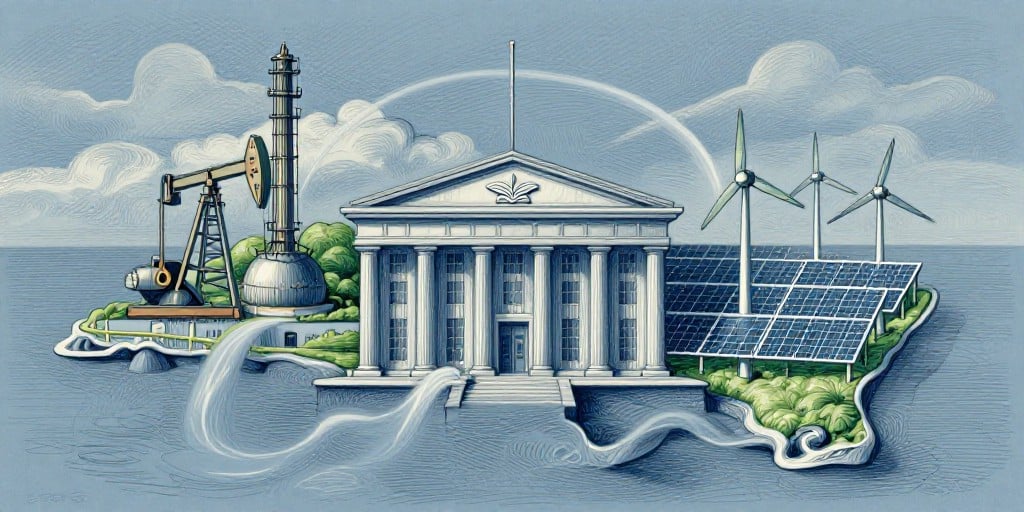
Corporate News: Strategic Positioning of Suncor Energy Inc. in a Volatile Energy Landscape
The recent outperformance of a leading Canadian equity fund, which has surpassed major North American indices, has highlighted a pronounced focus on value-oriented plays within the energy sector. Central to this strategy is Suncor Energy Inc., whose inclusion reflects a broader trend in which Canadian energy firms have capitalized on market uncertainty and inflationary pressures—conditions that historically favor value over growth narratives.
Energy Market Fundamentals
The current energy landscape is shaped by a convergence of supply‑demand dynamics, technological innovation, and regulatory shifts. Oil prices, which have oscillated between $70 and $90 per barrel over the past year, continue to influence the profitability of commodity‑heavy companies. The demand side remains buoyant, driven by rebound activity in emerging markets and a gradual slowdown in global economic contraction. However, production data from OPEC+ and the U.S. Energy Information Administration indicate that new supply is not keeping pace with demand, reinforcing a supply‑constrained environment that benefits producers such as Suncor.
On the renewable front, policy frameworks in Canada and the United States—particularly the Inflation Reduction Act and the Canada Green Energy Act—have accelerated investment in solar, wind, and battery storage. These developments introduce new competitive pressures but also diversify revenue streams for integrated energy firms that can leverage both fossil and renewable assets.
Technological Innovations in Production and Storage
Suncor’s ongoing investment in advanced extraction techniques, such as enhanced oil recovery (EOR) and low‑carbon steam‑flooding, has reduced its carbon intensity while maintaining output levels. In parallel, the company’s commitment to expanding its battery‑energy‑storage (BES) portfolio aligns with industry trends toward grid‑level storage solutions. The adoption of modular lithium‑ion units and emerging solid‑state chemistries is expected to enhance storage efficiency and reduce lifecycle costs, positioning Suncor favorably within the emerging clean‑energy market.
Regulatory Impact on Traditional and Renewable Sectors
Regulatory developments continue to reshape the energy sector’s competitive dynamics. Carbon pricing mechanisms, such as Canada’s federal carbon tax, impose additional costs on conventional production but also create a market for carbon credits. Suncor’s participation in carbon capture and storage (CCS) projects not only mitigates regulatory exposure but also generates a potential revenue stream through the sale of captured CO₂ for industrial use.
Conversely, renewable energy incentives—particularly the federal tax credit for solar and wind installations—enhance the attractiveness of diversification into clean technologies. The Canadian government’s 2025 target of 40% renewable electricity generation by 2030 amplifies opportunities for integrated players like Suncor, which already operate in the oil‑to‑biofuel pipeline and have the infrastructure to support renewable projects.
Commodity Price Analysis and Production Data
Historical price trends for crude oil and natural gas exhibit a cyclical pattern that is currently in its upward trajectory, driven by supply disruptions and geopolitical tensions in key producing regions. Suncor’s production mix—primarily heavy crude from the Athabasca oil sands—benefits from a premium on heavier grades, thereby enhancing margins relative to light‑crude producers.
The company’s reported first‑quarter production of 200,000 barrels per day (bpd) exceeded analyst consensus by 4%, reflecting disciplined operational efficiency and successful cost‑reduction initiatives. Additionally, natural gas output of 1.5 billion cubic meters (bcm) aligns with the national demand forecast, underscoring a balanced resource portfolio.
Balancing Short‑Term Trading and Long‑Term Transition Trends
While short‑term trading factors—such as crude price volatility and interest‑rate movements—continue to influence intraday price swings, the long‑term trajectory of the energy transition remains a dominant driver of strategic positioning. Value-oriented investors, as exemplified by the Canadian fund’s recent allocation to Suncor, are increasingly evaluating intrinsic company fundamentals in the context of a decarbonizing economy.
This approach aligns with the fund’s broader shift toward non‑resource, dividend‑paying firms entering attractive price zones, thereby achieving a blend of growth potential and defensive resilience. The inclusion of Suncor, a commodity‑heavy entity trading at a discount relative to intrinsic value, reinforces the portfolio’s capacity to weather short‑term market turbulence while capitalizing on long‑term structural shifts.
Conclusion
Suncor Energy Inc. remains a pivotal component of a Canadian equity strategy that prioritizes value selection amid evolving economic dynamics. Its robust commodity portfolio, coupled with strategic investments in technological innovation and regulatory compliance, positions the company to navigate periods of market volatility while contributing to the broader energy transition narrative. The firm’s role within the portfolio underscores the enduring relevance of energy assets in fostering resilience and delivering shareholder value in a complex, rapidly changing market environment.