
Corporate News
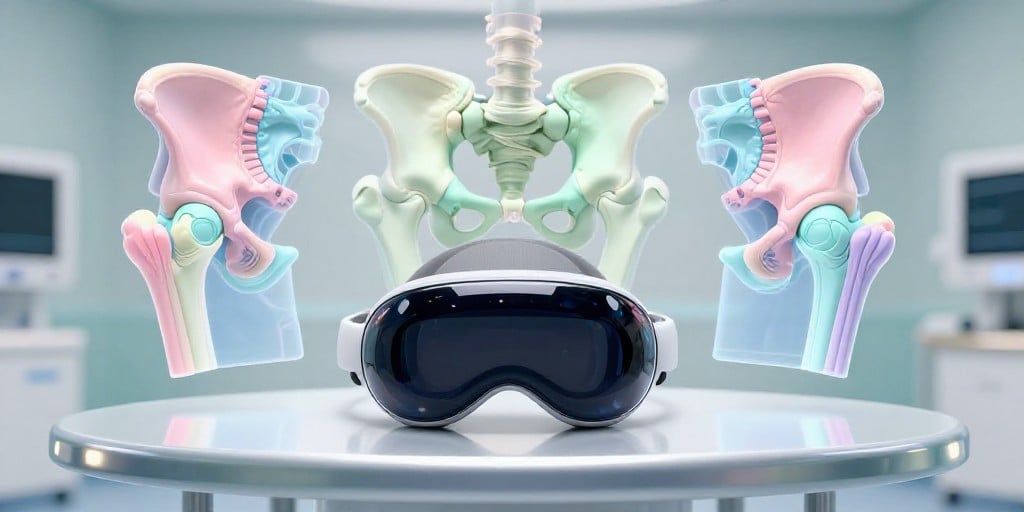
Stryker Corp, a leading medical technology company, announced a milestone in the integration of digital technology with surgical practice. The company revealed that its SportSuite Vision application—designed to deliver arthroscopic video, imaging, and procedural data in a spatial computing format—successfully supported the first hip arthroscopy performed with an Apple Vision Pro headset at Duke Health. This event followed the product’s receipt of FDA De Novo authorization in mid‑July, marking the first time the agency approved an intra‑operative application for the Apple platform.
Technical and Operational Implications
SportSuite Vision consolidates multiple streams of clinical information into a single ergonomic view. By overlaying imaging, navigation data, and real‑time video onto a head‑mounted display, surgeons can customize the placement of critical data, potentially reducing cognitive load and improving workflow efficiency. The application’s ability to replace conventional monitors with a spatially integrated display may shorten setup times, lower equipment costs, and enhance patient safety by providing surgeons with a clearer view of operative fields.
The FDA approval also establishes a regulatory framework for future intra‑operative applications on consumer‑grade hardware. This precedent could accelerate the adoption of mixed reality tools across orthopaedic and other surgical specialties, fostering a more connected operating environment that integrates real‑time sensor data, patient records, and procedural analytics.
Market Context and Competitive Dynamics
The digital surgery market is experiencing rapid growth, driven by increasing demand for minimally invasive procedures, improved surgical precision, and the need for data‑driven outcomes. Key players—including Medtronic, Johnson & Johnson, and Intuitive Surgical—are investing heavily in augmented reality (AR) and virtual reality (VR) solutions. Stryker’s partnership with Apple positions it at the forefront of this trend, leveraging Apple’s ecosystem of hardware and software to deliver a seamless user experience.
From a business perspective, the SportSuite Vision platform aligns with broader industry moves toward value‑based care. By enhancing procedural efficiency and reducing operative times, the solution can lower costs for hospitals and improve patient throughput—an attractive proposition for health‑system buyers. Additionally, the platform’s modular architecture allows for integration with other Stryker devices and third‑party systems, expanding its appeal across different surgical suites.
Cybersecurity Landscape
While the announcement underscores Stryker’s focus on product innovation, it also highlights the healthcare sector’s dual priorities of advancing technology and safeguarding data. Earlier in the week, a cyberattack on a major oncology firm exposed internal records of over 1,400 U.S. patients, drawing attention to a growing pattern of cyberattacks across the industry. The report noted that several medical device manufacturers, including Stryker, have previously experienced similar breaches.
These incidents illustrate the inherent tension between connectivity and security in modern operating rooms. As hospitals adopt more networked devices—ranging from imaging systems to wearables—protecting patient data becomes increasingly critical. Stryker’s recent announcement, however, did not address security measures directly, leaving questions about how the company is mitigating risks associated with its spatial computing solutions.
Broader Economic Trends
The convergence of consumer electronics and medical devices reflects a broader trend toward digital transformation in healthcare. Increased investment in AI, data analytics, and immersive technologies is reshaping the operating room, driving up demand for integrated platforms that can deliver actionable insights in real time. At the same time, rising cyber‑threats and regulatory scrutiny—exemplified by the FDA’s De Novo authorization process—are forcing companies to balance innovation with rigorous data protection protocols.
Stryker’s strategic emphasis on a fully connected operating environment aligns with the industry’s move toward interoperable ecosystems. By offering a product that unifies disparate data sources into a coherent interface, the company is positioning itself as a key player in the next generation of surgical workflows. However, sustained success will depend on its ability to secure patient data, comply with evolving regulations, and demonstrate measurable clinical and economic benefits to its customers.
This article is intended to provide an objective, analytical overview of Stryker Corp’s recent announcement and its implications within the broader context of the healthcare industry.