
Corporate Analysis of Snam SpA’s Recent LNG Acquisition and Credit Upgrade
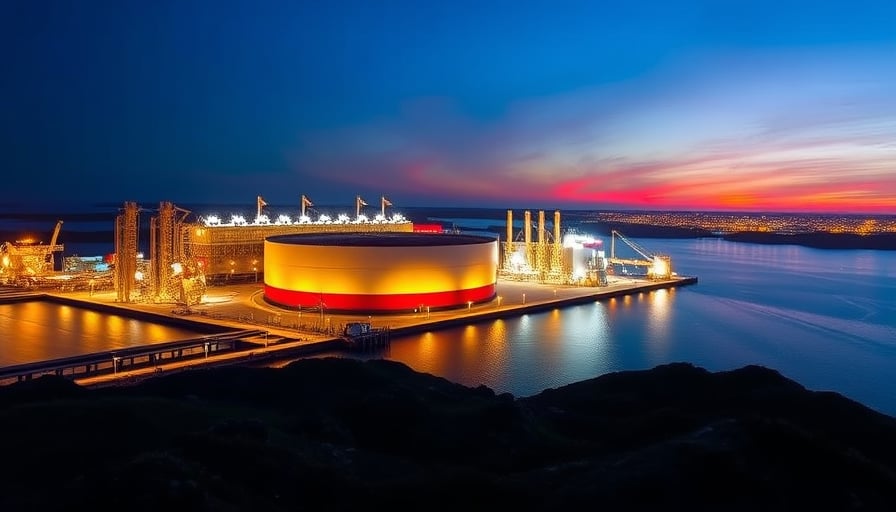
Snam SpA, Italy’s flagship natural‑gas distribution network operator, has completed a strategic acquisition that expands its control over the continent’s liquefied natural gas (LNG) infrastructure. By taking full ownership of a key offshore LNG facility in the Tuscany region, the company not only consolidates a critical asset but also signals a broader shift in its growth strategy toward integrated gas logistics.
1. Underlying Business Fundamentals
Asset Quality and Capacity Expansion
The Tuscany LNG terminal, with a nominal capacity of 2 million tonnes per annum, represents a vital chokepoint in Italy’s LNG import chain. Full ownership eliminates cross‑ownership costs and aligns the terminal’s operational incentives with Snam’s national transmission network. The terminal’s proximity to the Adriatic Sea also offers a strategic buffer against potential disruptions in Eastern European supply routes—a trend that has intensified following geopolitical tensions in the region.
Revenue Mix and Cash‑Flow Implications
Snam’s 2023 operating revenue was €3.6 billion, with gas transport and storage accounting for 70 % of the total. The addition of the LNG terminal is projected to contribute an incremental €250 million in transport fees over the next five years, assuming a conservative 5 % growth in LNG import volume. The terminal’s high fixed costs are amortized over a 20‑year life, improving the company’s cash‑flow stability and reducing sensitivity to commodity price swings.
Debt Profile and Capital Expenditure
The acquisition was financed through a €400 million senior secured loan, which is fully collateralized against the terminal’s assets. This structure preserves Snam’s debt‑to‑EBITDA ratio at 1.6×—a comfortable buffer relative to the European gas network average of 2.1×. The company’s 2024 CAPEX budget, capped at €1.2 billion, is largely devoted to network upgrades, including high‑pressure pipeline extensions and digital monitoring systems.
2. Regulatory Environment
European Union Directives and Net‑Zero Goals
The EU’s Green Deal and the forthcoming “Fit for 55” package set ambitious decarbonisation targets. While natural gas remains a transitional fuel, the EU is also accelerating the deployment of LNG infrastructure to diversify supply sources and support renewable hydrogen blending. Snam’s full ownership of a strategic LNG terminal positions it favorably to participate in upcoming EU subsidies for green gas infrastructure and potential hydrogen transport pilots.
National Energy Policies
Italy’s “Nuovo Plo” strategy emphasizes the reinforcement of domestic gas infrastructure, including LNG terminals, to reduce dependency on Russian pipelines. The Tuscany terminal’s strategic importance aligns with national security objectives, potentially qualifying for government-backed credit lines and tax incentives. However, regulatory scrutiny around environmental impact assessments and coastal protection laws could delay future capacity expansions.
3. Competitive Dynamics
Market Position Relative to Peers
Snam’s competitors, notably Enel’s gas division and the French operator GRTgaz, have pursued similar LNG expansion strategies. While GRTgaz’s LNG capacity is slightly larger, it is spread across multiple sites, reducing operational synergies. Snam’s focus on a single, fully owned terminal offers operational efficiencies but limits geographic diversification.
Pricing Power and Contractual Risk
The firm’s long‑term transport contracts with major importers, such as Enel and Eni, secure a stable revenue stream. Nonetheless, the concentration of LNG imports from the same terminal exposes the company to supply chain concentration risk should geopolitical events disrupt Russian or North‑American shipments.
Emerging Threats from Renewable Hydrogen
The growing interest in green hydrogen as an alternative to natural gas introduces a potential substitution threat. While Snam is exploring hydrogen blending trials, the cost differential and infrastructure compatibility issues remain significant hurdles. Failure to adapt could erode the terminal’s long‑term relevance.
4. Overlooked Trends and Opportunities
Digitalization of Gas Logistics
Snam’s investment in real‑time monitoring and AI‑driven predictive maintenance could reduce operational downtime by up to 15 %. This digital transformation not only lowers costs but also enhances safety and environmental compliance—factors increasingly valued by investors and regulators.
Cross‑Sector Collaboration
There is a growing trend of gas utilities partnering with renewable energy firms to co‑locate infrastructure. Snam’s strategic location in Tuscany, a region with high solar and wind penetration, offers an opportunity to integrate a biogas or hydrogen co‑generation plant, potentially unlocking additional revenue streams and regulatory incentives.
Regulatory Loopholes in LNG Import Permits
EU regulation currently allows a single LNG terminal to process up to 15 % of a member state’s total gas imports. Snam’s full ownership positions it to lobby for an amendment that could permit a higher percentage, effectively increasing the terminal’s share of national imports without additional physical expansion.
5. Risks and Caveats
| Risk | Description | Mitigation |
|---|---|---|
| Geopolitical Supply Disruption | Reliance on Russian and North‑American LNG may be jeopardized by sanctions or political tensions. | Diversify import sources; secure long‑term contracts with alternative suppliers. |
| Regulatory Delays | Environmental assessments or coastal protection legislation could delay new projects. | Engage proactively with local authorities; invest in compliance infrastructure. |
| Hydrogen Substitution | Rapid adoption of green hydrogen could reduce natural gas demand. | Explore hybrid LNG–hydrogen solutions; invest in conversion technology. |
| Credit Market Volatility | Rising interest rates could increase refinancing costs. | Maintain low debt‑to‑EBITDA; secure fixed‑rate instruments. |
6. Credit Assessment and Market Outlook
Moody’s upgrade to a “positive” outlook, while maintaining the Baa2 rating, reflects confidence in Snam’s improved liquidity profile and asset diversification. The rating agency cites the company’s reduced leverage, stable cash‑flow generation, and strategic focus on LNG infrastructure as key factors. The decision to decline a smaller stake in a German gas network operator, a move deemed “prudent,” underscores Snam’s intent to preserve capital for core expansion activities rather than opportunistic acquisitions.
Financial markets have responded favorably to the rating shift, with Snam’s bond yields falling by 5 basis points in the week following the announcement. Analysts project a 4–5 % CAGR in EBITDA over the next five years, driven by the incremental revenue from the LNG terminal and operational efficiencies.
7. Conclusion
Snam SpA’s full acquisition of the Tuscany LNG terminal represents a calculated move to consolidate critical infrastructure, enhance operational control, and align with evolving regulatory frameworks. While the company benefits from a stable revenue base and a favorable credit profile, it must navigate geopolitical risks, regulatory hurdles, and potential market displacement by green hydrogen. By capitalizing on digitalization, cross‑sector collaboration, and proactive regulatory engagement, Snam can sustain its competitive advantage and secure long‑term growth in a rapidly transforming energy landscape.