Corporate News Report
Corporate Overview
Sika AG, a global specialist in construction chemistry, has announced its role as a financial partner in the ETH Zürich Living Lab HIL (Hybrid Innovation Lab) project. The partnership, announced today, positions Sika as a key investor and technical collaborator in a multi‑year initiative aimed at advancing sustainable building practices. The financial commitment will support the Living Lab’s early stages—Exploration (2026), Synthesis (2027), and Transfer (2028)—in preparation for the 2030 renovation and expansion of the ETH building.
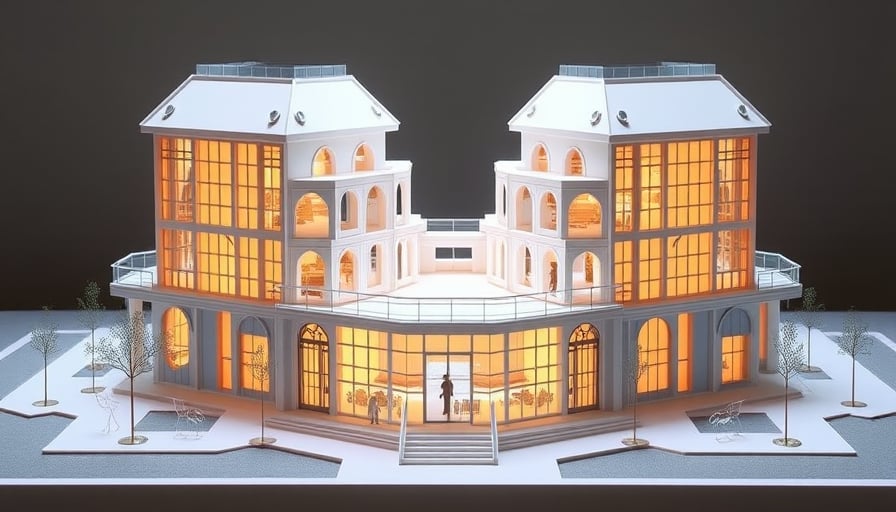
The ETH Zürich Living Lab HIL is a pioneering pilot initiative designed to test and validate novel approaches to sustainable construction through carbon reduction, digitalisation, and circular economy principles. The project will serve as a real‑world case study, allowing researchers, students, and industry partners to collaborate on developing solutions that will be implemented during the building’s 2030 renovation phase.
Strategic Rationale
Sika’s involvement underscores the company’s broader strategy of promoting sustainable and digital construction solutions worldwide. According to recent financial data, the company reported a turnover of CHF 11.2 billion in 2025 and operates in 103 countries through more than 400 manufacturing sites. By investing in the Living Lab HIL, Sika seeks to accelerate the transfer of innovations from research to practice, thereby strengthening its competitive positioning in the construction chemistry sector and reinforcing its reputation as an innovation leader.
Sika’s Chief Innovation and Sustainability Officer, Patricia Heidtman, emphasised the company’s commitment to advancing sustainable construction methods. She noted that the collaboration with ETH Zürich would accelerate the development of new technologies and demonstrate how sustainable and circular building practices can shape the industry’s future.
Project Implementation and Funding Structure
The ETH Foundation will manage the multi‑year financing of the Living Lab HIL project. Sika will provide both capital and ongoing technical support, leveraging its expertise in construction chemistry to develop and test new materials and processes. The project phases are structured as follows:
| Phase | Year | Focus | Key Deliverables |
|---|---|---|---|
| Exploration | 2026 | Conceptual research, data collection | Baseline metrics, initial material prototypes |
| Synthesis | 2027 | Development of pilot solutions | Scalable process designs, digital integration tools |
| Transfer | 2028 | Implementation framework | Deployment plans for 2030 renovation |
The funding amount, described as substantial, will be allocated across these phases to ensure the project’s continuity and success.
Industry Implications
The collaboration aligns with several industry trends:
- Circular Economy and Resource Efficiency – By focusing on material reuse and waste minimisation, the project supports the global push toward circular construction practices.
- Digitalisation of Construction – The integration of digital tools and data analytics will enhance design optimisation and real‑time monitoring, reflecting the sector’s increasing reliance on digital twin technologies.
- Carbon‑Reduction Targets – The Living Lab HIL’s emphasis on carbon reduction aligns with regulatory pressures and corporate sustainability goals, positioning the ETH building as a benchmark for future developments.
The partnership demonstrates how cross‑sector collaboration can accelerate the adoption of innovative solutions, a model that other construction chemistry firms may emulate.
Economic Context
The construction chemistry sector is experiencing heightened demand for environmentally responsible products, driven by stricter building regulations and stakeholder expectations. Sika’s investment in a high‑profile sustainability initiative signals confidence in the sector’s growth trajectory and reinforces the company’s position as a market leader.
Moreover, the project’s long‑term horizon (up to 2035) reflects a strategic shift towards future‑proofing operations, mitigating risks associated with climate change and supply chain disruptions. By embedding research and development within a real‑world context, Sika is poised to capture emerging opportunities and maintain a competitive edge.
Conclusion
Sika AG’s role as a financial partner in the ETH Zürich Living Lab HIL represents a significant commitment to sustainable construction innovation. By contributing substantial funding and technical expertise, Sika is set to accelerate the development and deployment of circular, resource‑efficient, and digital building practices. The partnership exemplifies a forward‑looking strategy that integrates fundamental business principles, competitive positioning, and broader economic trends, positioning Sika as a catalyst for transformative change in the global construction chemistry industry.