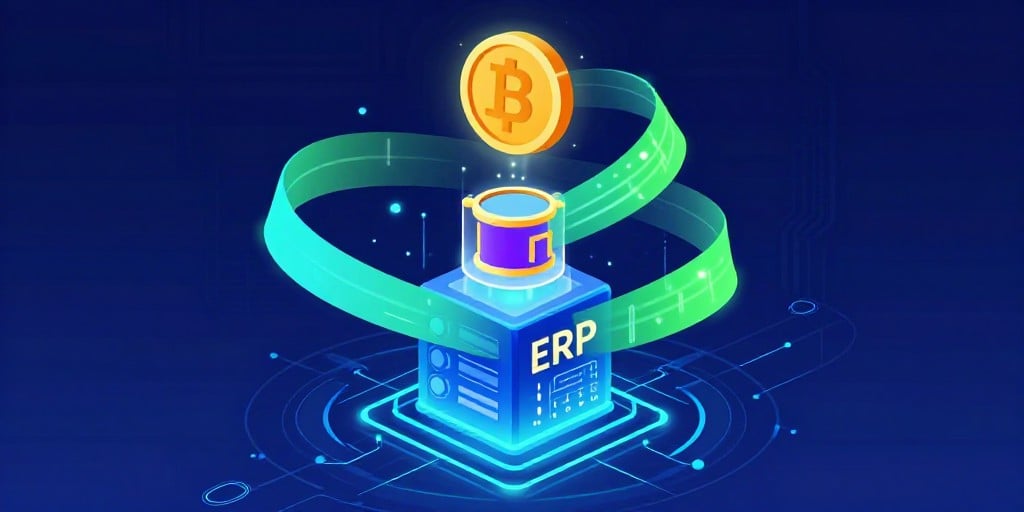
SAP SE Expands Cloud ERP Payment Landscape with Stablecoin Integration
SAP SE’s announcement of native stablecoin support within its cloud ERP platform marks a pivotal shift in how enterprises approach digital‑asset transactions.
Executive Summary
SAP’s partnership with a leading digital‑asset provider enables customers to initiate, route, and reconcile stablecoin payments directly inside the SAP environment. By eliminating the need for external blockchain infrastructure, the company positions stablecoins as a competitive alternative to traditional payment rails when economic conditions are favorable.
Context: The Growing Convergence of Enterprise Software and Digital Assets
- Industry Momentum: Across the technology spectrum, enterprise software vendors are embedding blockchain‑derived balances into core workflows, reducing friction for users who otherwise would need to adopt separate wallet applications.
- Operational Value Over Technology: SAP’s approach reflects a broader trend: shifting focus from the underlying technology (blockchain, smart contracts) to tangible operational benefits—transaction cost, settlement speed, regulatory compliance.
- Competitive Landscape: Samsung’s mobile‑wallet integration of a widely used stablecoin and similar initiatives by financial platforms underscore a rapid, cross‑sector embrace of stablecoins as mainstream payment instruments.
Strategic Implications for Corporate Treasurers
| Criterion | Traditional Bank Transfers | Stablecoin via SAP ERP |
|---|---|---|
| Settlement Speed | Hours to days | Minutes to seconds |
| Cost (per transaction) | Variable, often higher | Potentially lower, depending on network fees |
| Regulatory Oversight | Established frameworks | Emerging regulations, but increasingly transparent |
| Integration Complexity | Mature APIs, legacy systems | Native SAP integration, reduced complexity |
- Decision Framework Shift: Treasurers will likely evaluate stablecoins alongside conventional bank transfers, treating them as another option in their payment toolkit rather than a separate project.
- Risk–Reward Balance: The economics of a stablecoin transaction—transaction fees, currency volatility, and counterparty risk—will dictate adoption. SAP’s integration lowers the entry barrier, potentially tipping the scale in favor of stablecoins in specific scenarios.
Potential Market‑Level Outcomes
- Erosion of Traditional Banking Dominance
- As stablecoins become seamlessly integrated into enterprise systems, banks may face pressure to offer competitive fee structures and faster settlement mechanisms to retain corporate clients.
- Acceleration of Digital‑Asset Adoption
- The removal of technical hurdles could spur broader acceptance, prompting further standardization of digital‑asset settlement protocols across industries.
- Evolution of Regulatory Focus
- With stablecoins moving into mainstream corporate workflows, regulators may intensify scrutiny, potentially leading to clearer guidelines and increased compliance resources.
Challenges and Counterarguments
- Regulatory Uncertainty: Despite growing acceptance, legal frameworks for stablecoins remain in flux, which could pose compliance challenges for large enterprises.
- Cybersecurity Risks: Integration of digital‑asset functionality may expose ERP systems to new threat vectors, necessitating robust security architectures.
- Vendor Lock‑In: Relying on a single digital‑asset provider could reduce flexibility; enterprises must weigh the benefits against potential vendor dependency.
Forward‑Looking Analysis
SAP’s initiative is a harbinger of a larger paradigm shift: payment systems moving from siloed, technology‑driven solutions to unified, value‑centric platforms.
- Standardization Trajectory: If major ERP vendors follow SAP, a common framework for digital‑asset transactions may emerge, simplifying cross‑border payments and fostering interoperability.
- Economic Modelling: Corporate treasurers will develop new cost‑benefit models that incorporate blockchain‑specific variables (gas fees, network congestion) alongside traditional banking metrics.
- Innovation Catalysts: The convergence of stablecoins with ERP platforms could stimulate ancillary services—real‑time compliance monitoring, automated tax reporting, and AI‑driven treasury forecasting—leveraging the granular transactional data now accessible.
Conclusion
SAP’s native stablecoin support is more than a technical upgrade; it represents a strategic realignment of payment ecosystems. By embedding digital‑asset settlement into the core of enterprise software, SAP is redefining how corporate treasuries perceive and utilize stablecoins. This move accelerates the mainstreaming of digital assets, potentially reshaping the competitive dynamics between traditional financial institutions and the burgeoning digital‑asset sector. Enterprises that adapt early stand to benefit from faster settlements, reduced costs, and a future‑proof payment architecture.