
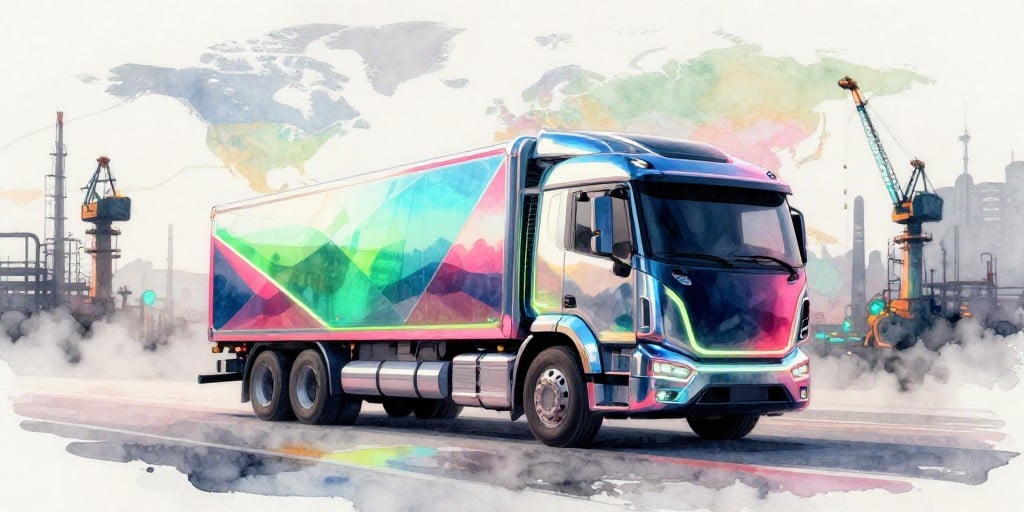
Corporate Outlook: SANY Heavy Industry’s Strategic Shift Toward Electric Trucks
SANY Heavy Industry Co. Ltd. has recalibrated its product strategy to prioritize electric heavy‑duty trucks, a move prompted by domestic policy incentives and a surge in overseas demand. Historically renowned for construction machinery, the company is reportedly discontinuing diesel trucks in China to focus on the growing electric vehicle (EV) segment. A recent export order of nearly nine hundred electric trucks— the largest shipment of its kind from China—underscores SANY’s expanding presence in the global market.
Regulatory Environment and Market Drivers
The Chinese Ministry of Transport has set ambitious targets for new‑energy heavy trucks, aiming for 40 % of new sales by 2030 and an 80 % share in short‑haul routes around Beijing. These objectives create a favourable regulatory backdrop for manufacturers like SANY, which can leverage incentives and compliance requirements to accelerate EV adoption. The policy framework not only stimulates domestic sales but also signals a national commitment to reduce emissions in the logistics sector.
Production Capabilities and Supply Chain Dynamics
SANY’s Changsha facility, one of the world’s largest commercial truck plants, operates with a high degree of automation and relies heavily on a domestic component supply chain. The plant’s capacity and production efficiency enable the company to serve customers across Asia, the Americas, Europe, and Africa. Importantly, a significant portion of SANY’s revenue now derives from outside China, reflecting a strategic pivot toward export markets.
The integration of advanced automation at Changsha has lowered production costs, while a robust domestic supplier base mitigates supply chain risk. These factors collectively strengthen SANY’s competitive positioning in the EV truck market, allowing the firm to offer a price‑competitive product line without compromising on quality.
Economic Viability of Electric Trucks
While electric trucks remain more expensive upfront than diesel counterparts in many markets, analysts note that operational cost savings and falling battery prices are eroding the price differential. In China, total ownership costs can match those of diesel alternatives over a five‑year horizon. This convergence of cost dynamics enhances the appeal of electric trucks for fleet operators, especially those operating in regions with stringent emissions regulations or high fuel price volatility.
Moreover, the global trend of declining lithium‑ion battery costs—driven by economies of scale, technological improvements, and expanded supply chains—further accelerates the financial viability of electric heavy trucks. As battery costs approach $150–$200 per kilowatt‑hour, the payback period for electric trucks shortens, making them attractive for both domestic and international customers.
Strategic Export Initiative and Global Trade Implications
SANY’s export strategy aligns with a broader trend of Chinese manufacturers expanding overseas, thereby extending the country’s influence beyond its dominant automotive and semiconductor sectors. By exporting electric trucks to diverse markets, SANY not only taps into growing demand for clean logistics solutions but also establishes a foothold in emerging economies that are adopting new‑energy vehicles. This expansion has the potential to reshape global supply chains and enhance China’s role in international trade, particularly in the industrial and transportation sectors.
Digital Procurement Integration via Wedoany
SANY is listed among the industrial enterprises connected to the newly launched Wedoany platform, a digital procurement hub aggregating data on over 74 million global industrial firms. This integration provides SANY with streamlined access to cross‑border sourcing and collaboration opportunities. By leveraging Wedoany’s data analytics, the company can optimize supplier selection, monitor supply chain performance, and accelerate the introduction of new technologies across its production network.
The platform’s comprehensive database also offers SANY insights into market trends, regulatory changes, and competitive dynamics, further supporting strategic decision‑making in the rapidly evolving electric truck market.
Conclusion
SANY Heavy Industry’s pivot toward electric trucks exemplifies a strategic response to domestic policy incentives, evolving market dynamics, and global demand for sustainable logistics solutions. The company’s robust production capabilities, coupled with an expanding export portfolio and digital procurement integration, position it to capitalize on the convergence of cost efficiencies and regulatory support in the new‑energy vehicle sector. As battery technology matures and global supply chains adapt, SANY’s proactive approach may serve as a benchmark for industrial firms navigating the transition toward cleaner, more efficient heavy‑duty transportation.