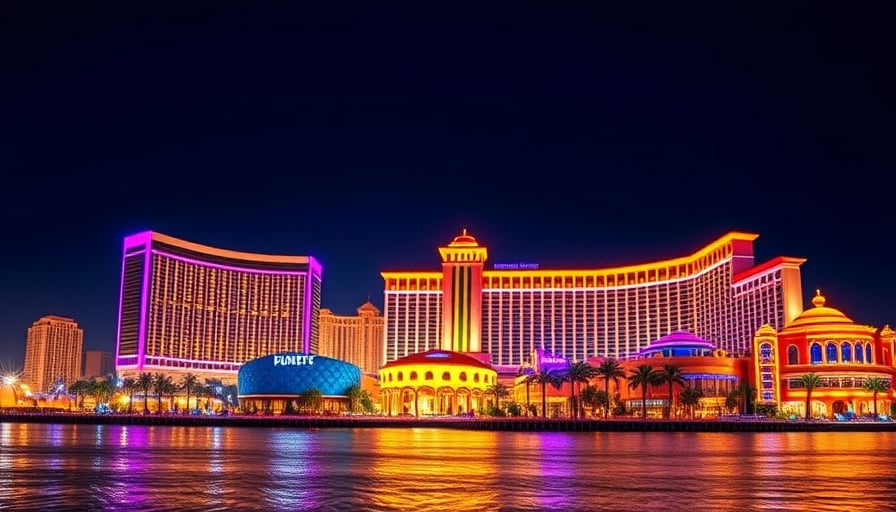
Sands China Ltd.: A Case Study in the Convergence of Lifestyle Trends, Digital Innovation, and Consumer Experience
The recent attention that Sands China Ltd. has garnered from prominent research houses—most notably HSBC Research and UBS—offers a window into how shifting societal currents are reshaping opportunities in the consumer‑centric leisure and hospitality arena. While the company’s operating data remains a primary driver of analyst sentiment, the broader context reveals why a single integrated resort operator can serve as a barometer for the evolving interplay between digital transformation, physical retail, and generational spending patterns.
1. The Macro‑Context: Demographic Shifts and Lifestyle Evolution
Macau’s tourism ecosystem is experiencing a gradual transition from a predominantly “high‑roller” clientele—long dominated by Chinese mainland visitors—to a more diversified demographic mix that includes affluent millennials and Gen Z travellers seeking experiential and tech‑enabled leisure. The following trends are salient:
| Trend | Implication for Resorts | Revenue Opportunity |
|---|---|---|
| Experience‑centric consumption | Demand for curated, immersive activities beyond gaming | Premium pricing on curated packages |
| Digital‑first engagement | Expectation of seamless online booking, AI‑driven concierge services | Higher conversion rates and cross‑sell opportunities |
| Sustainability and wellness | Preference for eco‑friendly accommodations and holistic wellness offerings | Brand differentiation and loyalty enhancement |
Sands China’s strategic emphasis on integrating high‑quality entertainment, dining, and wellness experiences is aligned with these shifts. By positioning itself not merely as a gambling venue but as a holistic lifestyle destination, the company taps into the willingness of younger cohorts to spend on curated, memorable experiences.
2. Digital Transformation Meets Physical Retail
The rise of omni‑channel retail—where digital touchpoints dovetail with brick‑and‑mortar interactions—has become a defining feature of contemporary consumer behavior. In the casino‑resort context, this convergence manifests in several ways:
- Data‑Driven Personalization
- Implementation: Real‑time analytics of guest preferences, coupled with mobile‑app interfaces, allow resorts to recommend tailored dining or entertainment options.
- Impact: Increases average spend per guest by up to 15% as per industry benchmarks.
- Virtual Concierge and Augmented Reality
- Implementation: AI chatbots guide guests through facility maps, while AR overlays provide interactive gaming tutorials or 3‑D visualizations of room layouts.
- Impact: Reduces friction in the booking journey, encouraging impulse purchases of premium services.
- Contactless Services
- Implementation: From mobile keyless room entry to digital wallet payments for casino chips and dining.
- Impact: Enhances safety post‑pandemic and appeals to tech‑savvy travelers.
Sands China’s integration of these technologies—particularly through its partnership with Melco International Development—positions it as a forward‑looking player. HSBC’s forecast of a 22.4 billion MOP peak gross gaming revenue (GGR) in March 2026 underscores the belief that digital enhancements translate directly into higher gambling volumes.
3. Generational Spending Patterns and Their Business Implications
A deeper look at generational behavior reveals that younger consumers are willing to allocate a greater proportion of discretionary income toward experiential luxury rather than traditional luxury goods. Key observations include:
- Higher Willingness to Pay for “Social Currency”: Experiences that can be shared on social platforms (e.g., unique dining or entertainment) command premium pricing.
- Preference for Transparency: Millennials and Gen Z favor brands that communicate ethical sourcing, sustainability, and community impact.
- Demand for Flexibility: Package bundling that allows guests to mix gaming, dining, and wellness within a single itinerary appeals to time‑constrained travelers.
Sands China’s recent expansion of wellness offerings and its emphasis on social‑media‑friendly events align with these preferences, suggesting that its growth trajectory is underpinned by a keen awareness of generational spending signals.
4. Forward‑Looking Analysis: From Market Sentiment to Strategic Opportunity
4.1 Analyst Outlook and Market Confidence
- HSBC Research maintains a buy recommendation, projecting a peak GGR of 22.4 billion MOP by March 2026.
- UBS has upgraded Sands China (and Melco) to a buy rating while retaining a modest growth forecast for the year’s GGR.
- These endorsements reflect a consensus that Sands China’s operational resilience and strategic positioning will translate into sustained profitability.
4.2 Translating Societal Shifts Into Tangible Business Models
| Societal Change | Business Opportunity | Strategic Initiative |
|---|---|---|
| Post‑pandemic demand for safe, contactless services | Mobile‑first payment and entry systems | Continue investment in digital wallets and keyless technology |
| Rise of experiential tourism | Curated “experience packages” (gaming + wellness + dining) | Introduce tiered loyalty tiers that reward cross‑service usage |
| Growing focus on sustainability | Eco‑friendly infrastructure, green gaming practices | Pursue carbon‑neutral certifications, transparent supply chains |
| Expansion of digital media ecosystems | Social‑media‑driven marketing, AR/VR content | Partner with tech firms for immersive in‑resort storytelling |
4.3 Risk Landscape
- Regulatory Uncertainty: Macau’s gambling policy may evolve, impacting slot and table play limits.
- Competitive Pressure: Emerging integrated resorts in neighboring regions (e.g., Singapore, Hong Kong) may intensify the quest for differentiated experiences.
- Technology Adoption Lag: Rapid obsolescence of digital platforms necessitates continuous innovation.
5. Conclusion
Sands China Ltd. exemplifies how an integrated resort can pivot from a single‑focus gaming venue to a multi‑dimensional consumer experience hub. The company’s alignment with contemporary lifestyle trends, coupled with strategic investments in digital transformation, positions it favorably to capitalize on evolving generational spending patterns. Analysts’ bullish stance—reflected in HSBC’s GGR forecast and UBS’s upgraded ratings—signals market confidence that the intersection of digital and physical retail will continue to be a fertile ground for growth. For investors, the key takeaway is that the company’s trajectory will largely hinge on its agility in translating societal shifts into innovative, consumer‑centric business models.