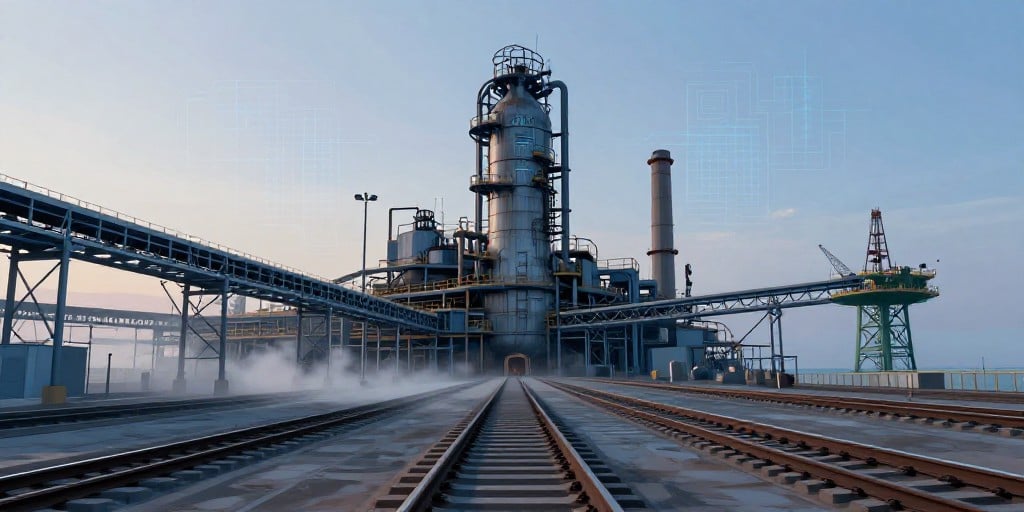
Corporate Capital Expenditure Dynamics in a Volatile Macro‑Environment
The recent modest decline in the Dow Jones Industrial Average—paralleled by declines in the S&P 500 and Nasdaq—underscored the sensitivity of industrial firms to macro‑economic signals such as rising bond yields and escalating oil prices. These market movements have direct implications for the capital expenditure (CapEx) trajectories of manufacturing and heavy‑industry companies, particularly those that rely on complex industrial equipment and long‑lead‑time supply chains.
Impact on Manufacturing CapEx
Manufacturers across the U.S. have traditionally aligned CapEx with productivity gains and capacity expansion. In a period where borrowing costs climb, firms reassess the economic viability of large‑scale equipment purchases. The key productivity metrics that drive these decisions include:
- Unit Output per Machine Hour – A higher output per machine hour justifies the depreciation cost of new automation equipment.
- Process Yield Rates – Improved yield reduces waste and enhances the return on investment in advanced process controls.
- Energy Efficiency Ratios – Energy‑saving machinery can offset higher financing costs through lower operating expenses.
With oil prices surging, the energy burden for heavy‑industry operations rises, making investments in energy‑efficient technologies more attractive. Companies that can demonstrate measurable reductions in kilowatt‑hour consumption per unit produced are better positioned to secure financing at favorable rates.
Technological Innovation and Heavy Industry
Recent advancements in digital twins, additive manufacturing, and predictive maintenance are reshaping the cost–benefit calculus for industrial equipment. These technologies:
- Reduce Downtime – Predictive analytics identify impending failures before they occur, keeping production lines running.
- Lower Maintenance Costs – Smart sensors provide real‑time diagnostics, enabling just‑in‑time maintenance and minimizing costly overhauls.
- Accelerate Return on Capital – Faster deployment of new equipment, combined with improved process stability, shortens the payback period.
The adoption curve for these innovations is accelerating in sectors such as automotive, aerospace, and advanced materials, where precision and throughput directly influence competitiveness.
Supply Chain Considerations
The current environment is marked by:
- Lead‑time Volatility – Disruptions at key suppliers (e.g., rare‑earth metals for electric motors) can delay equipment installation.
- Geopolitical Tensions – Potential export policy adjustments announced by U.S. Treasury officials introduce uncertainty regarding component sourcing abroad.
- Inventory Management Shifts – Companies are increasingly shifting from just‑in‑time to strategic safety stock levels for critical parts, impacting overall inventory carrying costs.
Manufacturers are therefore evaluating the robustness of their supply chains when deciding on CapEx, often favoring equipment that can be sourced domestically or from politically stable regions.
Regulatory and Policy Landscape
Recent discussions around tightening export controls on high‑technology equipment underscore the importance of compliance costs. Firms must incorporate:
- Export Licensing Fees – Potentially significant for equipment designed for dual‑use applications.
- Compliance Audits – Additional costs to ensure adherence to evolving regulations.
- Strategic Redesign – Modifying product specifications to avoid restricted export categories.
Regulatory uncertainty can dampen investment enthusiasm, prompting firms to delay or scale back CapEx until the policy framework stabilizes.
Infrastructure Spending and Market Implications
Federal infrastructure spending—particularly in the energy grid, transportation, and water treatment sectors—creates downstream opportunities for industrial equipment suppliers. CapEx in these areas often includes:
- Grid Modernization – Deployment of smart meters and distributed energy resources.
- Transportation Corridors – Upgrades to rail and highway infrastructure requiring heavy machinery and precision equipment.
- Water Infrastructure – Demand for advanced treatment plants and associated automation.
Industrial firms that can align their product development with the anticipated infrastructure agenda stand to capture significant market share. However, the timing of federal stimulus packages and the allocation of funds remain contingent on political negotiations, adding another layer of risk to CapEx planning.
Economic Drivers of CapEx Decisions
Several macro‑economic factors influence CapEx trajectories:
| Driver | Effect on CapEx | Rationale |
|---|---|---|
| Bond Yields | ↓ CapEx | Higher borrowing costs raise the discount rate applied to projected cash flows. |
| Oil Prices | ↑ CapEx in Energy‑Efficient Equipment | Energy cost savings justify larger upfront investments. |
| Inflation Expectations | ↓ CapEx | Uncertainty erodes confidence in long‑term investment returns. |
| Interest Rate Outlook | ↓ CapEx | Anticipated tightening reduces the attractiveness of debt‑financed projects. |
| Consumer Demand Indicators | ↑ CapEx | Strong purchasing‑manager indices suggest robust demand, encouraging capacity expansion. |
Manufacturers often employ scenario analysis to quantify the sensitivity of CapEx to these variables, integrating them into their long‑term strategic plans.
Conclusion
In a market where equity performance is tethered to macro‑economic sentiment, manufacturing firms must navigate a complex landscape of rising energy costs, tightening financing conditions, and evolving regulatory frameworks. Capital expenditure decisions are increasingly driven by productivity metrics, technological innovation, and supply chain resilience. Firms that can leverage digital manufacturing advances, secure stable component sources, and align their CapEx with infrastructure investment trends are positioned to thrive, even amid market softness.