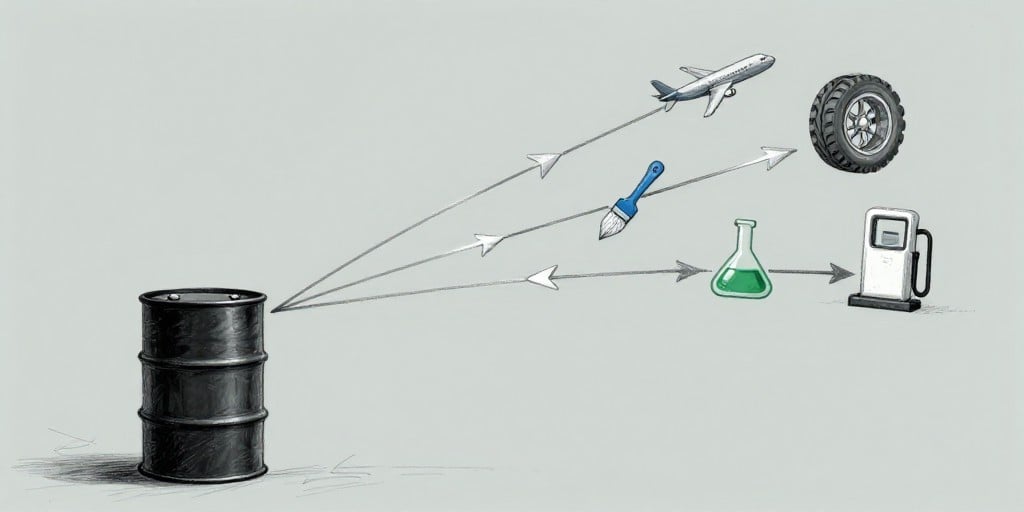
Impact of Elevated Brent Crude on Multisector Corporate Earnings
The recent surge in Brent crude prices, which have approached $110 per barrel following supply disruptions in the Middle East, has generated considerable headwinds for a range of industries whose profitability is closely tied to petroleum. This article offers an analytical review of the implications for oil‑marketing firms, airlines, tyre manufacturers, paint producers, specialty chemicals, and gas‑linked companies, emphasizing the underlying economic dynamics and competitive considerations that shape their responses.
1. Oil‑Marketing Firms: Margin Compression and Balance‑Sheet Constraints
Oil‑marketing operators are positioned between upstream producers and end‑users, absorbing the volatility of crude price movements through their marketing margins. The company in question, distinguished by a smaller balance sheet and limited internal refining capacity, faces heightened vulnerability for several reasons:
| Factor | Impact | Mitigation Consideration |
|---|---|---|
| Input Cost Spike | Direct increase in acquisition cost of crude | Hedging strategies, long‑term supply contracts |
| Marketing Margin Tightening | Reduced spread if retail prices lag | Pricing flexibility, differentiated product mix |
| Balance‑Sheet Fragility | Limited capacity to absorb shocks | Capital allocation, liquidity management |
Analysts have observed that the firm’s marketing margins could tighten significantly if retail fuel prices fail to keep pace with the elevated crude costs. The extent of the margin erosion will largely depend on the firm’s ability to pass higher input costs onto consumers and on the duration of the crude‑price elevation. A sustained high‑price environment would pressure the company’s profitability, especially if competitors with larger refining footprints can absorb cost increases more efficiently.
2. Airlines: Fuel‑Cost Burden and Operational Efficiency
Aviation turbine fuel accounts for a substantial portion of airline operating expenses. In the context of a prolonged crude‑price rally:
- Cost Structure: Higher fuel prices increase the variable cost base, eroding gross margins unless offset by revenue growth or cost‑control measures.
- Pricing Power: Low‑cost carriers and legacy airlines differ in their capacity to raise fares. The market elasticity of airline tickets and competitive dynamics will determine the degree of pass‑through.
- Operational Adjustments: Fleet optimization, fuel‑efficient routing, and ancillary revenue generation become critical tools for preserving profitability.
The airline sector’s exposure is amplified by the fact that fuel constitutes one of the most significant discretionary costs for airlines, making margin preservation a central strategic priority.
3. Tyre Manufacturers: Petrochemical Input Price Pressure
Tyre production relies heavily on petroleum‑derived inputs such as carbon black, elastomers, and various additives. Elevated crude prices translate into higher costs for these inputs, leading to:
- Cost Inflation: Directly compressing profit margins unless offset by higher tyre prices.
- Competitive Landscape: Price elasticity in the tyre market is relatively inelastic for certain segments (e.g., safety or performance tyres) but more elastic for off‑the‑shelf consumer models.
- Innovation Imperative: Development of alternative, lower‑cost materials or energy‑efficient manufacturing processes can mitigate input cost sensitivity.
Companies that can adjust retail pricing without eroding market share or invest in cost‑reducing technologies will be better positioned to weather prolonged high‑crude periods.
4. Paint Producers: Solvents, Resins, and Petrochemical Feedstocks
Paint manufacturers face cost pressures from rising solvent and resin prices, both closely linked to crude oil. Key implications include:
- Raw Material Cost: Higher petrochemical prices increase the cost of key intermediates (e.g., acrylic resins, polyurethane).
- Pricing Strategy: The ability to pass these costs onto consumers depends on market segmentation; specialty and high‑performance paints tend to have higher pricing resilience.
- Product Innovation: Development of solvent‑free or low‑VOC formulations can reduce reliance on petrochemicals.
Sustained high crude prices could erode margins for paint producers unless they can realign product portfolios or achieve economies of scale in raw material procurement.
5. Specialty Chemicals and Gas‑Linked Companies: Feedstock and LNG Dynamics
Specialty chemical firms that rely on naphtha and related feedstocks face direct cost inflation, while gas‑linked entities experience strain through higher liquefied natural gas (LNG) prices tied to crude. These dynamics manifest as:
- Input Cost Increase: Naphtha‑dependent processes (e.g., alkylation, alkane blending) become more expensive.
- Commodity Price Correlation: LNG price spikes impact gas‑linked companies’ operating expenses, especially those with long‑term LNG supply contracts at fixed rates.
- Strategic Response: Diversification of feedstock sources, long‑term hedging, and efficiency improvements in catalytic processes.
The extent of impact is contingent on the duration of elevated oil prices and the flexibility of supply contracts.
6. Cross‑Sector Economic Forces and Broader Trends
- Supply Chain Interdependencies: Elevated oil prices ripple across sectors through shared commodity inputs, amplifying cost pressures.
- Pricing Power and Competitive Positioning: Firms with robust pricing strategies and differentiated products can better absorb input cost hikes.
- Regulatory and ESG Pressures: Emissions regulations and sustainability goals may accelerate the adoption of alternative energy sources, influencing long‑term exposure to crude price volatility.
7. Conclusion: Navigating a Volatile Crude Landscape
The current high‑price environment for Brent crude is poised to exert a negative influence on earnings across oil‑marketing firms, airlines, tyre manufacturers, paint producers, specialty chemicals, and gas‑linked companies. The magnitude of the impact will be determined by:
- The duration of the elevated crude‑price environment.
- Firms’ pricing flexibility and market power.
- Their capacity to manage cost increases through hedging, supply‑chain optimization, and product innovation.
- The competitive dynamics within each sector and the broader macroeconomic backdrop.
Companies that can swiftly adapt to rising input costs while preserving margin stability will likely outperform peers less adept at navigating these challenges.