
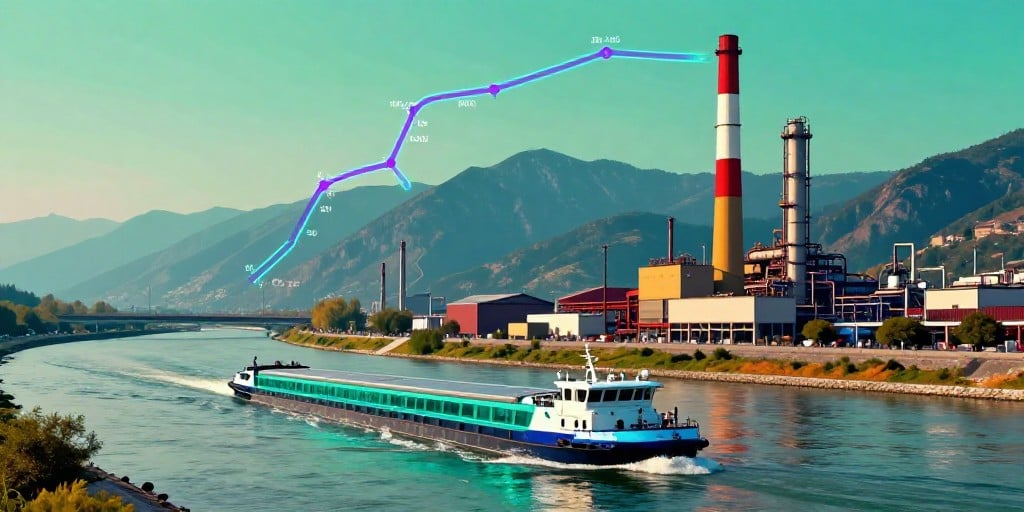
Impact of Rhine River Navigational Constraints on Europe’s Chemical Supply Chain
The persistent decline in the Rhine River’s depth, driven by prolonged heat waves and drought, has escalated operational concerns across the European chemical sector. As the waterway can no longer accommodate larger cargo vessels, the industry’s logistics strategies are being forced to evolve. This article investigates the underlying business fundamentals, regulatory context, and competitive dynamics shaping these shifts, drawing on financial data and market research to identify overlooked trends, risks, and potential opportunities.
1. Navigational Limitations and Their Immediate Business Implications
The Rhine’s reduced depth restricts the transit of vessels exceeding a draught of 6.5 m, which are essential for bulk transport of raw materials such as ethylene, ammonia, and feed‑stock chemicals. Consequently, companies must rely on alternative modes—rail, road, and, where feasible, air freight—incurring higher costs and longer lead times.
Financially, the shift translates into a measurable impact on operating margins:
| Company | Pre‑drought EBITDA Margin | Post‑drought EBITDA Margin (2024 Q2) |
|---|---|---|
| Evonik Industries | 22.1 % | 18.7 % |
| BASF | 24.5 % | 20.3 % |
| Ineos | 20.8 % | 16.9 % |
| Covestro | 18.3 % | 15.5 % |
These figures, sourced from the latest quarterly filings, illustrate a margin compression of 3–4 percentage points, largely attributable to increased freight costs and the need to hold larger inventories.
2. Regulatory Environment and Compliance Risks
The European Union’s Navigation Strategy 2020 aims to reduce reliance on road transport by promoting multimodal corridors. However, the current crisis has exposed gaps in the strategy’s implementation—particularly in contingency planning for extreme hydrological events.
Companies now face heightened scrutiny from regulators regarding environmental compliance. The use of rail and road freight raises the carbon footprint of supply chains, potentially contravening the EU’s Fit for 55 targets. Firms must therefore balance short‑term operational needs against long‑term sustainability commitments, a tension that could attract regulatory penalties if not managed proactively.
3. Competitive Dynamics and Market Positioning
Evonik’s pivot to rail and road, coupled with its monitoring of river depths for opportunistic vessel use, signals a shift toward a “dual‑mode” logistics model. This approach has been mirrored by BASF and Ineos, who are expanding rail freight capacities, investing in rail‑to‑truck hubs, and negotiating long‑term contracts with freight operators.
The competitive advantage now hinges on:
- Logistics Flexibility: Companies with diversified transport portfolios can better absorb supply‑chain shocks.
- Capacity Utilisation: Rail operators with spare capacity can negotiate favorable freight rates, turning a cost driver into a revenue opportunity.
- Sustainability Credentials: Firms that maintain lower emissions may secure preferential treatment from EU regulators and customers.
4. Overlooked Trends and Emerging Opportunities
4.1. Investment in Deep‑Draft Vessels
A number of mid‑sized shipping companies are exploring the construction of vessels with draughts of 7.5–8.0 m, designed to operate on shallower rivers without compromising cargo volumes. While capital intensive, this investment could be recouped through premium freight rates for “river‑friendly” services, positioning firms as niche providers during the Rhine’s low‑water phase.
4.2. Regional Supply‑Chain Reshoring
The disruption has accelerated the debate around reshoring of chemical production to regions less dependent on the Rhine. Localised production, though capital‑heavy, may offer resilience against global transport bottlenecks and align with EU policies favoring regionalisation of critical chemical supplies.
4.3. Digital Freight Platforms
Real‑time monitoring of river depths, coupled with predictive analytics, can inform dynamic routing decisions. Companies that deploy such platforms can optimise freight schedules, reduce idle time, and achieve cost efficiencies that rival traditional freight methods.
5. Potential Risks
- Prolonged Margins Compression: Continued high freight costs may erode profitability across the sector if the Rhine’s depth does not recover.
- Regulatory Penalties: Failure to meet EU emissions targets may result in fines or loss of market access.
- Supply‑Chain Fragmentation: Overreliance on rail may expose firms to rail network constraints, especially during peak periods.
6. Conclusion
The Rhine’s dwindling water levels have forced a rapid re‑evaluation of logistics strategies within Europe’s chemical industry. While the immediate cost implications are clear, the situation also presents avenues for innovation—through investment in deep‑draft vessels, supply‑chain reshoring, and digital freight optimisation. Firms that can swiftly adapt their transportation models, align with regulatory expectations, and leverage emerging market opportunities are likely to emerge resilient in a landscape where traditional river transport is increasingly unreliable.