Corporate News
Public Service Enterprise Group Inc. (PSEG) has recently highlighted several developments that underscore its ongoing focus on customer protection, corporate responsibility, and community engagement.
A key regulatory milestone occurred when the Federal Energy Regulatory Commission (FERC) rejected a proposed settlement that would have disproportionately shifted transmission costs onto PSEG customers. The commission’s order affirmed that the settlement would have imposed unfair and discriminatory cost burdens, a stance that PSEG had championed through extensive legal arguments. The outcome is expected to generate substantial savings for the utility’s customers, with the company anticipating refunds that will be returned to its service territory over the coming years. This decision reinforces PSEG’s long‑standing commitment to maintaining affordable, reliable energy for the communities it serves.
In the same period, PSEG received a trio of national recognitions that emphasize its leadership in corporate citizenship and sustainability. The organization was named a JUST Capital Industry Leader for Utilities, placed among the top ten on Newsweek and Statista’s list of America’s Most Responsible Companies, and honored as one of America’s Most Charitable Companies. These accolades reflect PSEG’s emphasis on responsible business practices, workforce development, environmental stewardship, and philanthropy. Highlights of its community impact include a significant reduction in methane emissions through its Gas System Modernization Program and a robust track record of volunteer hours and financial contributions via the PSEG Foundation.
The combination of regulatory success and award‑winning corporate stewardship signals that PSEG continues to prioritize its customers and the broader communities it serves while upholding rigorous standards of operational reliability and environmental responsibility.
Technical Analysis of Grid Stability and Renewable Integration
PSEG’s regulatory victory directly influences the economics of its transmission assets. By preventing a shift of transmission cost burden to customers, the utility maintains a more balanced cost structure, which in turn supports the financial feasibility of future grid upgrades necessary for renewable integration. A stable cost base enables the allocation of capital toward advanced transmission technologies such as high‑voltage direct current (HVDC) lines and flexible AC transmission system (FACTS) devices that can mitigate power quality issues arising from intermittent renewable sources.
Grid stability hinges on several interrelated factors: frequency regulation, voltage support, and transient fault clearance. As wind and solar penetration increases, the inertia of conventional synchronous generators declines, exacerbating frequency excursions. PSEG’s investment in synchronous condensers and inverter‑based energy storage can restore rotational inertia virtually instantaneously, smoothing frequency deviations. Additionally, deploying voltage‑controlled FACTS devices—such as Static Synchronous Compensators (STATCOMs) and Static VAR Compensators (SVCs)—will enhance reactive power support, thereby preserving voltage profiles across the distribution network.
The integration of distributed energy resources (DERs) introduces bidirectional power flows that challenge traditional protection schemes. PSEG’s modernization program includes upgrading protective relays to adaptive logic and installing microgrid control platforms that can isolate faults and re‑configure the network dynamically. These measures reduce outage durations and improve system resiliency, aligning with the company’s customer‑centric mission.
Infrastructure Investment Requirements
A 2024 industry report estimates that achieving a 65 % renewable share by 2035 requires an additional $180 billion in transmission and distribution investments. For PSEG, this translates into capital expenditures of $4–$5 billion annually over the next decade. The utility’s recent FERC decision safeguards a portion of the transmission budget that would otherwise have been passed to customers, thereby preserving capital that can be re‑directed toward grid resilience projects.
Key investment areas include:
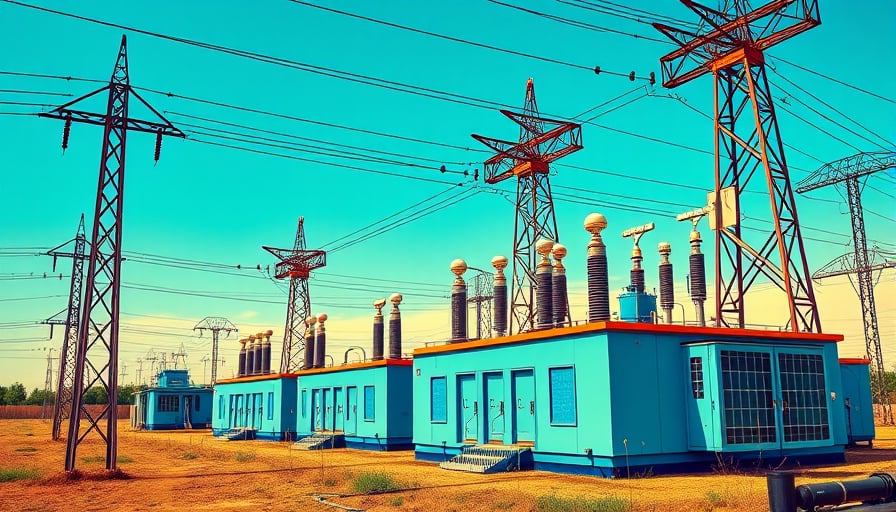
- High‑Capacity Substations – Modernizing existing substations to support double‑feed, two‑way power flows, and integrating advanced SCADA systems for real‑time monitoring.
- Smart Grid Sensors – Deploying phasor measurement units (PMUs) and edge‑computing devices to detect and mitigate cascading failures in seconds.
- Energy Storage – Installing utility‑scale lithium‑ion or flow‑battery systems to provide fast frequency response and reserve capacity.
- Demand‑Side Management – Enhancing customer‑facing platforms that incentivize load shifting during peak renewable generation windows.
Regulatory Frameworks and Rate Structures
Under the Federal Power Act and state utility commission regulations, utilities are required to provide reliable service at the lowest possible cost. FERC’s rejection of the contested settlement reaffirms this principle by ensuring that cost allocation reflects true economic drivers rather than administrative convenience. The decision also emphasizes the importance of cost causation principles, where costs are borne by the entities that actually incur them.
In terms of rate structures, PSEG operates a tiered retail rate that incorporates a fixed charge, a variable charge, and a renewable energy surcharge. The renewable surcharge is currently set at $0.02 per kWh, intended to fund grid upgrades and renewable procurement. The regulatory outcome may prompt a re‑evaluation of this surcharge to ensure that it remains equitable while still supporting the utility’s modernization goals.
Economic Impacts of Utility Modernization
Modernizing the grid delivers both direct and indirect economic benefits:
- Reduced Outage Costs – Faster restoration times lower the economic losses associated with extended outages, benefitting commercial and industrial customers.
- Enhanced Asset Longevity – Smart infrastructure reduces mechanical wear and improves the reliability of transformers and circuit breakers, extending their operational life.
- Job Creation – Infrastructure projects create skilled‑worker positions in construction, engineering, and system integration.
- Consumer Savings – By preventing the transfer of transmission costs to customers, PSEG protects consumer bills, potentially lowering the average monthly electric charge by $5–$10 over the next five years.
These impacts align with PSEG’s corporate citizenship narrative, reinforcing its commitment to responsible stewardship and community engagement.
Conclusion
PSEG’s recent regulatory success and recognition by national award bodies underscore the company’s dual focus on maintaining affordable, reliable service and advancing environmental responsibility. The technical investments required for grid stability and renewable integration are significant, yet they are now more financially viable thanks to the FERC decision that preserves customer‑fair cost allocation. Through thoughtful rate design, regulatory compliance, and strategic capital deployment, PSEG is positioning itself to meet the challenges of the evolving energy landscape while continuing to deliver value to the communities it serves.