
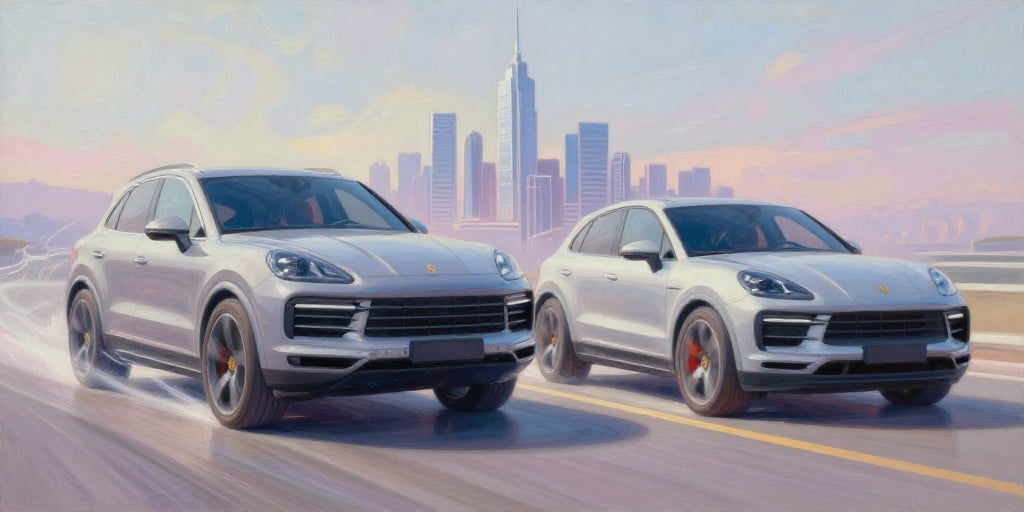
Porsche Automobile Holding GmbH Faces Intensified Scrutiny Over Its Electric Vehicle Lineup
Porsche Automobile Holding GmbH has come under renewed scrutiny as the automotive industry continues to pivot toward electrification. The German luxury automaker, renowned for its high‑performance combustion‑engine models, has released a new generation of electric vehicles that has elicited mixed reactions from critics and consumers alike.
The Cayenne Electric Turbo: A Performance Benchmark
The recent review of the Cayenne Electric Turbo highlighted several impressive attributes. Powertrain specifications indicate a peak output of 600 kW (approximately 800 hp), allowing the SUV to accelerate from 0–100 km/h in just 3.1 seconds. Battery technology—utilizing a 100 kWh lithium‑ion pack—provides an EPA‑estimated range of 420 km under standard driving conditions. These figures place the vehicle firmly within the high‑performance electric segment, a category dominated by rivals such as Audi, Tesla, and Jaguar.
From a market‑positioning standpoint, the Cayenne Electric Turbo reaffirms Porsche’s commitment to delivering “muscle‑electric” vehicles that blend traditional brand DNA with contemporary sustainability mandates. The vehicle’s weight, largely attributable to its battery mass, is offset by strategic use of lightweight alloys and carbon‑fiber components, thereby maintaining the brand’s signature driving dynamics.
Persistent Concerns: The Macan Electric’s Legacy
Despite the success of the Cayenne variant, the earlier Macan Electric model has continued to generate doubts among stakeholders. The Macan’s performance metrics—reaching 0–100 km/h in 4.3 seconds—were perceived as underwhelming relative to the brand’s premium image. Additionally, the vehicle’s battery capacity (approximately 60 kWh) yielded a range that fell short of consumer expectations for a modern SUV, especially when compared to benchmark offerings from Tesla’s Model Y and Audi’s e‑Q5.
These shortcomings have translated into a measurable decline in brand perception scores within key markets, as reflected in consumer surveys conducted by independent research firms. The Macan’s reception underscores the broader challenge for legacy automakers: balancing heritage brand values with the aggressive performance standards now associated with electric mobility.
Strategic Response: Reinforcing the Electric Portfolio
In response to these critiques, Porsche’s headquarters in Zuffenhausen has reportedly embarked on a multifaceted strategy aimed at revitalizing its electric lineup. Key elements of this strategy include:
| Initiative | Objective | Expected Outcome |
|---|---|---|
| Battery Innovation | Transition to next‑generation solid‑state cells with higher energy density | Extend vehicle range by 20–25 % without weight penalty |
| Software Integration | Deploy over‑the‑air updates to enhance power management and regenerative braking | Improve vehicle efficiency and customer experience |
| Manufacturing Flexibility | Reconfigure the Zuffenhausen assembly line for modular production | Reduce cycle time and lower per‑unit costs |
| Ecosystem Partnerships | Collaborate with charging infrastructure providers (e.g., Ionity, Tesla Supercharger) | Expand network coverage and reduce range anxiety |
| Marketing Focus | Highlight “heritage meets future” narrative in branding campaigns | Rebuild consumer confidence and reinforce premium positioning |
The company’s emphasis on high‑performance electric vehicles aligns with global industry trends that favor robust performance metrics in addition to environmental credentials. By investing in advanced battery chemistries and flexible production, Porsche aims to address the dual challenge of meeting consumer expectations for speed and range while maintaining profitability in an increasingly competitive market.
Broader Economic and Industry Context
Porsche’s current predicament is emblematic of broader dynamics shaping the automotive sector. As governments worldwide tighten emissions regulations and consumers shift toward low‑carbon mobility solutions, legacy manufacturers face intense pressure to accelerate electrification. The competitive landscape is being reshaped by entrants such as Tesla, which has set a benchmark for range and software integration, and by traditional rivals that are investing heavily in battery technology (e.g., Audi’s partnership with Northvolt).
Moreover, the global semiconductor shortage has exacerbated production delays across the industry, reinforcing the need for flexible supply chains. Porsche’s strategy of modular production and diversified supplier relationships reflects a prudent response to these uncertainties.
Conclusion
Porsche Automobile Holding GmbH’s recent experiences with its electric vehicle lineup illustrate the delicate balance between preserving brand heritage and adapting to the imperatives of electrification. While the Cayenne Electric Turbo demonstrates the brand’s capacity to deliver high‑performance electric powertrains, the Macan Electric’s reception reveals lingering gaps in consumer perception and market positioning.
By pursuing targeted investments in battery technology, software, and manufacturing agility, Porsche aims to restore confidence among its customer base and reinforce its standing in the high‑performance electric segment. Success in this endeavor will depend on the company’s ability to translate technical innovations into tangible value propositions that resonate across diverse consumer segments, ultimately securing a competitive advantage in an industry that is rapidly evolving beyond traditional boundaries.