
Corporate Performance and Strategic Positioning of Dr. Ing. h.c. F. Porsche Aktiengesellschaft
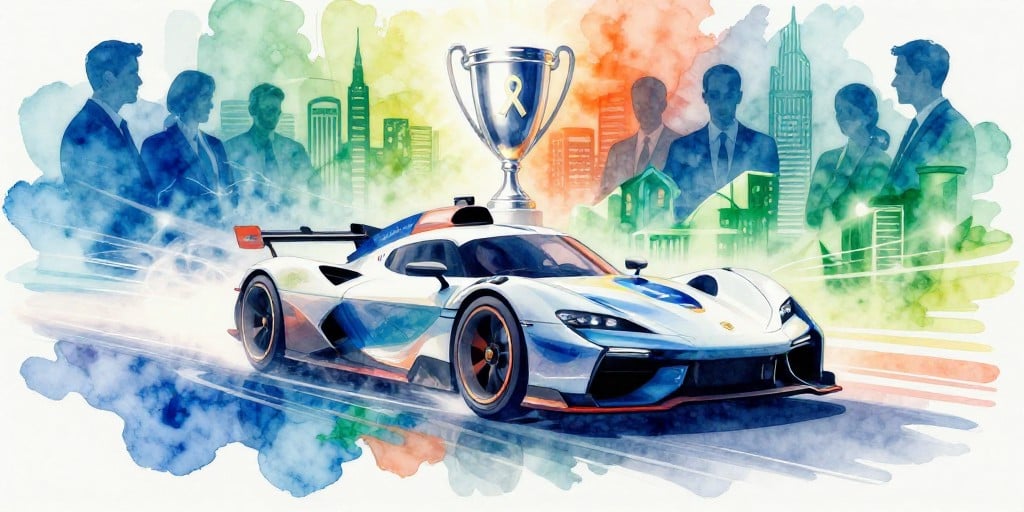
Dr. Ing. h.c. F. Porsche Aktiengesellschaft (Porsche AG) has confirmed its continued leadership in the emerging electric‑vehicle (EV) motorsport arena, highlighted by the triumph of factory driver Pascal Wehrlein at the London E‑Prix. Wehrlein secured a second Formula E Drivers’ World Championship, cementing the manufacturer’s status as the most successful brand of the GEN 3 era. The victory, however, came amid a late‑round collision that forced Porsche‑run drivers to the back of the field and precluded the team from contesting the Teams’ title. Despite this setback, Porsche had already clinched the championship crown in the preceding round, reinforcing its dominance.
Competitive Dynamics in Electric Motorsport
The season’s performance underlines Porsche’s strategic advantage in the fast‑growing sector of electric motorsport. The 99X Electric platform, deployed by the factory team as well as by customer squads such as Andretti and Cupra Kiro, amassed a combined total of race victories that surpasses all rivals in the history of Formula E. Wehrlein’s individual statistics—three wins, six podiums, and four pole positions—match those of former champion Jean‑Éric Vergne, underscoring the driver’s consistency and the vehicle’s competitive edge.
From a broader perspective, Porsche’s success demonstrates the viability of high‑performance EV technologies in endurance‑style racing. The synergy between on‑track data collection and commercial EV development provides a feedback loop that accelerates product innovation, benefiting both the motorsport and consumer vehicle segments. This cross‑pollination is emblematic of a wider trend in which manufacturers leverage racing platforms to validate cutting‑edge power‑train and battery technologies for mass‑market offerings.
Corporate Social Responsibility and Brand Equity
Parallel to its competitive achievements, Porsche has continued its “Racing for Charity” initiative, channeling funds to organisations supporting seriously ill children. The campaign has raised a substantial sum over the course of the season, with the final figure pending announcement. Such philanthropy enhances brand equity and aligns with stakeholder expectations that premium automotive manufacturers contribute positively to society. In an industry increasingly scrutinised for its environmental footprint, charitable engagement can help offset perceptions of automotive pollution by highlighting the brand’s commitment to broader societal welfare.
Investor Sentiment and Market Outlook
The Royal Bank of Canada (RBC) recently released a research update expressing caution regarding Porsche’s outlook. The advisory notes that the company remains under pressure despite its recent successes, reflecting broader market scrutiny as investors evaluate Porsche’s future prospects amid rapid evolution in both the automotive and motorsport landscapes. Key factors shaping investor sentiment include:
- Capital Allocation: Balancing investment between racing programmes, consumer EV development, and traditional internal combustion engine (ICE) platforms.
- Regulatory Environment: Anticipating tightening emissions regulations that could shift demand away from ICE vehicles and intensify competition in the EV sector.
- Competitive Landscape: Rising participation from manufacturers such as Mercedes‑Mercedes-Benz, Audi, and newcomers like Rivian and Lucid in both motorsport and consumer EV markets.
The RBC report suggests that while Porsche’s on‑track success bolsters brand prestige, sustained profitability will depend on translating racing technology into scalable consumer products, managing costs, and navigating an increasingly crowded EV market.
Cross‑Sector Implications
Porsche’s experience exemplifies a broader economic phenomenon: high‑tech firms using high‑visibility platforms to validate and disseminate new technologies. Similar patterns are observable in other sectors, such as aerospace (e.g., SpaceX’s use of reusable rockets to reduce launch costs) and consumer electronics (e.g., automotive‑grade processors for mobile devices). These inter‑sectoral linkages demonstrate how performance‑centric industries can serve as catalysts for innovation diffusion, thereby reshaping entire value chains.
In conclusion, Porsche’s dual achievements in Formula E and charitable engagement reinforce its position as a forward‑looking, socially responsible brand. However, as highlighted by RBC’s cautionary stance, the company must navigate a complex array of market forces to ensure long‑term growth in both motorsport and consumer automotive sectors.