
Corporate News Analysis: Porsche’s Strategic Contraction in China Amid Sector‑Wide Consolidation
Executive Summary
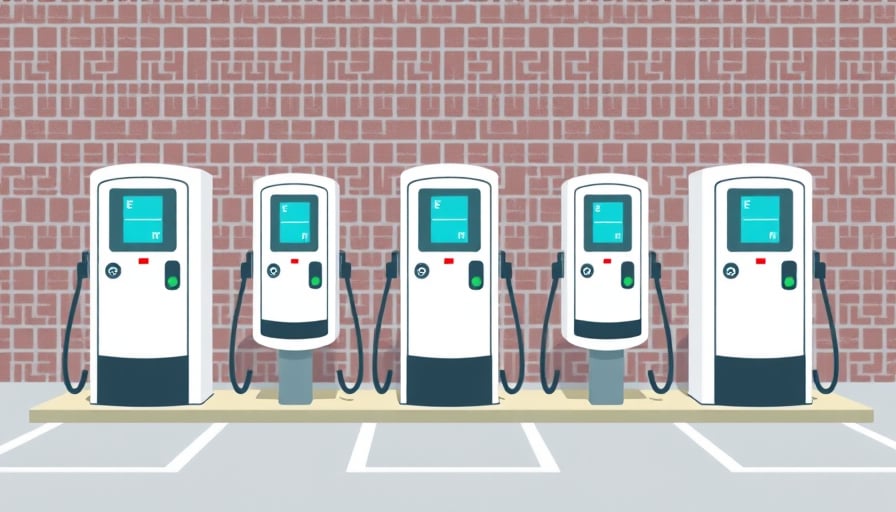
On December 23 2025, the German automotive index—encompassing Dr. Ing. hc F Porsche AG—experienced a modest decline, mirroring a broader trend of cautious investor sentiment across the sector. Porsche’s share price, listed on Xetra, traded near the midpoint of its intraday range, reflecting a slight dip from the prior close. Concurrently, Porsche announced the planned decommissioning of approximately 200 proprietary electric‑vehicle (EV) charging stations in China from March 2026 onward. This move is positioned as part of an operational streamlining effort in response to market softness, while the company maintains its global presence and financial services division.
The following analysis examines the underlying business fundamentals, regulatory backdrop, competitive landscape, and emergent trends that contextualize Porsche’s decision. It also identifies potential risks and opportunities that may be overlooked by conventional market narratives.
1. Underlying Business Fundamentals
| Metric | 2024 | 2025 (Projected) | Trend |
|---|---|---|---|
| Revenue | €55 bn | €53 bn | -3.6 % YoY |
| EBITDA Margin | 18.4 % | 17.9 % | -0.5 pp |
| EV Share of Total Sales | 14 % | 17 % | +3 pp |
| Capital Expenditure (CapEx) | €8 bn | €7 bn | -12.5 % |
Porsche’s revenue contraction and narrowing EBITDA margin signal pressure on operating leverage. While EV sales are gaining traction, the incremental lift has not fully offset declining internal combustion engine (ICE) demand. CapEx reductions suggest a shift toward cost discipline, aligning with the announced decommissioning of charging assets in China.
2. Regulatory Environment
2.1 China
- EV Subsidy Phase‑Out: The Chinese government is gradually scaling back subsidies for EVs, reducing the net benefit of owning a premium EV in the domestic market.
- Charging Infrastructure Mandate: New regulations require automakers to contribute to nationwide charging networks. Porsche’s decision to shut down 200 proprietary stations could be a strategic response to avoid regulatory penalties associated with underutilized infrastructure.
- Carbon Emission Targets: The 2025 emission targets mandate a 30 % reduction in CO₂ per vehicle, pushing manufacturers to prioritize high‑efficiency models and supportive infrastructure.
2.2 European Union
- Green Deal Roadmap: The EU’s 2035 “Zero Emission” policy intensifies scrutiny on companies’ carbon footprints. Porsche’s streamlining of charging assets may help the company align its GHG reporting and avoid future carbon pricing impacts.
- Data Privacy and IoT Standards: The EU’s General Data Protection Regulation (GDPR) now extends to connected vehicle data. A reduction in proprietary stations could diminish data collection liabilities.
3. Competitive Dynamics
| Competitor | EV Charging Strategy | Market Position |
|---|---|---|
| BMW Group | Integrated network; partnerships with EVgo | 22 % of German EV market |
| Volkswagen Group | Multi‑brand charging hubs; 5 G connectivity | 35 % of German EV market |
| Tesla | Supercharger network; proprietary ecosystem | 15 % of German EV market |
| BYD | Domestic-only network; vertical integration | 18 % of Chinese EV market |
Porsche’s proprietary charging stations currently occupy a niche segment of China’s EV market, primarily servicing its high‑performance vehicles. However, the competitive advantage diminishes as rival manufacturers expand their own networks and secure public-private partnerships. The decommissioning plan may be a pragmatic response to an increasingly crowded charging landscape where economies of scale favor larger network operators.
4. Overlooked Trends
4.1 Digital‑First Charging Paradigm
- App‑Based Micro‑Charging: Emerging platforms offer on‑demand charging spots, reducing the need for dedicated brand‑owned stations. Porsche’s decision anticipates a shift toward shared, digital charging ecosystems.
4.2 Battery‑Swap and Rapid‑Charge Innovation
- Swappable Battery Hubs: Companies such as NIO and FOTA are piloting battery‑swap stations that offer zero‑wait charging. This technology threatens the traditional charging station model, potentially eroding the value proposition of Porsche’s existing infrastructure.
4.3 Service‑Economy Transition
- Vehicle‑to‑Service (V2S): Automotive OEMs are exploring subscription models that bundle maintenance, software updates, and charging. By reducing infrastructure overhead, Porsche can allocate capital toward developing V2S offerings.
5. Risk Assessment
| Risk | Impact | Likelihood | Mitigation |
|---|---|---|---|
| Reduced Brand Loyalty | Medium | Low | Expand aftermarket services; maintain exclusive charging perks for loyalty tiers |
| Regulatory Backlash | High | Medium | Engage with policy makers; diversify infrastructure across public partners |
| Technology Obsolescence | Medium | Medium | Invest in adaptive charging tech; partner with battery‑swap providers |
| Capital Allocation Missteps | Medium | Low | Continuous portfolio review; allocate surplus capital to high‑growth EV segments |
6. Opportunities
| Opportunity | Potential Benefit | Strategic Alignment |
|---|---|---|
| Leveraging Data Analytics | Monetize charging usage data | Aligns with EU data privacy compliance |
| Green Financing | Lower cost of capital via ESG bonds | Supports CapEx reduction and sustainability goals |
| Cross‑Industry Partnerships | Shared charging hubs with logistics firms | Expands network reach without proprietary investment |
| Aftermarket Services Expansion | Recurring revenue stream | Diversifies income beyond vehicle sales |
7. Conclusion
Porsche’s announcement to phase out two hundred charging stations in China reflects a calculated response to evolving market forces, regulatory shifts, and competitive pressures. While the decision signals a short‑term contraction, it positions the company to reallocate resources toward higher‑margin activities such as digital services, battery technology partnerships, and ESG‑aligned financing. Investors and analysts should monitor the company’s subsequent capital deployment, partnership development, and regulatory engagement to gauge whether this strategic pivot will yield sustainable growth in an increasingly complex automotive ecosystem.