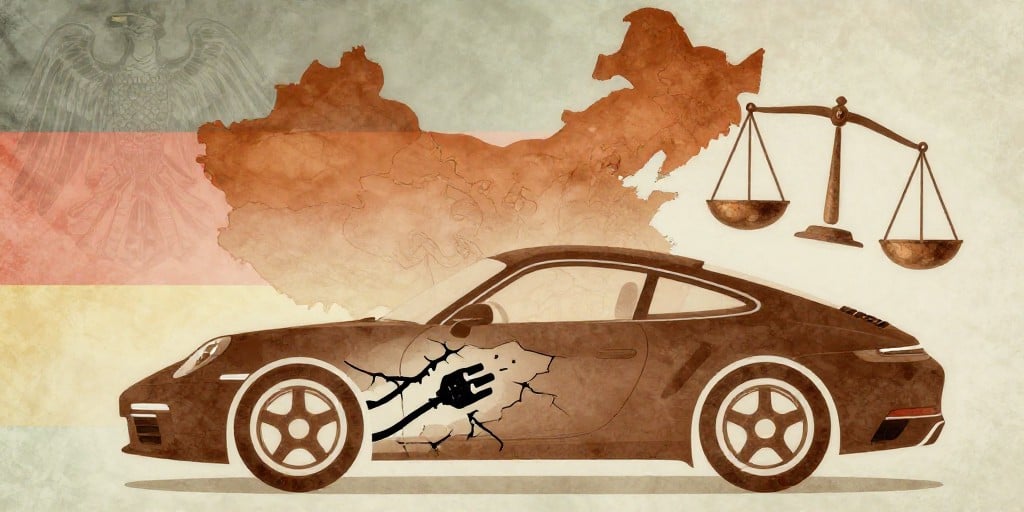
Corporate Outlook: Porsche AG Amidst German Automotive Headwinds
The German luxury automaker Porsche AG is confronting a confluence of headwinds that echo broader distress across the national automotive sector. Recent quarterly figures underscore a significant contraction in vehicle deliveries, particularly in the Chinese and United Kingdom markets, while modest gains in Europe and the United States offer limited relief.
Sales Dynamics and Market Exposure
- Third‑quarter deliveries declined by roughly 15 % year‑over‑year, a trend that aligns with the sector‑wide slump highlighted in the latest industry reports.
- China, a pivotal market for high‑performance vehicles, has experienced a near‑one‑third drop in sales over the past nine months.
- The United Kingdom and other European territories also report downward pressure, though the European market continues to display relative resilience thanks to sustained demand for Porsche’s flagship sports cars.
Product Portfolio and Pricing Pressures
Porsche’s electrified lineup has provided a partial buffer against declining demand for combustion‑engine models. However, the absence of new model introductions in the near term and the loss of tax incentives for gasoline vehicles in the United States have curtailed the brand’s ability to sustain growth. The company’s strategy to deepen its electric‑vehicle offering is under scrutiny, given the increasing competition from both established OEMs and new entrants in the premium EV space.
Analyst Revision and Financial Implications
Jefferies, a leading investment bank with a long‑standing focus on the automotive sector, has adjusted its outlook for Porsche. Key points include:
- Target‑price reduction: In light of the latest quarterly performance, Jefferies lowered Porsche’s target price, signaling a more cautious view on the company’s valuation prospects.
- Earnings impact: The bank anticipates that earnings will continue to suffer from diminished demand for core sport‑car models and from escalating cost pressures linked to supply‑chain disruptions.
- Market‑share considerations: While Porsche retains a robust share of the European luxury‑car market, its dependence on the Chinese market remains a salient risk factor.
- Regulatory backdrop: The European Commission’s ongoing deliberations on potential regulatory measures to aid the automotive industry may prove insufficient or too delayed to address the immediate challenges facing Porsche and its peers.
Cross‑Sector Implications
The difficulties faced by Porsche mirror trends observed in adjacent industries:
- Electronics and technology: Global supply‑chain bottlenecks, especially for semiconductors, have similarly strained production schedules and cost structures.
- Luxury goods: A tightening of consumer spending power in key export markets has led to decreased discretionary purchases, affecting high‑margin brands across the board.
- Energy: The shift toward electric mobility is reshaping the energy market, creating both opportunities and uncertainties for power suppliers and battery manufacturers.
These interlinkages highlight a broader economic environment characterized by sluggish growth, supply‑chain volatility, and evolving regulatory landscapes.
Outlook
Porsche AG’s trajectory in the coming quarters will likely hinge on its ability to navigate a multi‑dimensional set of challenges: managing cost structures amid supply‑chain disruptions, sustaining demand for a diversified product mix, and adapting to shifting geopolitical and regulatory conditions. The firm’s performance will also serve as a bellwether for the German automotive industry, whose fortunes continue to be tied to global trade dynamics and consumer sentiment.