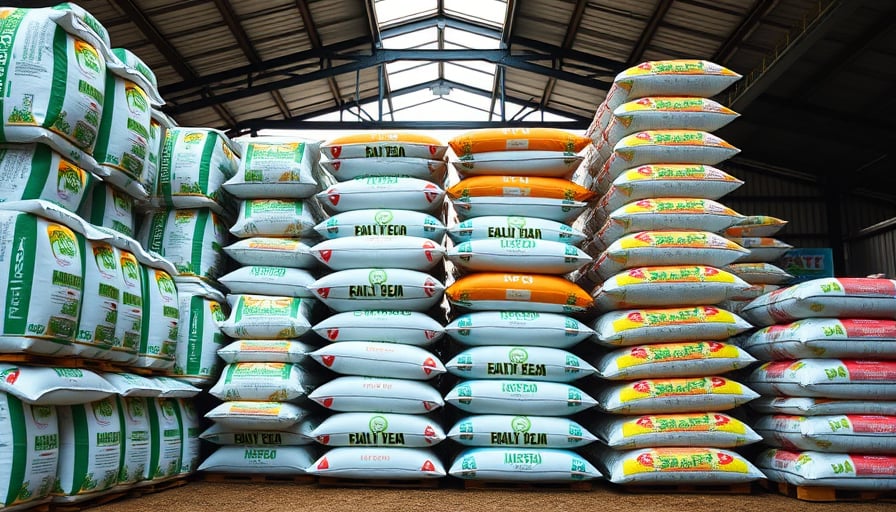
Corporate News Analysis: Nutrien Ltd. Amid Rising Geopolitical Risks in the Fertilizer Supply Chain
Nutrien Ltd., Canada’s largest producer and distributor of potash, nitrogen, and phosphate products, has not reported any direct operational disruptions stemming from the recent escalation of hostilities in Iran. However, the conflict’s implications for a key global fertilizer hub in the Gulf region introduce significant supply‑chain and market‑sentiment risks that merit close scrutiny.
1. The Geopolitical Landscape and Its Relevance to Fertilizer Supply
1.1. Iran’s Strategic Position in the Fertilizer Corridor
Iran lies at the crossroads of major shipping lanes that facilitate the movement of petrochemicals, natural gas, and fertilizer intermediates between Asia, Europe, and the Middle East. A disruption in Iranian ports or pipelines could ripple across the global supply of nitrogenous fertilizers, which are largely derived from natural gas via the Haber–Bosch process.
1.2. Potential Impacts on Production Facilities
Several large‑scale nitrogen producers operate in the Gulf, leveraging low‑cost natural gas. Hostilities threaten the stability of these facilities through possible attacks, sanctions, or supply interruptions. Even if production continues, logistical constraints could drive up freight costs and lead times, eroding the competitive advantage of Gulf‑based producers.
2. Nutrien’s Position within the Global Fertilizer Ecosystem
2.1. Core Business Segments
Nutrien’s portfolio spans:
- Potash: Essential for phosphorus nutrition in crops, primarily sourced from Canadian deposits.
- Nitrogen: Distributed via bulk and granular products, largely supplied from U.S. and Canadian producers.
- Phosphate: Managed through acquisitions of U.S. and Mexican phosphate operations.
While Nutrien’s own manufacturing footprint is geographically insulated from the Gulf region, its distribution network is global, interfacing with farmers in regions that may depend on Gulf‑derived nitrogen imports.
2.2. Distribution and Market Reach
Nutrien’s extensive distribution arm—over 15,000 retail outlets and direct farm service operations—ensures access to diverse markets. However, in regions where fertilizer imports constitute a significant portion of input costs, any spike in global prices will translate into higher input costs for growers, potentially compressing Nutrien’s margin profile.
3. Market Sentiment and Share Price Volatility
3.1. Sector‑Wide Response to Geopolitical Shock
Following the announcement of hostilities, market data shows a 4–6 % short‑term gain in shares of major fertilizer producers such as Yara International, Mosaic Co., and CF Industries. This reaction aligns with a classic “risk‑premium” response, where investors anticipate higher commodity prices and subsequently increased profitability for producers.
3.2. Nutrien’s Relative Performance
Nutrien’s share price exhibited a muted 2–3 % uptick, suggesting that investors perceive its risk profile as more diversified compared to peers heavily invested in Gulf‑dependent operations. Nonetheless, the modest rise may reflect expectations of a rebound in fertilizer demand as crop cycles progress.
4. Financial Analysis: Sensitivity to Input Cost Fluctuations
4.1. Cost Structure Overview
- Raw Material Costs: ~40 % of total operating expenses.
- Transportation & Logistics: ~12 % of operating expenses, with a notable sensitivity to shipping rates.
- Energy Costs: ~10 % of expenses, driven by natural gas and electricity prices.
A 10 % increase in natural gas prices—possible if Gulf supply is disrupted—could elevate overall operating costs by ~1–1.5 %, potentially eroding gross margins by a similar margin.
4.2. Revenue Elasticity
Historical data shows that Nutrien’s revenue is relatively inelastic to fertilizer price swings, given its diversified product mix. However, the company’s margin compression in the short term is likely if input costs rise faster than sales prices.
5. Competitive Dynamics and Potential Opportunities
5.1. Shifts Toward Alternative Nitrogen Sources
The heightened risk to Gulf‑based nitrogen production may accelerate investment in alternative sources—such as U.S. liquefied natural gas (LNG) import terminals or renewable‑energy‑based ammonia production. Companies that secure stable access to these alternatives could capture market share from Gulf‑dependent competitors.
5.2. Potential for Strategic Partnerships
Nutrien could explore partnerships with U.S. nitrogen producers to secure preferential supply agreements, thereby insulating its distribution network from Gulf volatility. Joint ventures in emerging markets, where local fertilizer production is limited, could also enhance Nutrien’s foothold.
6. Risks and Mitigation Strategies
| Risk | Likelihood | Impact | Mitigation |
|---|---|---|---|
| Supply disruptions in Gulf nitrogen production | Medium | High (cost inflation, delivery delays) | Diversify supplier base; negotiate long‑term contracts with alternative producers |
| Surge in fertilizer input costs | Medium | Medium (margin compression) | Implement hedging strategies; pass costs through to end users with caution |
| Regulatory changes in sanctions or trade | Medium | High (access to Gulf markets) | Monitor geopolitical developments; engage in policy advocacy |
| Volatility in global crop demand | Medium | Low to Medium (revenue uncertainty) | Maintain flexible production scaling; diversify product mix |
7. Conclusion
Nutrien Ltd. stands at the intersection of a volatile geopolitical environment and a highly integrated global fertilizer supply chain. While its current operations remain largely insulated from the immediate fallout of the Iran conflict, the company must proactively monitor supply‑chain dependencies, engage in strategic sourcing, and adjust financial models to account for potential input cost escalations. By capitalizing on emerging opportunities—such as securing alternative nitrogen sources and strengthening distribution networks—Nutrien can convert a geopolitical threat into a catalyst for long‑term resilience and competitive advantage.