
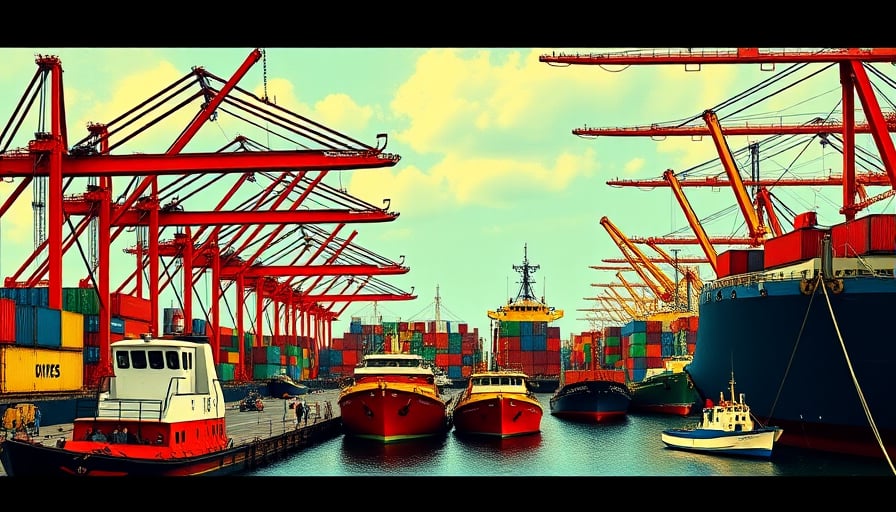
Nutrien Ltd. Advances $1 Billion Export Terminal Project in Washington State
Nutrien Ltd., the world’s largest potash producer, has announced plans to construct a new export terminal at the Port of Longview in Washington state. The project, estimated at approximately one billion dollars, represents a significant expansion of the company’s overseas shipping capacity and a strategic move to diversify its logistics footprint beyond Canada.
Project Overview
- Location: Port of Longview, Washington, United States
- Investment: ~$1 billion USD
- Purpose: Enhance export throughput for potash and related mineral products
- Timeline: Initial construction phases slated for 2025–2027, with operational launch projected in 2028
Stakeholder Reactions
Canadian Federal Government The Canadian government, which has traditionally promoted Canadian‑based infrastructure to support domestic industries, has expressed concerns about the project. Key points of apprehension include potential shifts in trade dynamics, environmental impact assessments, and the overall alignment with national export strategies. The federal stance reflects broader policy debates over cross-border resource logistics and the balance between domestic investment and international expansion.
Economic Analysts A segment of economists has welcomed the terminal as a strategic asset that could bolster Nutrien’s global supply chain resilience. They argue that the U.S. market, with its high demand for potash in agriculture, provides an attractive outlet for Canadian producers. Additionally, the investment is seen as a hedge against potential disruptions in Canadian port infrastructure or regulatory changes that could limit export volumes.
Context within Nutrien’s Corporate Strategy
Nutrien is currently in negotiations with Canadian authorities to determine the optimal location for its future logistics facilities. The Longview terminal could complement existing Canadian ports, such as Vancouver and Halifax, by providing a dedicated U.S. gateway that mitigates transshipment costs and reduces lead times. This dual‑port strategy aligns with Nutrien’s broader objective of maintaining a competitive edge through diversified logistics networks and ensuring supply chain stability amid fluctuating global trade conditions.
Sectoral Implications
- Agricultural Inputs: The expansion directly supports the global demand for potash, a critical fertilizer component that underpins food security and crop yields.
- Transportation & Logistics: By adding a new export hub, Nutrien contributes to the modernization of port infrastructure, potentially driving ancillary economic activity in maritime logistics, shipping services, and port management.
- Energy & Environmental Considerations: Large-scale terminal projects necessitate rigorous environmental assessments. Nutrien’s plans must navigate federal and state regulations on emissions, water usage, and habitat protection, reflecting a growing industry emphasis on sustainable operations.
Broader Economic Trends
The Nutrien initiative mirrors a broader pattern of multinational commodity firms investing in infrastructure to secure supply chains and capture emerging market opportunities. With trade tensions and supply chain disruptions underscoring the importance of geographic diversification, firms are increasingly building assets in politically stable, economically vibrant regions. The U.S. market offers a sizable domestic consumer base and well-developed logistics ecosystems, making it an attractive destination for such infrastructure investments.
Conclusion
Nutrien’s proposed $1 billion export terminal at Port of Longview illustrates the company’s adaptive strategy to expand its export capacity while engaging in complex regulatory and environmental negotiations. The project underscores the interplay between commodity producers, national governments, and global economic forces, highlighting how firms must navigate sector-specific dynamics to achieve sustainable growth.