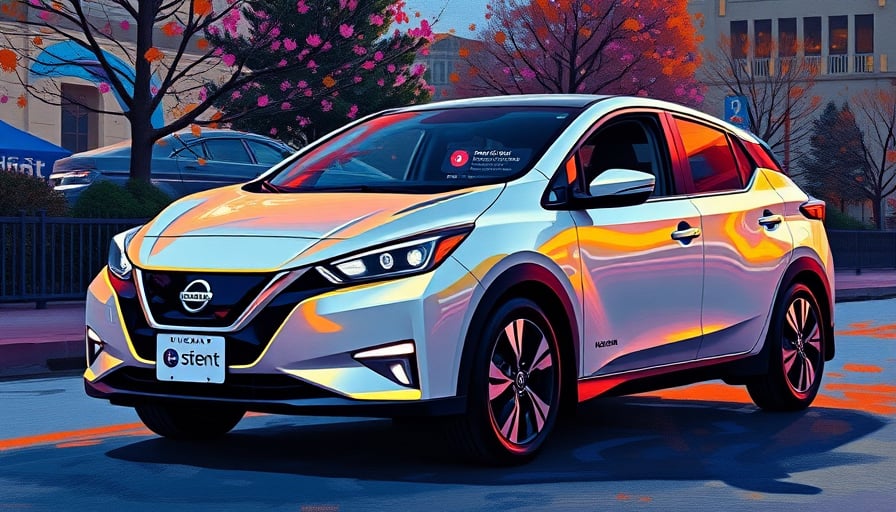
Nissan Motor Co. Ltd. Expands In‑Vehicle Infotainment Capabilities with Personalized Sound Feature
Nissan Motor Co. Ltd. is deepening its footprint in the rapidly evolving domain of in‑vehicle infotainment (IVI) and connected‑vehicle technology. In 2025, the automaker rolled out a personalized sound feature for vehicles equipped with Google‑built infotainment systems. The functionality is available on selected Nissan and Infiniti models, including the widely popular Leaf electric vehicle, and is accessed via a downloadable application that lets drivers and passengers tailor audio profiles to their preferences. This move is part of Nissan’s broader strategy to differentiate its product portfolio by delivering immersive, digitally‑rich experiences inside the cabin.
Alignment with Global Market Trends
The introduction of the personalized sound feature dovetails with findings from a recent market study by MarkNtel Advisors. The study projects sustained growth in the global IVI market through 2032, driven by:
| Driver | Impact |
|---|---|
| Consumer demand for connected vehicle experiences | Accelerates adoption of advanced IVI solutions |
| Real‑time navigation and cloud‑based services | Enhances functionality and data connectivity |
| Seamless smartphone integration | Lowers entry barriers for consumers |
| Rapid expansion of digital cockpit technologies | Increases competitive differentiation |
MarkNtel’s research indicates that advanced infotainment platforms are becoming ubiquitous across both conventional passenger cars and electric vehicles (EVs). Nissan’s personalized sound capability exemplifies how automotive manufacturers can leverage cloud‑based audio processing and user‑centric design to meet these expectations.
Technical and Business Implications
Personalization as a Differentiator By allowing users to modify equalizer settings, speaker balance, and other acoustic parameters, Nissan provides a level of customization that has traditionally been limited to high‑end audio brands. This feature positions the automaker as a pioneer in cabin comfort, potentially creating a new value proposition that extends beyond basic safety and performance.
Integration with Google IVI Ecosystem The feature is built on Google’s automotive platform, which offers robust integration with Google Assistant, real‑time traffic data, and a vast content library. Nissan’s collaboration with Google not only enhances the user experience but also taps into a well‑established ecosystem, reducing time‑to‑market for future updates.
Cloud‑Based Audio Processing The ability to download new sound profiles implies a cloud infrastructure that can deliver updates and personalization data in real time. This aligns with industry trends toward over‑the‑air (OTA) servicing, which lowers maintenance costs and keeps vehicle software current without requiring dealership visits.
Customer Engagement and Loyalty A customizable audio experience can strengthen emotional attachment to the brand, translating into higher retention rates and increased word‑of‑mouth referrals. In an increasingly crowded automotive market, such experiential differentiation may prove decisive for customer acquisition.
Cross‑Sector Synergies and Economic Context
Automotive and Consumer Electronics Convergence The integration of sophisticated audio systems mirrors the convergence seen in the consumer electronics sector, where devices increasingly serve as platforms for content consumption. Nissan’s move underscores the broader trend of cars evolving into “mobile living spaces” rather than mere transportation.
Electric Vehicle (EV) Growth As EV adoption rises, cabin comfort becomes an even more critical differentiator because EVs often lack the noise and vibration of internal combustion engines. By improving acoustic quality, Nissan addresses a niche that could influence EV buyer decision‑making.
Digital Transformation Across Industries The shift toward digital cockpits is part of a wider corporate trend toward data‑driven, cloud‑based services. Industries such as automotive, logistics, and aerospace are increasingly embracing similar strategies to enhance operational efficiency and customer experience.
Economic Drivers The projected growth in IVI markets is supported by rising consumer disposable income, especially in emerging economies, and by regulatory incentives for connectivity and sustainability. Nissan’s investment in personalized sound aligns with these macro‑economic forces, positioning the company to capture value from evolving consumer preferences.
Outlook
Nissan’s personalized sound feature signals a strategic pivot toward a more sophisticated in‑car digital ecosystem. By integrating advanced audio engineering with connected services, the automaker is poised to:
- Strengthen its competitive positioning against premium brands that already offer high‑quality infotainment.
- Leverage OTA capabilities to reduce lifecycle costs and improve customer satisfaction.
- Create new revenue streams through subscription‑based content and premium audio packages.
In a sector where differentiation is increasingly dictated by technology and user experience, Nissan’s initiative may serve as a benchmark for other automakers seeking to elevate the standard of cabin comfort while meeting the escalating demands of connected‑vehicle consumers.