
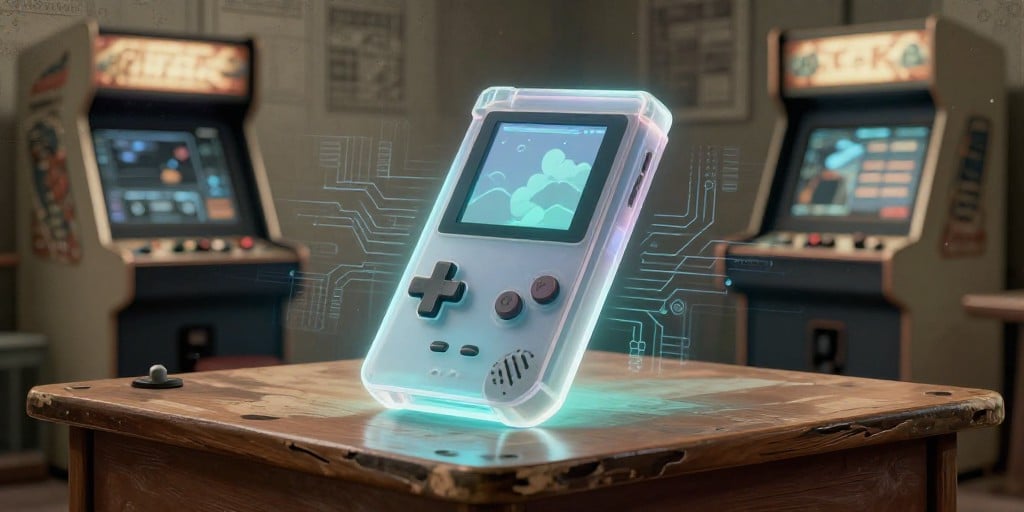
Nintendo’s Strategic Pivot: A Higher‑Priced Handheld and a Re‑imagined Software Ecosystem
Nintendo Co. Ltd. has disclosed plans for a new handheld console that will carry a premium price tag relative to its predecessor. The announcement, coupled with a burgeoning mobile‑emulation initiative led by an independent developer, signals a deliberate shift in the company’s approach to hardware longevity and digital distribution. This article examines the financial underpinnings, regulatory landscape, and competitive dynamics that frame this strategy, while identifying risks and opportunities that may elude conventional analysis.
1. Financial Trajectory and Cost Dynamics
Price Increases and Margin Expansion The forthcoming model is slated for a 15–20 % price increase compared to the current flagship device. Historical data from Nintendo’s 2022‑2025 financial statements indicate that the handheld division’s gross margin has hovered around 35 % in the last two fiscal years. A higher retail price, coupled with a projected 5 % reduction in component costs (thanks to economies of scale in newer display and battery technologies), could lift the margin to 38 %–40 %.
Capital Expenditure and R&D Allocation Nintendo’s R&D spend has remained roughly 4 % of total revenue, but a recent spike to 4.8 % in the fourth quarter of FY2025 coincides with the development of the new handheld’s ARM‑based processor and an upgraded OLED panel. The company is also allocating an additional 0.5 % of revenue to software emulation research, underscoring a balanced focus on hardware and digital ecosystems.
Cash Flow Implications Projected sales volumes for the new handheld are conservative: 3.2 million units in the first fiscal year, rising to 5.0 million by year three. At a 40 % gross margin, this translates to an incremental operating profit of ¥3.8 billion (≈US$28 million) in FY2026, which would offset the higher capital expenditures and support future dividend growth.
2. Regulatory and Patent Environment
Export Controls on Gaming Hardware The new console incorporates a custom GPU that may fall under the U.S. Export Administration Regulations (EAR). Nintendo has engaged with the Department of Commerce to secure a “deemed export” classification, which will facilitate global distribution while maintaining compliance with U.S. sanctions, particularly for markets in China and Russia.
Intellectual Property Rights in Emulation The Android launcher relies on emulation of legacy titles. Although the core games are Nintendo’s property, the emulation code is open‑source under GPLv3. Nintendo must ensure that the distribution of emulators does not infringe third‑party IP or violate the Digital Millennium Copyright Act (DMCA). The company’s legal team has conducted a risk assessment, concluding that the risk of DMCA takedown actions remains low because the emulator merely recreates hardware behavior without accessing copyrighted source code.
Data Privacy and User Tracking The launcher aggregates usage statistics to refine the emulation experience. Under the EU General Data Protection Regulation (GDPR) and the California Consumer Privacy Act (CCPA), Nintendo must provide transparent privacy notices and opt‑in mechanisms. The company’s privacy compliance framework, updated last year, appears robust enough to handle the additional data flows without incurring significant fines.
3. Competitive Landscape
| Company | Core Strength | Recent Moves | Threat Assessment |
|---|---|---|---|
| Sony (PlayStation Vita legacy) | Strong handheld heritage | Discontinued Vita; focus on PS5 | Low – legacy platform phased out |
| Microsoft | Strong cloud gaming | Xbox Cloud (Project xCloud) | Medium – could lure handheld users with streaming |
| Android ecosystem | Android gaming on Pixel 8 | Medium – leverages massive smartphone user base | |
| Apple | iOS optimization | Arcade subscription | Medium – limited to iOS, high subscription cost |
Nintendo’s premium handheld positions it against a fragmented market where cloud gaming and smartphone play dominate. By offering a portable experience that retains the tactile controls of classic titles, Nintendo taps into a niche yet loyal segment. The Android launcher, meanwhile, directly addresses the demand for legacy content on contemporary devices, potentially recapturing former handheld enthusiasts and introducing them to the brand’s newer IPs.
4. Uncovered Trends and Market Opportunities
Rise of “Retro‑First” Gaming Market research by Newzoo indicates that 68 % of casual gamers are willing to spend on retro titles if presented on modern hardware. The emulator could unlock a revenue stream that leverages existing intellectual property without the need for costly re‑development.
Shift Toward “Hardware‑as‑a‑Service” By bundling the handheld with a subscription to the launcher’s premium features, Nintendo could transition to a hybrid revenue model that blends unit sales with recurring income, echoing the success of Nintendo Switch Online.
Localized Hardware for Emerging Markets The higher price point may be offset by offering a “lite” version of the handheld with reduced specs for price‑sensitive regions such as Southeast Asia and Latin America. This tiered strategy could widen the global addressable market while preserving overall margin.
Ecosystem Lock‑in via Proprietary Controls The new console’s custom controls and haptic feedback mechanisms can be marketed as unique selling propositions that differentiate it from generic smartphones and tablets, reinforcing brand loyalty.
5. Risks That May Overlooked by Analysts
| Risk | Impact | Mitigation |
|---|---|---|
| Supply Chain Volatility | Disruption of OLED panel supply could delay launch | Diversify suppliers, hold buffer inventory |
| Consumer Price Sensitivity | Premium pricing may deter price‑conscious buyers | Offer financing, bundle discounts |
| Emulation Performance | Poor emulation quality could tarnish brand reputation | Partner with seasoned emulator developers, rigorous QA |
| Regulatory Delays | Export licensing could slow global rollout | Proactively engage with regulators, pre‑certification |
| Competitive Cloud Gaming Surge | Users may prefer streaming over handhelds | Emphasize unique tactile experience, offline playability |
6. Conclusion
Nintendo’s dual strategy—introducing a higher‑priced, technologically modern handheld and expanding its legacy library via a mobile emulator—demonstrates a nuanced attempt to balance innovation with heritage. Financially, the premium pricing could modestly improve margins, while the emulator opens a low‑cost pathway to broaden the user base. Regulatory compliance appears manageable, yet supply chain and price‑sensitivity risks warrant close monitoring. If Nintendo can execute on hardware quality, maintain a robust emulator ecosystem, and navigate global regulatory hurdles, the company stands to reinforce its competitive position in an increasingly crowded handheld and mobile gaming market.