
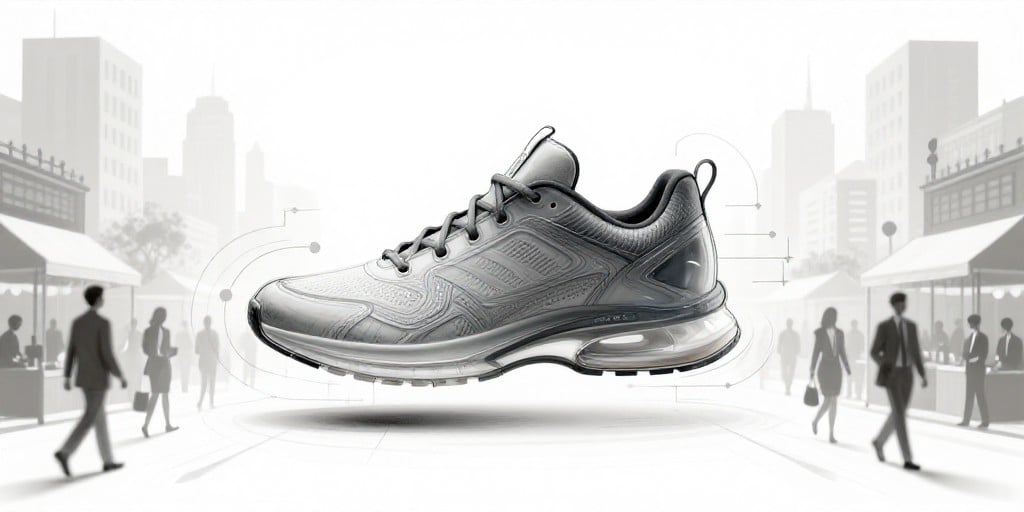
Nike Inc. Navigates a Cautious Recovery Amidst Omnichannel Shifts
Market Positioning in the Consumer‑Goods Landscape
Nike’s recent performance has become a benchmark for analysts tracking the broader consumer‑goods sector. While the company’s share price remains below consensus valuations, a consensus emerges that its long‑term strategy positions it for moderate upside. UBS and Goldman Sachs have both adopted neutral stances, maintaining price targets that reflect an expectation of a gradual, rather than immediate, rebound. The firms note that the company’s cautious optimism must be tempered by an insistence on sustained performance before a shift in sentiment can be fully realized.
Cross‑Sector Patterns and Brand Dynamics
The footwear and apparel industry has seen a convergence of consumer behaviour across several categories. Premium sportswear brands, traditional apparel players, and fast‑fashion retailers all report increased demand for products that blend performance with lifestyle appeal. In this environment, Nike’s brand positioning—anchored in innovation, heritage, and a strong digital presence—offers a competitive advantage. However, the brand’s lag behind peers such as American Express and Disney in terms of share price underlines a broader challenge: translating brand strength into market valuation when investors weigh macro‑economic risks and supply‑chain uncertainties.
Omnichannel Retail Innovation
Omnichannel strategies have become the linchpin of resilience for consumer‑goods firms. Nike’s integrated approach—combining e‑commerce, physical retail, and experiential stores—provides a template for the industry. The company’s “Nike Direct” model, which allows it to control the customer experience from online to offline, has yielded higher margins and tighter inventory control. This model is increasingly mirrored across the sector, as retailers leverage data analytics to personalize offers and streamline the last‑mile delivery process.
Supply‑chain innovations, particularly in inventory visibility and flexible sourcing, have been accelerated by the pandemic. Nike’s investment in digital twin technology and real‑time demand forecasting reflects an industry shift toward predictive logistics. Competitors are adopting similar tactics, creating a cross‑sector pattern where agility in production and distribution becomes a differentiator for long‑term profitability.
Consumer Behaviour Shifts
The post‑COVID consumer has exhibited a pronounced shift toward value‑centric purchases, while still desiring premium, well‑designed products. Sustainability, traceability, and ethical manufacturing are now core expectations. Nike has responded with its “Move to Zero” initiative, aiming to reduce carbon emissions and increase the use of recycled materials. Such initiatives resonate across the consumer‑goods spectrum, providing a template for firms seeking to differentiate on purpose and performance.
Short‑Term Market Movements vs. Long‑Term Transformation
Analysts warn that the immediate outlook remains measured, reflecting a need for patience before significant upside materializes. Yet, the forthcoming global soccer event is a potential catalyst that could accelerate momentum. In the longer term, the convergence of omnichannel retail, supply‑chain resilience, and purpose‑driven brand positioning suggests a transformation that will reward firms able to execute on these fronts. Nike’s current discount to model‑derived fair value underscores a market that is restrained but not dismissive, leaving room for moderate gains if the company can convincingly demonstrate a path to sustained profitability.
In sum, Nike’s trajectory exemplifies the broader dynamics of the consumer‑goods sector: a delicate balancing act between brand heritage, operational innovation, and evolving consumer expectations. The company’s ability to translate these elements into consistent earnings growth will determine whether the current market discount narrows or widens in the years ahead.