
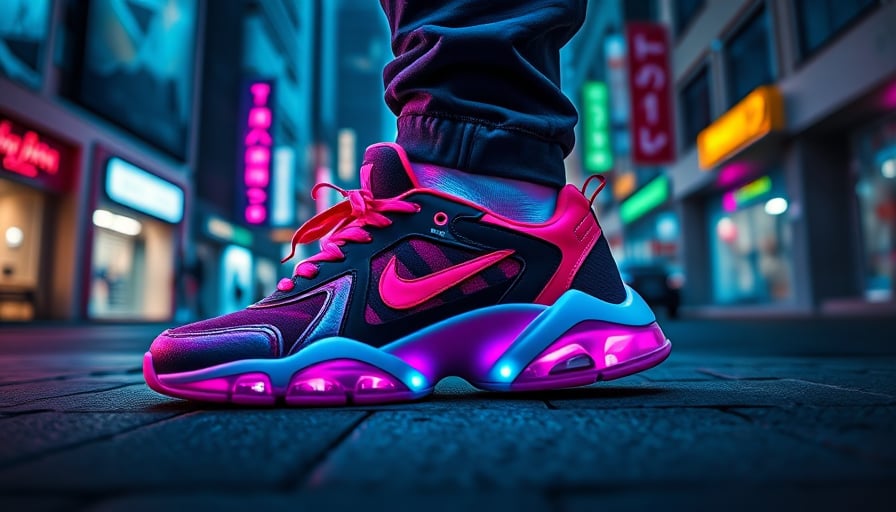
Nike Inc. Navigates Leadership Transition Amid Mixed Market Sentiment
Nike Inc. has once again captured investor attention following a recent reshuffling of its senior management team. The departure of long‑serving executives and the appointment of new leaders have prompted a wave of re‑evaluation among analysts. While a faction of market watchers maintains a bullish outlook, citing the company’s robust brand equity and global footprint, others caution that the latest guidance may temper expectations for the current fiscal year.
Short‑Term Market Movements
The stock’s recent performance illustrates modest volatility, with a day‑to‑day fluctuation that aligns with broader consumer‑goods sentiment. RBC Capital’s latest recommendation—“positive” with a “hold” rating—underscores a consensus that the share price is poised for a stable footing in the near term. This stance is reinforced by the company’s recent quarterly earnings, which exceeded analysts’ projections, driven by a 6% year‑over‑year increase in direct‑to‑consumer (DTC) sales and a 4% uplift in wholesale revenue.
| Metric | Current Quarter | YoY Change |
|---|---|---|
| DTC Sales | $5.2 billion | +6% |
| Wholesale Sales | $3.8 billion | +4% |
| Operating Margin | 18.5% | +1.2pp |
| EPS | $3.15 | +9% |
The market’s cautious stance is partly rooted in the company’s updated guidance, which projects a moderate 3.5% revenue growth for FY 2025—below the 4.2% average growth rate observed over the last three years. Analysts note that this conservative projection reflects heightened competition in the premium athletic apparel segment and a gradual shift toward sustainability‑focused product lines.
Consumer‑Goods Trends and Cross‑Sector Patterns
Nike’s strategic moves resonate with broader consumer‑goods trends:
Sustainability and Circular Economy Across apparel, footwear, and accessories, brands that integrate recycled materials and transparent supply chains are outperforming peers. Nike’s recent “Move to Zero” initiatives—aiming for zero carbon and waste—align with consumer preference for environmentally responsible products.
Digital Transformation and Omnichannel Retail The pandemic accelerated the adoption of omnichannel strategies. Companies that blend online experiences with physical stores see higher conversion rates. Nike’s “Nike App + NikeFit” technology, coupled with in‑store experiential zones, exemplifies this trend.
Premiumization and Personalization High‑margin products, especially in the lifestyle and athleisure segments, are experiencing consistent growth. Nike’s personalized “NikeID” service leverages data analytics to tailor designs, driving higher customer lifetime value.
Supply‑Chain Resilience Disruptions in the global supply chain—particularly in Asia—have prompted a shift toward diversified sourcing and near‑shoring. Nike’s investment in smart factories and digital twins demonstrates a commitment to mitigating future disruptions.
| Category | Trend | Nike Initiative |
|---|---|---|
| Sustainability | Circularity | Move to Zero |
| Omnichannel | Seamless | Nike App + Store |
| Premiumization | Upselling | NikeID |
| Supply Chain | Resilience | Digital Twin, Near‑shoring |
These cross‑sector patterns reveal a convergence of consumer expectations around sustainability, convenience, and personalization—areas where Nike already holds a competitive advantage.
Retail Innovation and Brand Positioning
Nike’s brand positioning remains anchored in its “Just Do It” ethos, yet the company is actively expanding into adjacent markets:
- Athleisure & Lifestyle: The rapid rise of “athleisure” has prompted Nike to broaden its product portfolio to include casual wear and lifestyle accessories, appealing to a wider demographic.
- Digital Experiences: Virtual try‑on features and AI‑powered recommendation engines enhance the online shopping experience, reducing friction and increasing conversion rates.
- Community Engagement: Partnerships with local athletes and community initiatives foster brand loyalty and reinforce Nike’s identity as a champion of athleticism at all levels.
Retail innovation is also reflected in the physical store model. Nike’s flagship locations now incorporate interactive zones, live events, and localized product drops, creating a sense of urgency and exclusivity that drives foot traffic.
Supply Chain Innovations
Nike’s supply‑chain strategy is evolving to address both cost pressures and consumer demand for transparency:
- Near‑Shoring: By bringing production closer to key markets, Nike reduces lead times and carbon emissions.
- Digital Twins: Simulation tools allow for real‑time monitoring of production lines, enabling swift response to disruptions.
- Supplier Collaboration: Integrating suppliers into the digital ecosystem improves forecasting accuracy and ensures adherence to sustainability standards.
These innovations are expected to translate into improved inventory turnover and a reduction in stock‑out scenarios—factors that directly influence consumer satisfaction and profitability.
Long‑Term Industry Transformation
Looking beyond the short term, several industry dynamics suggest that Nike’s strategic focus will position it favorably for sustained growth:
- Consumer Demand for Ethical Products: Millennials and Gen Z continue to prioritize sustainability, driving long‑term sales growth in responsible product lines.
- Technology‑Enabled Retail: The integration of AI, AR, and IoT into retail spaces will become a differentiator. Nike’s early adoption positions it as a market leader in experiential shopping.
- Resilient Supply Chains: Companies that can flexibly adapt to global disruptions will outpace competitors. Nike’s digital twin technology and near‑shoring initiatives will likely reduce supply‑chain risk over the next decade.
By aligning its brand positioning with these macro‑trends, Nike can maintain a competitive edge while delivering shareholder value.
In conclusion, Nike’s current market performance and strategic initiatives reflect a nuanced balance between short‑term prudence and long‑term ambition. While recent leadership changes and modest revenue guidance introduce temporary uncertainty, the company’s robust retail innovations, supply‑chain resilience, and alignment with evolving consumer preferences underpin a cautiously optimistic outlook for investors.