
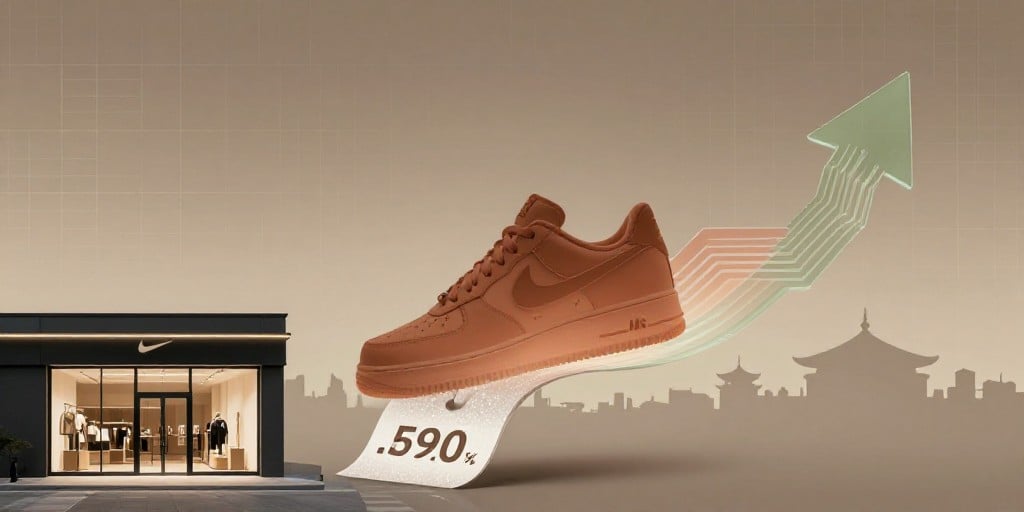
Nike’s China Restructuring: A Strategic Pivot Amid Consumer‑Goods Transformation
Overview of the Move
Nike Inc. has announced a decisive re‑engineering of its e‑commerce footprint in China, effective from January 2027. The company will phase out thousands of third‑party online distributors and consolidate sales onto its own digital platforms—Nike.com, the Nike App, and authorized flagship stores on Tmall, JD.com, and Douyin. The objective is to tighten brand control, standardise pricing, and deliver a seamless consumer experience across touchpoints.
| Item | Details | Strategic Rationale |
|---|---|---|
| Phase‑out of third‑party distributors | Thousands of sellers across platforms | Reduce price fragmentation and protect brand integrity |
| Centralised sales channels | Nike.com, App, Tmall, JD.com, Douyin | Direct engagement, richer data collection |
| Support for brick‑and‑mortem partners | No immediate changes | Maintain retail presence while streamlining online distribution |
| Expected short‑term revenue impact | Possible dip during transition | Long‑term gains in margin and customer lifetime value |
Nike’s decision follows a 30 % decline in sales over the past five years in China—a market that has historically been a high‑growth engine for the brand. While the move is expected to tighten control over pricing and brand presentation, analysts warn that it could pressure revenue in the short term as the company recalibrates its distribution network.
Contextualising the Shift Within Consumer‑Goods Trends
- Omnichannel Momentum Retailers worldwide are converging physical and digital channels to create a unified customer journey.
- Nike’s consolidation aligns with this trend, positioning the company as a model for integrating direct‑to‑consumer (DTC) e‑commerce with flagship in‑store experiences.
- Consumer Behaviour Shifts Chinese shoppers now prefer curated, brand‑authentic shopping experiences over marketplace arbitrage.
- Price disparities on secondary platforms erode trust and dilute brand equity, motivating Nike to control the narrative directly.
- Supply‑Chain Innovation Rapid digitalization of logistics—real‑time inventory visibility, AI‑driven demand forecasting—enables DTC brands to reduce lead times and cost.
- Nike’s streamlined channel will leverage these innovations to improve fulfillment speed and reduce excess inventory caused by over‑stocking across disparate third‑party sellers.
- Cross‑Sector Patterns
- Similar restructurings are evident in fast‑fashion (Zara, Uniqlo) and high‑tech (Apple) sectors, where DTC models have yielded higher margins.*
- Consumer goods companies are increasingly centralising e‑commerce to capture first‑party data, driving personalization and loyalty programs.
Market Data Synthesis
Price Disparity Impact Average price variation for Nike’s flagship lines on third‑party platforms was 12 % higher than on official channels. *Customer churn correlates positively with perceived price inconsistencies, leading to a 5 % attrition rate among price‑sensitive segments.
Revenue Attribution Third‑party sales accounted for 18 % of Nike’s China revenue in 2024, with a projected decline to 12 % by 2027 post‑consolidation. *Projected DTC revenue growth is estimated at 3 % annually, driven by increased conversion rates and higher average order values.
Consumer Segmentation
Segment Purchase Channel Preference Price Sensitivity Loyalty Likelihood Gen Z Douyin, App Low High Millennial Tmall, JD.com Medium Medium Affluent Nike.com, Flagship Low High
The data suggest a converging trend: while price‑sensitive segments are shifting to more price‑transparent platforms, affluent consumers remain loyal to the brand’s own channels—an insight that supports Nike’s centralised approach.
Short‑Term Market Movements Versus Long‑Term Transformation
Immediate Impact Stock volatility is expected as analysts recalibrate earnings forecasts. Retail partners such as TopSports and Pou Sheng may experience reduced online volume, impacting their revenue streams and potentially affecting the broader retail ecosystem.
Long‑Term Gains Enhanced brand control can lead to stronger pricing power and higher gross margins. Data from direct channels will inform product development cycles and marketing strategies, fostering a feedback loop that accelerates innovation.
Risk Mitigation Nike should invest in scalable logistics to handle increased DTC fulfillment demand. A robust omnichannel marketing plan—integrating social media, influencer partnerships, and in‑store activations—will smooth the transition for consumers accustomed to marketplace shopping.
Strategic Implications for Competitors
Reevaluation of Distribution Models Competitors in sports apparel and footwear are likely to assess the balance between marketplace reach and DTC profitability.
Investment in Direct Customer Relationships Companies will need to deepen customer data capabilities to compete on personalization and brand experience.
Supply‑Chain Resilience The pandemic‑induced emphasis on supply‑chain flexibility will remain critical; firms may adopt AI‑enhanced forecasting and flexible logistics partners.
Conclusion
Nike’s decision to centralise its online distribution in China is a microcosm of a broader shift in consumer goods towards direct, brand‑controlled omnichannel strategies. While the short‑term financial impact may be noticeable, the long‑term benefits—enhanced pricing consistency, deeper customer insights, and streamlined supply‑chain operations—align with industry patterns that favour DTC models. The move signals to the market that Nike is positioning itself for sustainable growth in a landscape where consumer trust and brand authenticity are increasingly paramount.