
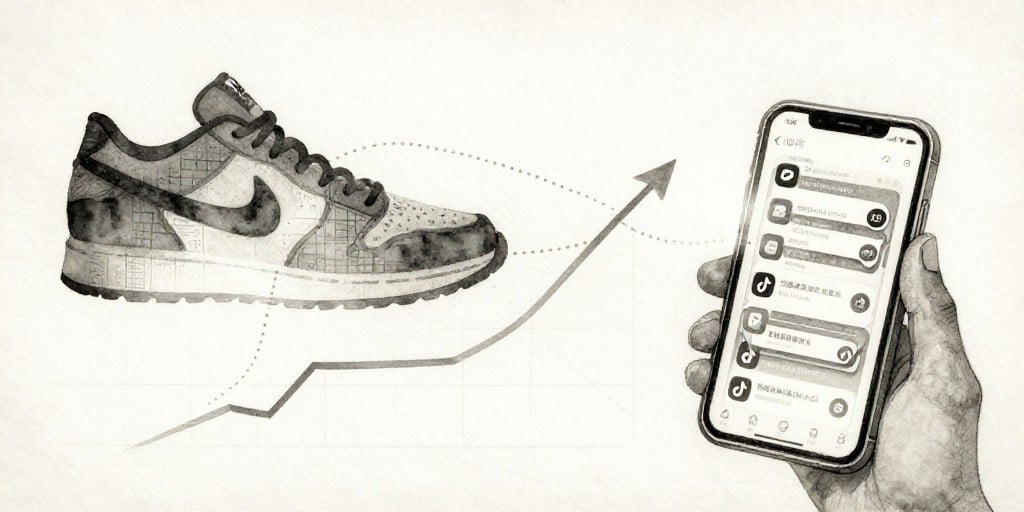
Corporate News Analysis: Nike’s Strategic Restructuring of China Operations
Executive Summary Nike Inc. has announced a decisive shift in its China strategy that will fundamentally alter how the company sells its products across the mainland. Beginning on 1 January 2027, Nike will terminate online sales agreements with thousands of third‑party distributors, including prominent retailers such as Topsports International Holdings and Pou Sheng International Holdings. The move will centralize distribution through Nike’s own channels and select e‑commerce platforms—Tmall, JD.com, and Douyin—to achieve tighter control over pricing, brand presentation, and consumer experience. While the announcement has triggered immediate market reactions—including declines in the shares of affected distributors and a modest dip in Nike’s U.S. stock price—analysts remain divided on whether the trade‑off between revenue breadth and margin depth will ultimately prove beneficial.
1. Underlying Business Fundamentals
1.1 Revenue Concentration in Greater China
Nike’s sales in Greater China have declined for the last three consecutive quarters, falling from 14.3 % of global revenue in FY 2023 to 13.2 % in FY 2025. This contraction is driven by a combination of factors:
- Currency Depreciation: The Chinese yuan weakened by 4.8 % against the U.S. dollar during FY 2025, eroding purchasing power for imported apparel.
- Market Saturation: Competition from domestic brands such as Li-Ning and Anta has intensified, with domestic e‑commerce penetration exceeding 70 % of total retail sales.
- Regulatory Uncertainty: Recent data‑privacy regulations and e‑commerce tax reforms have increased compliance costs for third‑party distributors.
By consolidating sales, Nike aims to capture higher margins (estimated at 3 % increase in average gross margin from 2025 to 2027) while offsetting the loss of volume through more profitable direct channels.
1.2 Channel Economics
Nike’s current distribution model relies heavily on third‑party e‑commerce platforms and offline retailers. While this model provides reach, it dilutes control over pricing and brand consistency. The company estimates that the average discount margin for third‑party sellers sits at 12 % of selling price, compared with an anticipated 8 % margin on Nike‑direct channels. Additionally, Nike’s own e‑commerce platform reportedly experiences lower customer acquisition costs (CAC $12 vs. $18 for third‑party sellers) due to brand loyalty and targeted marketing.
2. Regulatory Environment
2.1 China’s Digital Trade Policies
- Data Localization Mandate (2023): Requires all e‑commerce platforms to store user data within China, increasing operational burdens for foreign brands.
- E‑Commerce Tax Reform (2024): Introduced a 7 % consumption tax on goods sold through cross‑border platforms, directly impacting revenue from third‑party channels.
By shifting to primary platforms that already comply with these regulations (Tmall, JD.com, Douyin), Nike can reduce administrative overhead and mitigate tax exposure.
2.2 Intellectual Property and Counterfeiting
China remains a hotspot for counterfeit apparel. Nike’s consolidation strategy includes tighter digital asset protection via blockchain-based authentication on its own platforms, potentially reducing brand dilution. However, this also requires substantial investment in digital infrastructure (estimated at $120 million over three years).
3. Competitive Dynamics
3.1 Domestic Competitors’ E‑Commerce Dominance
- Li‑Ning and Anta have leveraged their own e‑commerce ecosystems, achieving 15 % higher gross margins than Nike in FY 2025.
- Both brands have secured exclusive partnerships with platforms such as Xiaohongshu and Baidu Shopping, providing them with superior data analytics capabilities.
Nike’s partnership with Douyin—a platform that blends short‑form video and live‑streaming commerce—positions it to capture younger demographics, yet it competes directly with domestic influencers who already command high engagement rates.
3.2 Global Brands’ Strategies
Other Western brands (Adidas, Puma) have similarly tightened their China operations, focusing on brand storytelling through owned digital channels. Nike’s approach is consistent with this industry trend but diverges by incorporating a larger proportion of third‑party platforms in its consolidation, potentially retaining broader reach.
4. Market Reactions and Financial Implications
| Entity | Pre‑Announcement Share Price | Post‑Announcement Change | Market Commentary |
|---|---|---|---|
| Nike (US) | $190.25 | -1.2 % | “Strategic shift signals confidence in direct‑channel growth, but short‑term revenue dip expected.” |
| Topsports (HK) | $25.80 | -14.5 % | “Distributors face immediate revenue contraction; investors caution about long‑term viability.” |
| Pou Sheng (HK) | $18.70 | -12.3 % | “Similar to Topsports; risk of reduced market share if direct channels underperform.” |
Revenue Forecast Impact
- Short Term (2027–2028): Projected decline of 8 % in China sales volume due to loss of third‑party distribution.
- Long Term (2029–2031): Potential rebound as brand equity strengthens, with expected CAGR of 6 % in direct sales.
Margin Analysis
- Gross Margin: Expected to rise from 43 % (FY 2025) to 46 % (FY 2029) following consolidation.
- Operating Margin: Projected to improve from 18 % to 22 % by 2031, assuming cost savings from reduced logistics complexity.
5. Risks and Opportunities
5.1 Risks
- Channel Saturation: Over-reliance on a limited number of platforms could expose Nike to platform‑specific regulatory changes or algorithmic shifts.
- Consumer Perception: Some loyal customers may feel alienated by reduced availability in traditional retail outlets, leading to brand fatigue.
- Execution Cost: Building and scaling proprietary digital infrastructure (AI pricing, inventory optimization) could surpass initial estimates, compressing margins.
5.2 Opportunities
- Data‑Driven Pricing: Direct control enables dynamic pricing models tailored to local demand fluctuations, potentially boosting conversion rates.
- Brand Immersion: Exclusive content on Douyin and Tmall can enhance storytelling, creating higher engagement and willingness to pay.
- Supply Chain Optimization: Centralized logistics can reduce lead times, lower inventory carrying costs, and improve responsiveness to trend shifts.
6. Conclusion
Nike’s decision to centralize its China operations reflects a broader industry shift toward tighter brand control and digital-first commerce. While the strategy promises higher margins, stronger brand consistency, and regulatory alignment, it also carries significant risks—most notably, the potential loss of reach and the costs associated with building an independent sales ecosystem. Investors and industry observers should monitor how Nike balances these trade‑offs over the next few years, particularly the speed at which it can capture volume through its direct channels and the robustness of its data‑analytics capabilities in a highly competitive market.