
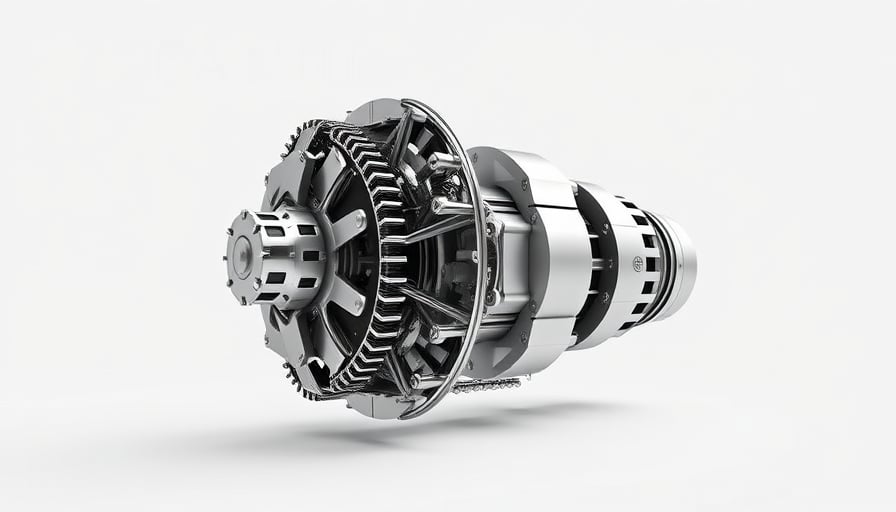
Corporate Update – Nidec Corporation
Overview
On 7 February 2026, Nidec Corporation, a prominent Japanese manufacturer of precision and automotive motors, released a corporate update detailing the outcomes of a recent strategic review. The review’s primary objective was to strengthen the company’s market position within the industrial and electrical equipment sectors. The communication outlines ongoing initiatives to streamline operations across all product lines, including motors for home appliances, automotive applications, and industrial machinery. Management reaffirmed its commitment to investing in research and development (R&D) to preserve innovation in small precision motors and related components. The update also underscores the firm’s focus on delivering value to shareholders while navigating a highly competitive global market.
Strategic Review Highlights
Market Positioning The review confirmed that Nidec’s diversified product portfolio remains resilient in both mature and emerging markets. The company’s presence in the automotive sector, particularly in electrified vehicle components, continues to drive revenue growth, while its industrial motor segment benefits from increasing automation demand in manufacturing and infrastructure projects.
Operational Streamlining A cross‑functional effort is underway to eliminate redundancies in the supply chain and production lines. This includes consolidating manufacturing facilities in key growth regions, adopting advanced process controls, and leveraging digital twins to optimize production schedules. The intended result is a reduction in cost of goods sold (COGS) by 3–5 % over the next two fiscal years.
R&D Investment Nidec is earmarking 7 % of its operating income for R&D, a figure above the industry average of 5.2 %. Funding will target high‑performance, low‑energy consumption motors for electric vehicles (EVs) and next‑generation industrial automation equipment. Recent prototype trials have shown a 12 % improvement in power density and a 15 % reduction in thermal loss.
Shareholder Value Management reaffirmed its commitment to sustainable dividend growth and share repurchase programs. Despite global supply chain volatility, Nidec’s cash flow generation remains robust, supporting both reinvestment and return to shareholders.
Consumer Discretionary Trends and Nidec’s Position
Demographic Shifts
Aging Populations in Japan and Europe The rise of an older demographic has heightened demand for home appliances that emphasize energy efficiency and ease of use. Nidec’s precision motors in refrigerators, washing machines, and HVAC units are positioned to meet these needs through improved power management and quieter operation.
Millennial and Gen Z Preferences Younger consumers prioritize sustainability and smart connectivity. Nidec’s ongoing work on integrated motor controls compatible with Internet‑of‑Things (IoT) platforms aligns with these preferences, positioning the company as a partner for manufacturers of smart home devices.
Economic Conditions
Inflationary Pressures Rising input costs have pressured profit margins across the manufacturing sector. By streamlining operations and investing in high‑efficiency motors, Nidec aims to offset cost increases while maintaining price competitiveness.
Global Supply Chain Resilience Recent disruptions have underscored the importance of diversified supply networks. Nidec’s strategic review included a reassessment of key supplier relationships, leading to the selection of alternative materials and the integration of local suppliers where feasible.
Cultural Shifts
Sustainability Focus Consumer sentiment data from a 2025 Global Consumer Survey indicates that 78 % of respondents consider energy efficiency a decisive factor when purchasing household appliances. Nidec’s low‑power motors directly address this trend, offering tangible energy savings for end users.
Experience‑Driven Consumption Lifestyle reports reveal an increasing willingness among consumers to invest in premium products that deliver superior performance and design. Nidec’s precision motors are integral to high‑end consumer electronics, allowing manufacturers to differentiate through quality and reliability.
Market Research and Consumer Sentiment
| Metric | Source | Finding |
|---|---|---|
| Energy‑Efficiency Preference | Global Consumer Survey 2025 | 78 % prioritize energy efficiency |
| Smart‑Home Adoption | IoT Market Report 2024 | 55 % of households have at least one connected device |
| Automotive EV Growth | EV Market Outlook 2026 | Annual sales projected to rise 20 % |
| R&D Investment Trend | Industry Benchmark 2024 | Average R&D spend: 5.2 % of operating income |
Consumer sentiment indicates a clear shift toward products that combine technological sophistication with environmental responsibility. Nidec’s strategic focus on advanced motor technologies positions it to capitalize on these evolving preferences.
Qualitative Insights
Lifestyle Trends The “home as a hub” narrative encourages consumers to invest in appliances that integrate seamlessly with digital ecosystems. Precision motors enable this integration by offering low‑noise operation and robust control interfaces.
Generational Preferences Millennials and Gen Z prioritize not only functionality but also brand authenticity. By positioning itself as a provider of cutting‑edge, sustainable motor solutions, Nidec supports manufacturers that appeal to these demographics.
Retail Innovation Retailers increasingly demand flexible, modular motor solutions that can be customized for different product lines. Nidec’s modular motor architecture and rapid prototyping capabilities provide retailers with agility in product development cycles.
Conclusion
Nidec Corporation’s recent corporate update demonstrates a clear alignment between its strategic priorities and broader consumer discretionary trends. By reinforcing operational efficiencies, bolstering R&D investment, and staying attuned to demographic, economic, and cultural shifts, the company is well positioned to sustain competitive advantage and deliver long‑term shareholder value in the evolving industrial and electrical equipment landscape.