
Corporate News
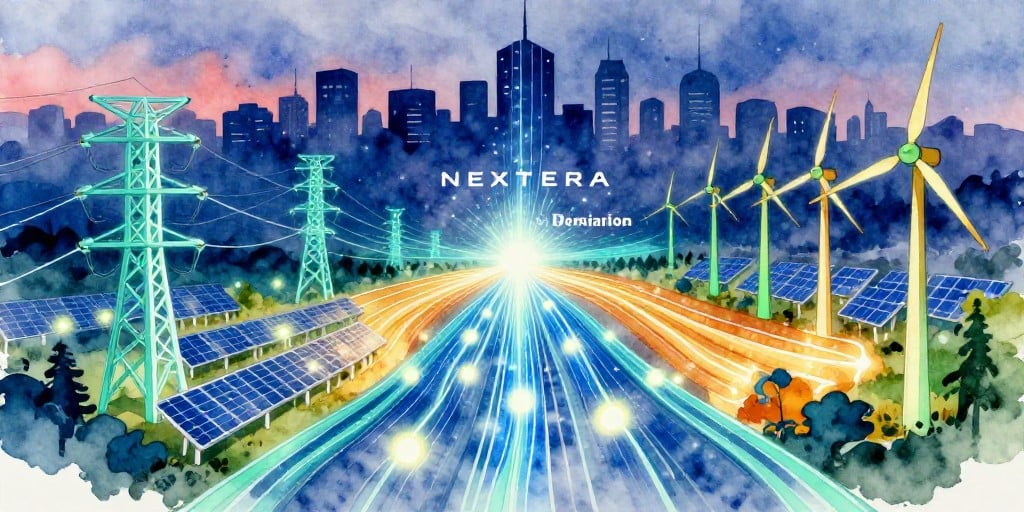
NEXTERA ENERGY INC announced a strategic development that could reshape the U.S. power landscape: a proposed merger with Dominion Energy. While the announcement stopped short of disclosing precise financial terms, it underscored the magnitude of the transaction for both companies’ long‑term positioning in the national energy market. The statement highlighted anticipated regulatory and operational challenges, noted that approvals and transition timelines remain uncertain, and reaffirmed NEXTERA’s commitment to maintaining a stable outlook for its earnings guidance. The company also emphasized its intent to continue monitoring the regulatory environment closely and to keep investors apprised of substantive changes. The focus, however, remains on the merger’s implications for future growth and the necessity of careful risk navigation.
Grid Stability in the Context of a Major Merger
A union between NEXTERA and Dominion Energy would bring together two extensive transmission and distribution networks, each characterized by different operating protocols, asset inventories, and customer demographics. The integration of these assets poses a significant challenge for grid stability:
System Frequency Management • Merging fleets of generators—particularly those with disparate control schemes (e.g., traditional fossil-fuel plants versus modern gas peakers)—requires sophisticated coordination of inertia and primary frequency response. • The combined system must preserve adequate spinning reserve margins to counteract sudden load fluctuations or generation loss.
Voltage Regulation and Reactive Power Support • The expanded network will likely contain a higher density of high‑voltage transmission corridors. Managing reactive power flows through the use of capacitor banks, synchronous condensers, and inverter‑based resources becomes critical to avoid voltage collapse in peak demand periods.
Contingency Analysis and Reliability Metrics • Post‑merger NEXTERA and Dominion will need to recalculate N-1 and N-2 contingency analyses to ensure that system reliability indices (SAIDI, SAIFI) remain within regulatory thresholds.
Renewable Energy Integration Challenges
Both companies are actively pursuing renewable portfolios, yet their current strategies differ markedly, which introduces integration hurdles:
| Aspect | NEXTERA | Dominion Energy |
|---|---|---|
| Wind Capacity | 4,000 MW (planned) | 2,500 MW (planned) |
| Solar Capacity | 1,200 MW (planned) | 800 MW (planned) |
| Storage | 500 MWh (planned) | 300 MWh (planned) |
| Grid‑Scale Integration | Aggressive, region‑focused | Steady, diversified |
Merging these portfolios will necessitate:
- Coordinated Forecasting: Aligning wind and solar output forecasts across overlapping service areas to improve real‑time dispatch decisions.
- Curtailment Management: Designing protocols to mitigate curtailment during periods of excess renewable generation, especially in congested corridors.
- Hybrid Inverter Standards: Implementing common inverter standards to streamline fault ride‑through and reactive power support.
The resulting synergies, if executed effectively, can reduce the reliance on fossil peakers, lower overall system costs, and accelerate the transition to a carbon‑neutral grid.
Infrastructure Investment Requirements
A merger of this scale will demand significant capital outlays to harmonize assets and enhance resilience:
Transmission Upgrades • Upgrading aging 230‑kV corridors to accommodate higher capacity and improve reliability. • Deploying high‑voltage direct current (HVDC) links to facilitate cross‑border renewable imports, estimated at 1–2 GW of additional capacity.
Distribution Modernization • Implementing advanced metering infrastructure (AMI) and distribution automation to support dynamic load management. • Expanding distributed energy resource (DER) hosting capacity to enable community solar and rooftop storage.
Cybersecurity and Resilience • Investing in next‑generation SCADA and IEC 61850 communication protocols to protect against cyber threats and ensure rapid restoration after outages.
Projections indicate a combined infrastructure investment of $15–20 billion over the next decade, driven by the need to meet evolving regulatory standards and to support a higher penetration of intermittent renewables.
Regulatory Frameworks and Rate Structures
The merger will be scrutinized under multiple regulatory lenses:
- Federal Energy Regulatory Commission (FERC): Oversight on transmission interconnection agreements and wholesale market access.
- Public Utility Commissions (PUCs): State‑level approvals that will assess rate impact, service quality, and fair access to the upgraded grid.
- Clean Power Plan/Regional Transmission Organization (RTO) Rules: Alignment with regional emissions targets and market operations.
Rate Implications
- Capital Recovery: Ratepayers may face modest increases to recover the substantial infrastructure spend, yet long‑term operational savings from reduced reliance on fossil peakers could offset these costs.
- Renewable Energy Credits (RECs): The merged entity will likely benefit from increased economies of scale in REC trading, potentially lowering the effective cost of renewable procurement for consumers.
A carefully calibrated rate design—balancing short‑term capital costs against long‑term operational savings—will be essential to secure regulatory approval and maintain consumer confidence.
Economic Impacts of Utility Modernization
The proposed merger, coupled with extensive infrastructure modernization, can influence the broader economy in several ways:
- Job Creation: Construction, engineering, and commissioning activities are expected to create thousands of jobs, both skilled and unskilled.
- Supply Chain Stimulus: Demand for advanced grid equipment, renewable technology, and cybersecurity solutions will invigorate domestic manufacturing sectors.
- Energy Cost Dynamics: While initial capital outlays may prompt short‑term rate adjustments, enhanced grid efficiency, reduced transmission losses, and a higher share of low‑cost renewable energy are projected to moderate long‑term consumer costs.
In addition, the consolidation may enhance the resilience of the national grid, reducing the economic impact of outages and improving reliability metrics that are increasingly valued by industrial customers.
Conclusion
The proposed NEXTERA–Dominion merger represents a strategic response to the twin imperatives of grid stability and renewable integration. Success hinges on meticulous planning across technical, regulatory, and financial domains. By investing aggressively in transmission and distribution upgrades, harmonizing diverse renewable portfolios, and navigating complex regulatory landscapes, the combined entity could set a new benchmark for utility performance and consumer value in the evolving U.S. energy market.